THE BIG MUFF π - A HISTORY OF ALL VERSIONS
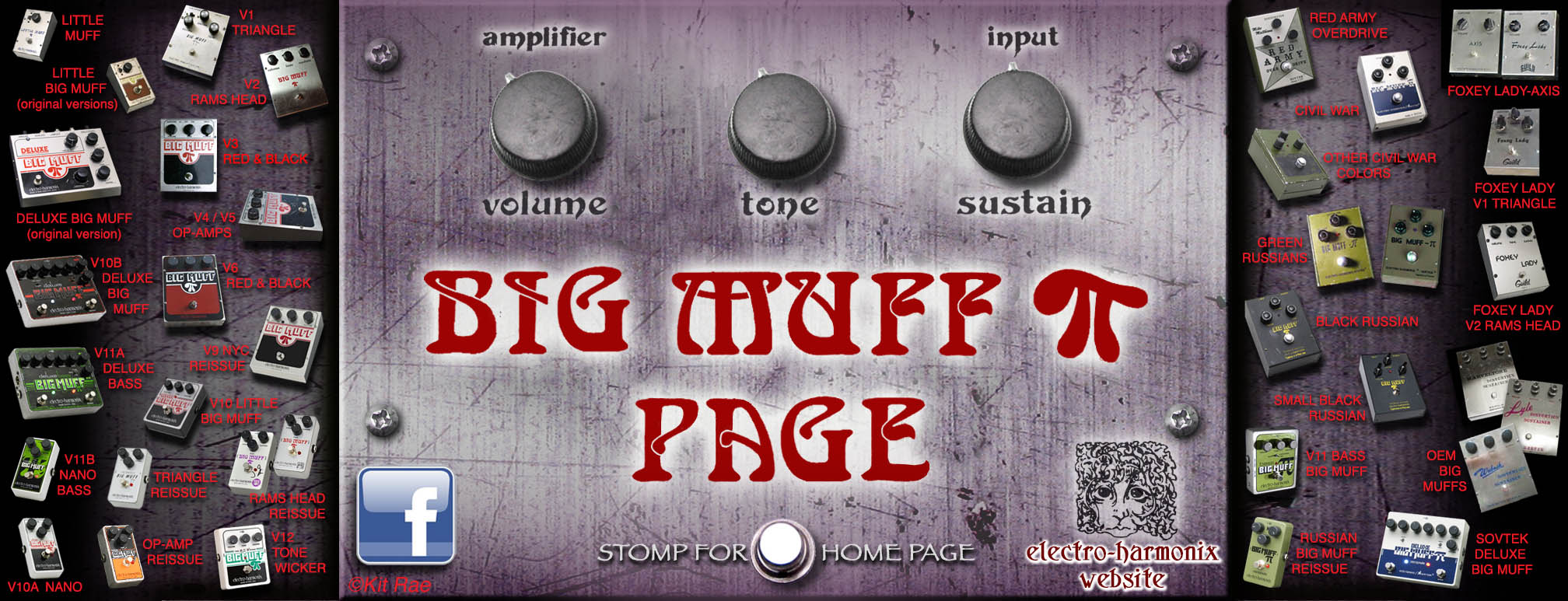
Click on any Big Muff in the image below to go directly to that section
NOTE: This website is constantly updated as new information becomes available. Version, Edition, and Revision numbers listed here are not actual Electro-Harmonix identifiers. They are my categorizations, for identification purposes only. Last update January 2012. Permission required to repost any information from this site in any ebay listing. Website and contents ©Kit Rae.
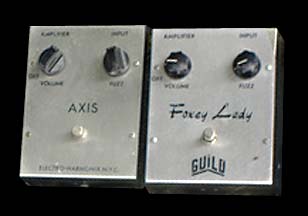
RE-BRANDING FUZZRITES, the GUILD FOXEY LADY and the ELECTRO-HARMONIX AXIS
1967 to 1968
Manufacturer: Mosrite(for Guild), Aul Instruments (for Mike Matthews/Guild), Electro-Harmonix (for Guild)
Place of Manufacture: USA
Fuzz tone guitar was a hot commodity at this time, and the market for fuzz pedals was growing rapidly! The first Rock and Roll fuzz tones came out of America in 1962 on the Ventures song 2000 Pound Bee, using a hand made Red Rhodes fuzz pedal, and Gibson was the first to the market with a production fuzz pedal shortly after that in 1962, the Maestro Fuzz-Tone (FZ-1). It wasn't until the 1964 that Dave Davies of the Kinks popularized fuzz tone in the United Kingdom with You Really Got Me. In 1965 Gary Hurst reworked the Maestro Fuzz-Tone into the Tone Bender fuzz pedal (Mark I), and it was featured on the Beatles' Rubber Soul album the same year. The Tone Bender was being produced by Sola Sound in London, and sparked the UK's entry into the fuzz pedal market. Sola later made a Mark II version for Vox, and yet another version for Marshall called the Supa Fuzz. In America the guitar company Mosrite brought the Ed Sanner designed FUZZ-rite pedal to the market in 1966. Mosrite also repackaged the same pedal for Guild around 1967, called the Foxey Lady fuzz. Also in 1966, Vox made their own version of the Tone Bender in Italy and Arbiter Electronics Ltd. in the U.K. copied a Tone Bender circuit for their Fuzz Face pedal. Jimi Hendrix was the poster boy for this pedal, making it hugely popular. Other popular fuzz users were Eric Clapton, Jeff Beck, Pete Townshend, and Jimmy Page (See the fuzz pedal timeline here for a detailed list of all the fuzz pedals on the market at this time).
Utilizing his electrical engineering skills, Mike Matthews worked on several unique but unsuccessful inventions on the side during this time at IBM. His big break came when he was given a contract to take over production of the Guild two-transistor fuzz pedal called the Foxey Lady. Guild, based in Rhode Island at the time, was primarily a large guitar maker but they also had other related products made under their brand name. It was Guild founder Al Drunge's idea to name their fuzz pedal the Foxey Lady, capitalizing on the popularity of Jimi Hendrix's fuzz tone, which had become hugely popular since the release of Are You Experienced in 1967. Mosrite, another guitar company, had previously been making the Foxey Lady pedals for Guild. That version of the Foxey Lady was actually the same fuzz pedal as Mosrite's own FUZZ-rite pedal, with a Germanium transistor circuit designed by Ed Sanner. It was simply re-branded and re-boxed for Guild. Mosrite made a small quantity of these until they went bankrupt, then at a NAMM show around 1967 Guild contracted Mike Matthews to take over production.
The circuit in Matthew's version of the Foxey Lady was slightly reworked by a New York audio and amp repairman William (Bill) Berko in his shop, ABCO Sound, on 48th Street. This was essentially the Ed Sanner designed FUZZ-rite circuit with a few mods. Matthews partnered with Berko to get it made, then Berko left unexpectedly. Matthews continued solo, with $1000 of his own money, and had the pedal manufactured for him by Aul Instruments. This extremely rare version of the Foxey Lady was housed in a simple, gray folded sheet metal box, with two control knobs. Guild had good success distributing the pedal, and in October 1968 Matthews founded his own New York company, Electro-Harmonix (E-H), and began making Foxey Lady pedals himself. This new version of the FUZZ-rite circuit used Silicon transistors rather than Germanium, and included a few extra parts for transistor biasing. This third version of the two-knob Foxey Lady was housed in a thinner box with more a more stylish Foxey Lady font. E-H also marketed the pedal under the name Axis Fuzztone, which was the first E-H branded product. It was the exact same circuit and enclosure as the Foxey Lady, just different graphics and knobs. The enclosure box was the same size as the one that would later become the first Big Muff Pi. Interestingly, some early point-to-point wired versions of the E-H Axis pedal may have used the Muff Fuzz circuit with a Big Muff hi-pass/low-pass tone control design. I have seen photos of one example with 1970 pot dates that includes it, shown on the wonderful Tone Machines blog (thanks to the pedal owner, Jerms), and another collector claims to have owned an identical one.
The Axis name was inspired by Jimi Hendrix, taken from his 1967 Axis:Bold As Love album title. Hendrix actually used a pedal at the time that would later be called the Axis, but that was a custom pedal designed and made by his guitar tech, Roger Mayer, not the E-H pedal. The E-H made Axis/Foxey Lady pedals are very rare as I have been told under 3000 of both versions were made, with the Axis being the rarer of the two. They shipped in a white corrugated cardboard box.
All of these pedals operated with similar two transistor circuits. The E-H Axis/Foxey Lady/Fuzz-rite FUZZ knob was actually a blend knob that allowed you to mix the fuzz tone from one transistor to the fuzz tone from the other.
CLICK A PHOTO TO ENLARGE
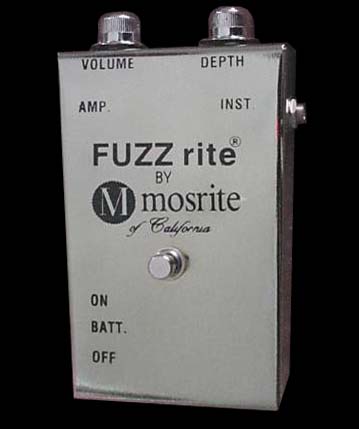
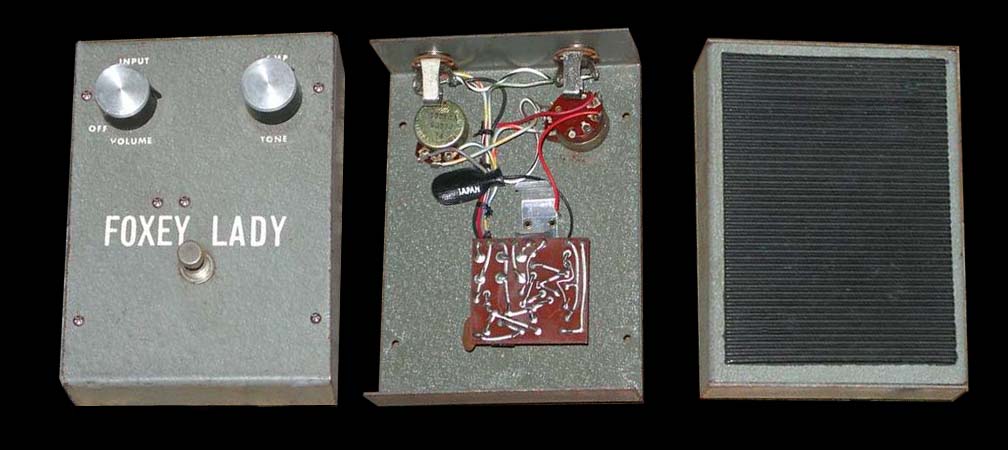
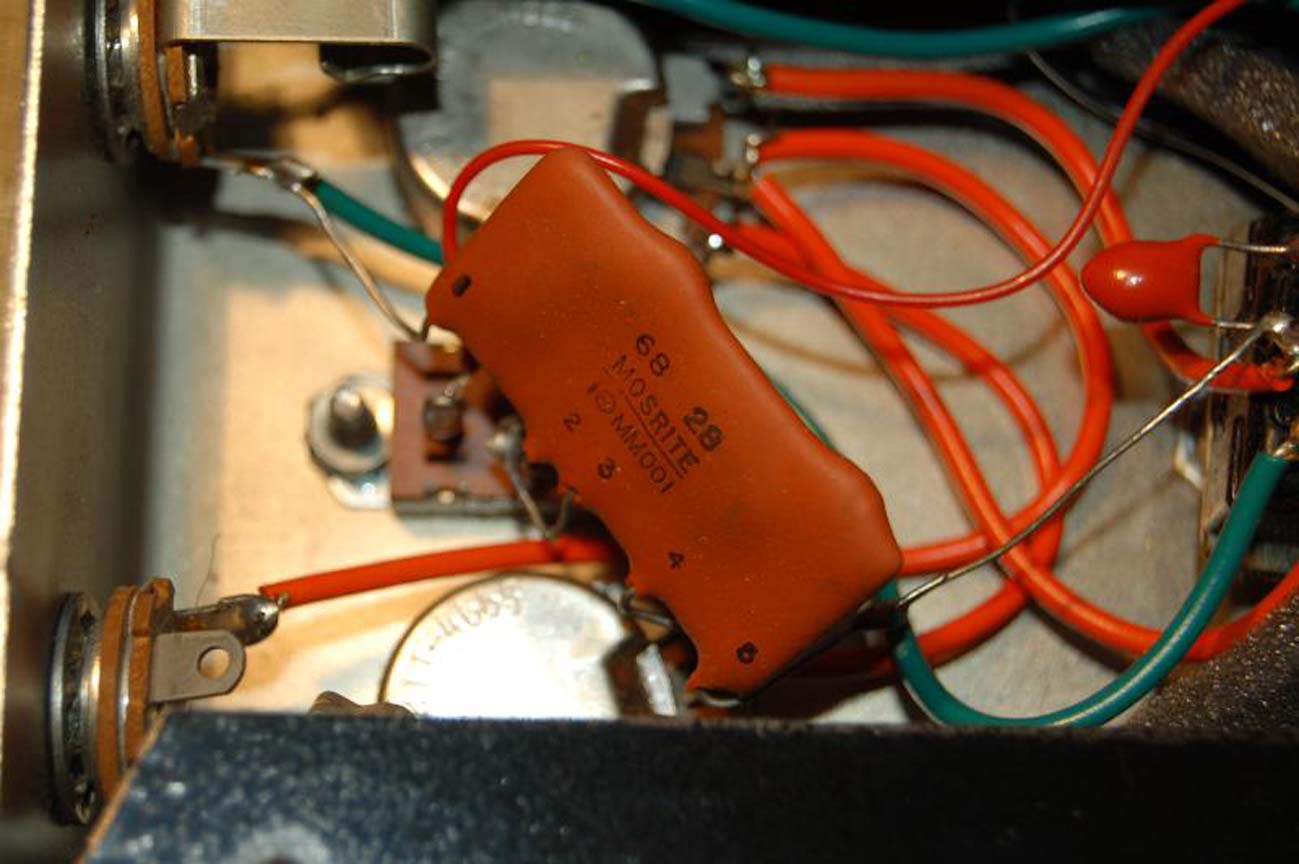
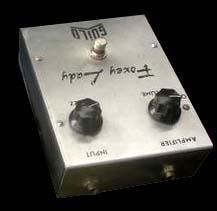
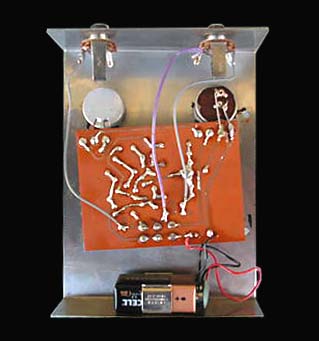
Shown above, left to right - The Mosrite FUZZrite, which was re-branded as the Foxey Lady for Guild around 1967. Note the encapsulated components inside, made for Mosrite by Sprague. Photos on the right are the very rare Mike Matthews version of the Foxey Lady made by Aul Instruments. Mike got the contract to take over production of the Foxey Lady after Mosrite went bankrupt in 1967. The circuit was a slightly modified version of Ed Sanners original FUZZ-rite circuit.
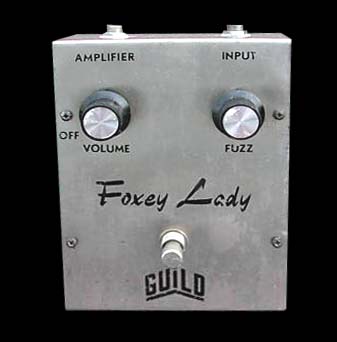
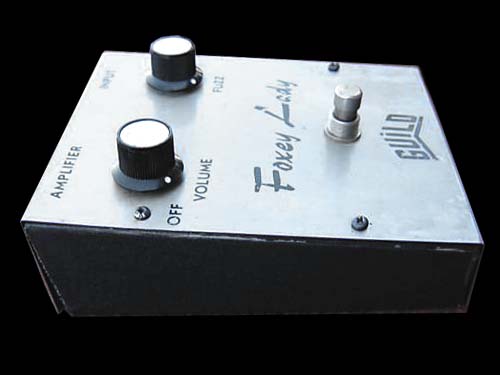
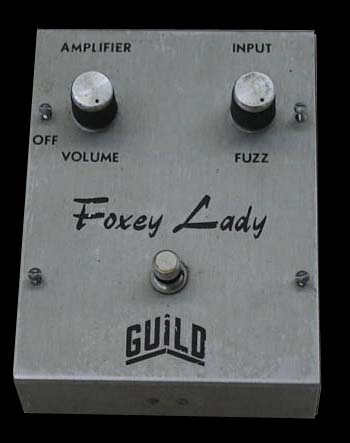
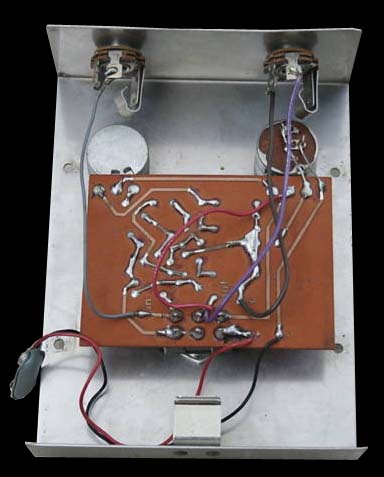
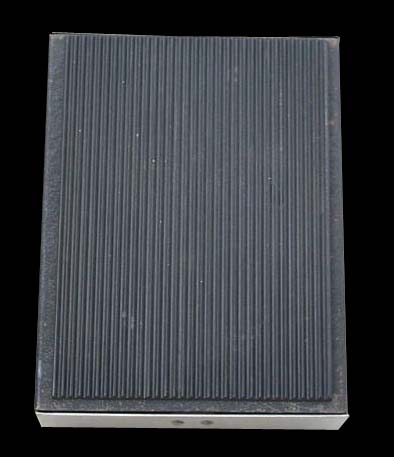
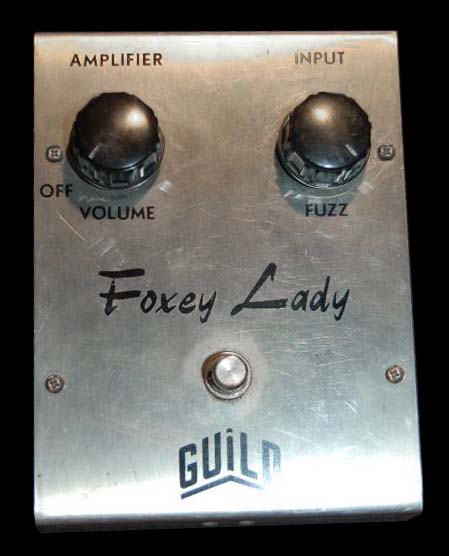
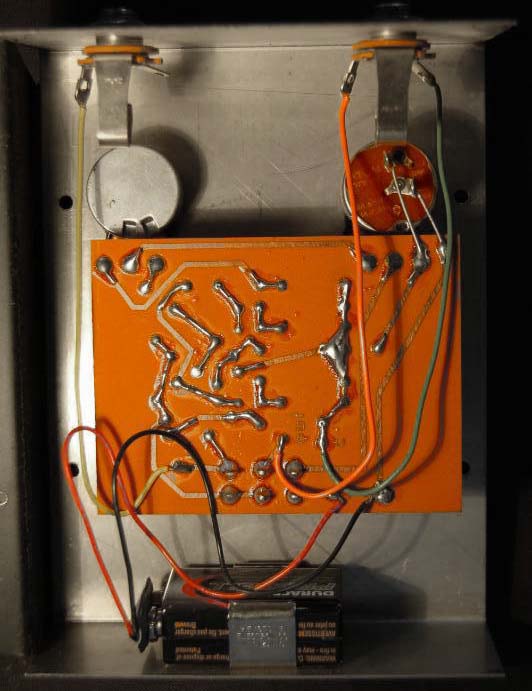
Shown above - Several examples of the Electro-Harmonix made version of the Foxey Lady from 1968 (thanks to devnulljp for pix on right). The circuit was a slightly modified FUZZ-rite circuit, reworked to use Silicon transistors rather than Germanium.
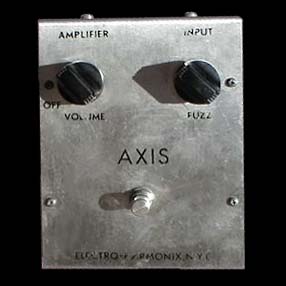
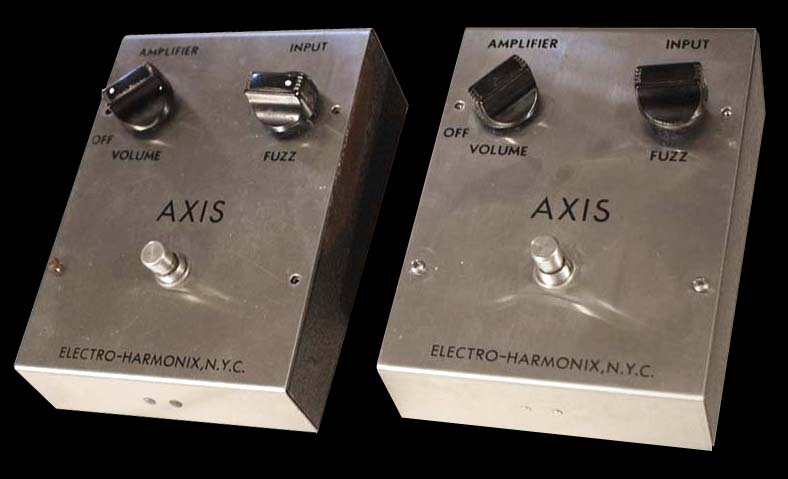
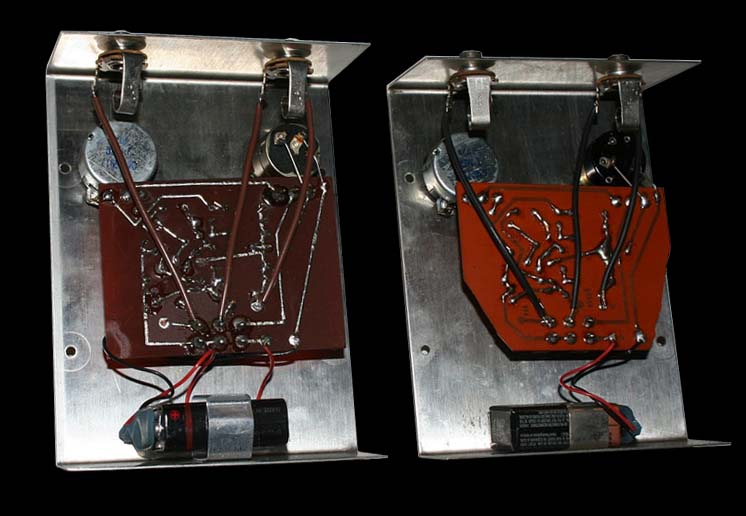
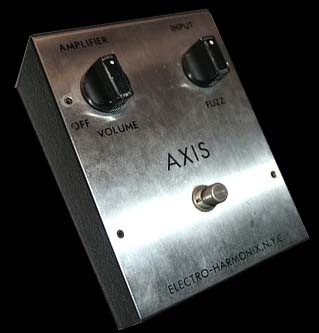
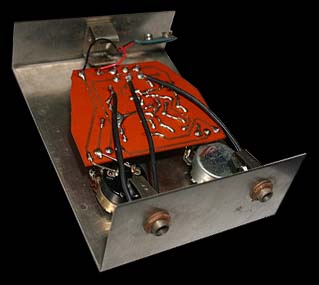
Shown above (top row)- Two versions of the Electro-Harmonix made Axis fuzz pedal, a rebranding of the Foxey Lady pedal E-H made for Guild, with slightly different knobs and circuit board layout. Circa 1968.
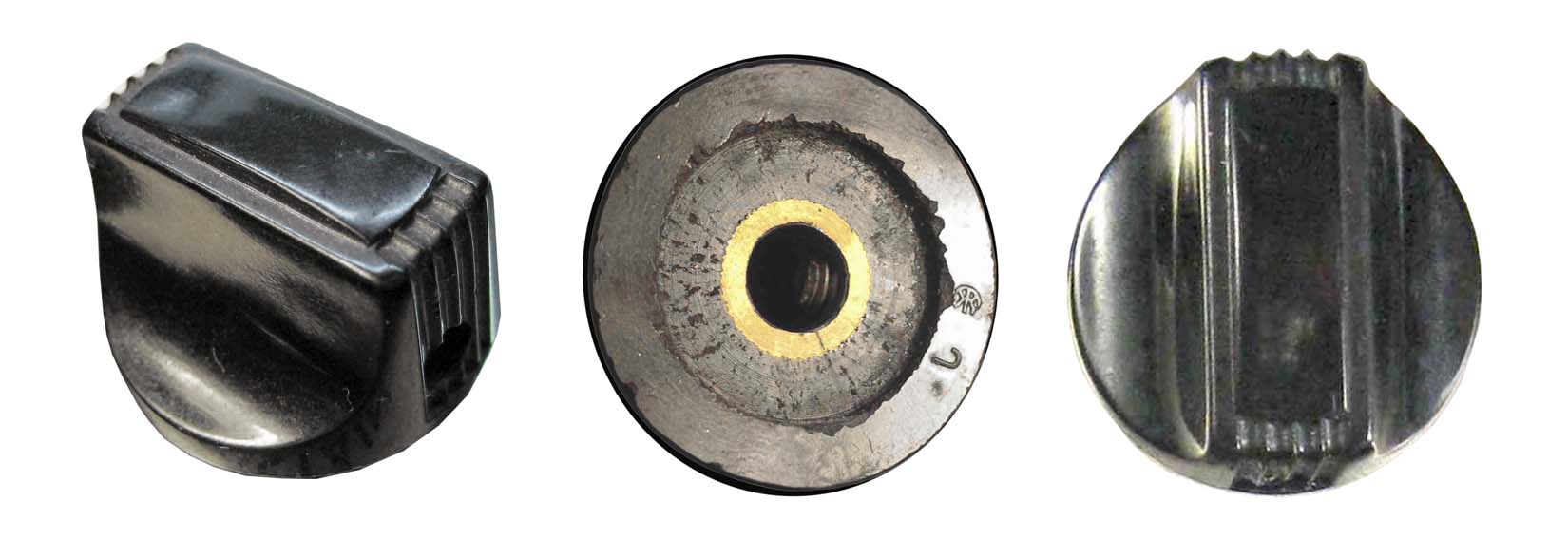
Shown above - The Axis fuzz knobs, which were identical to the knobs used for most Electro-Harmonix products that would follow.
CONTINUE - BACK TO THE HISTORY OF THE BIG MUFF PART 1 (Vintage USA)

Circa 1970
Manufacturer: Electro-Harmonix
Place of Manufacture: Manhattan, New York USA
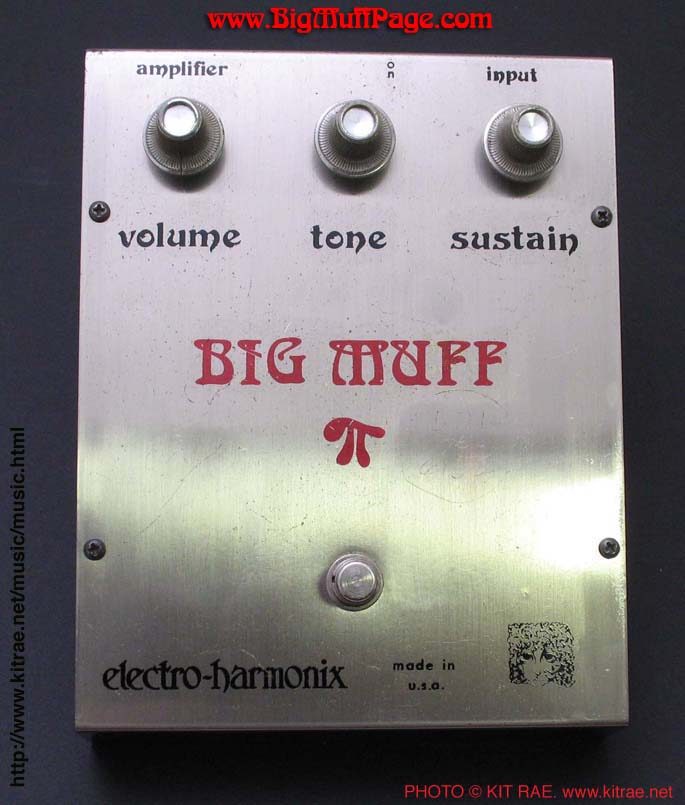
The Electro-Harmonix Axis pedal was discontinued around 1970 with the introduction of the new four transistor V1 Big Muff. However, the Foxey Lady pedal, which was an OEM (original equipment manufacturer) version of the two knob Axis, was still being sold by the Guild Guitar Company. Electro-Harmonix simply changed the graphics of the new V1 Big Muff to the Foxey Lady graphics and continued production as a three-knob version for Guild. Essentially, as you can see in the photos below, this was the exact same pedal as the V1 Triangle Big Muff, only repackaged for the Guild OEM version. The component values changed from unit to unit just like the E-H version. Many of the same knob types used for the V1 Big Muff are also seen on the Foxey version.
CLICK A PHOTO TO ENLARGE

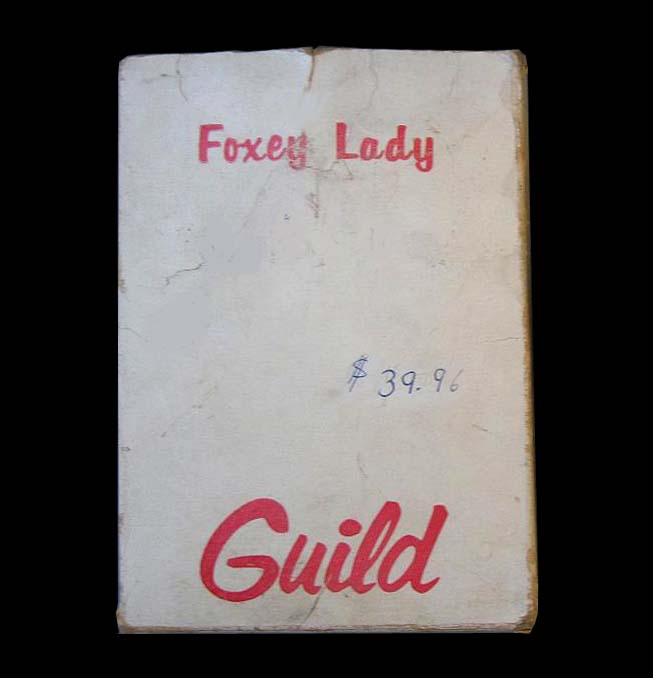
Shown above - Guild Foxey Lady advertsement
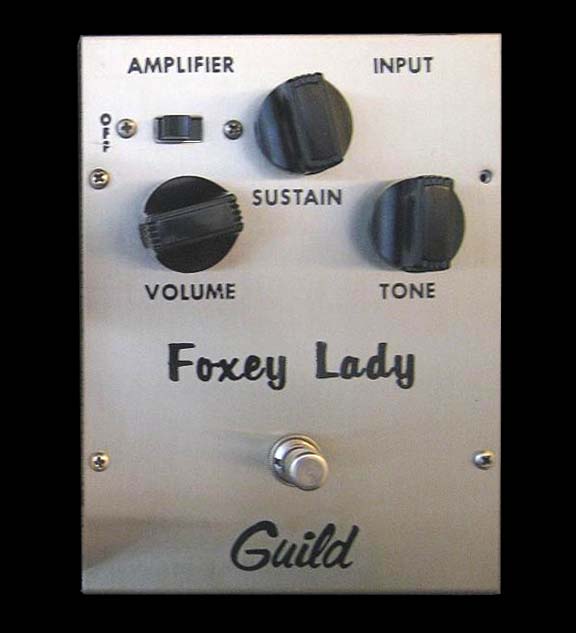
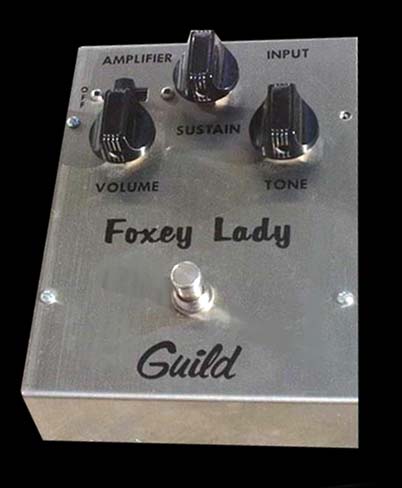
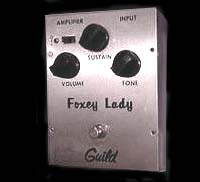
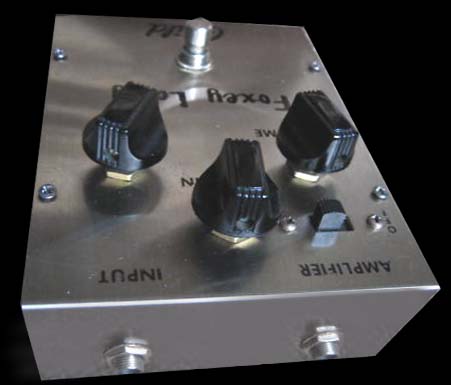
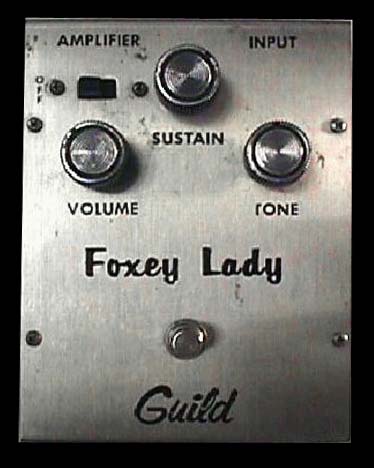
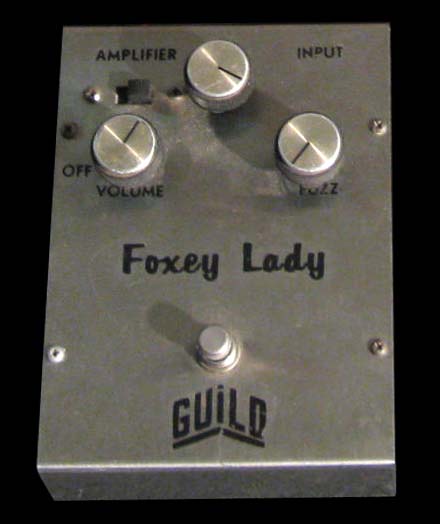
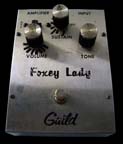
Shown above - Foxey Lady pedals, circa 1970, showing the various knob types used, the same as the V1 Triangle Big Muff. Essentially these were rebranded V1 "triangle" Big Muffs.
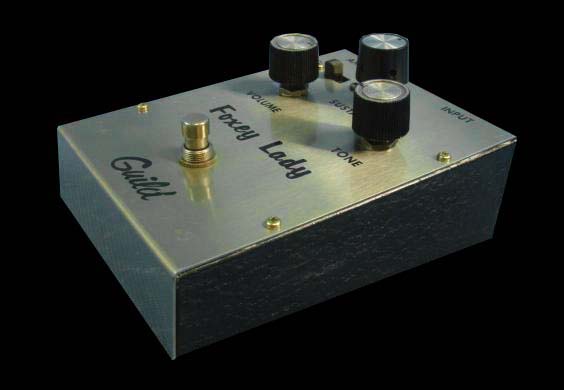
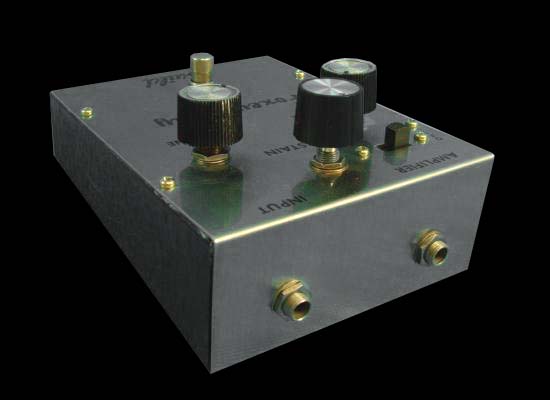
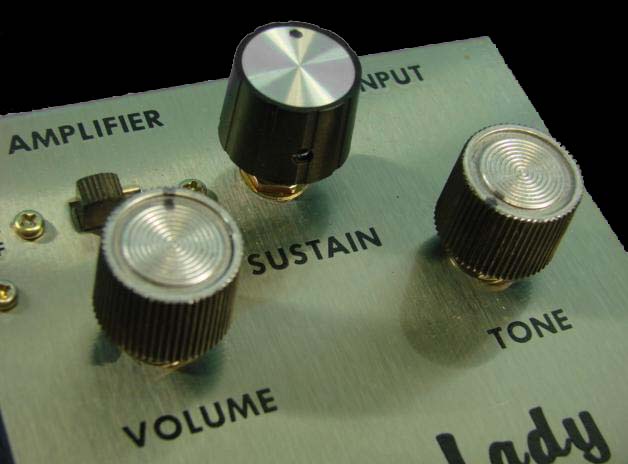
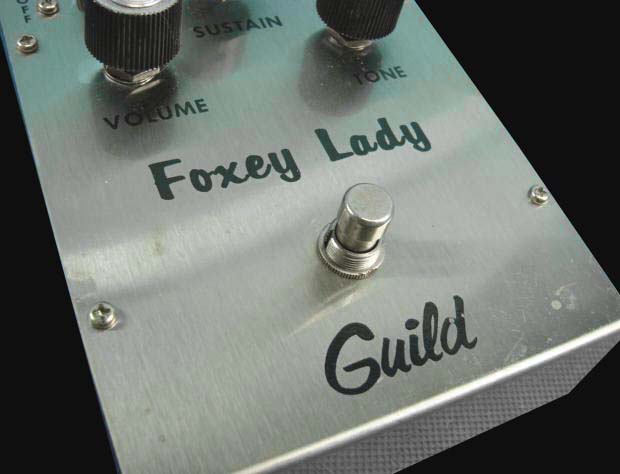
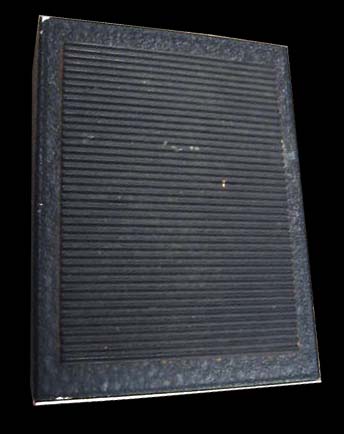
Shown above - A mint Foxey Lady pedal (center knob has been replaced), the same as a first edition V1 Big Muff. Note the extreme knob height, due to extra long posts used on some production Foxey Ladys and V1 Triangle Big Muffs. A rubber skid pad covered the bottom.
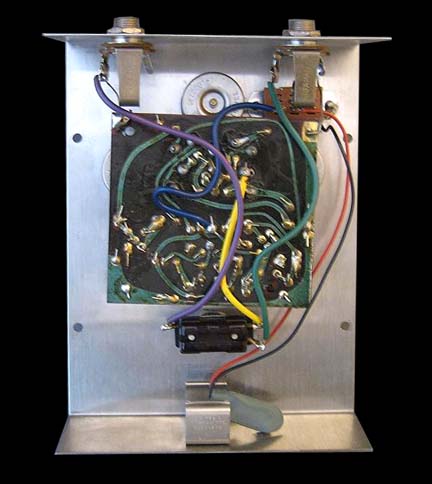
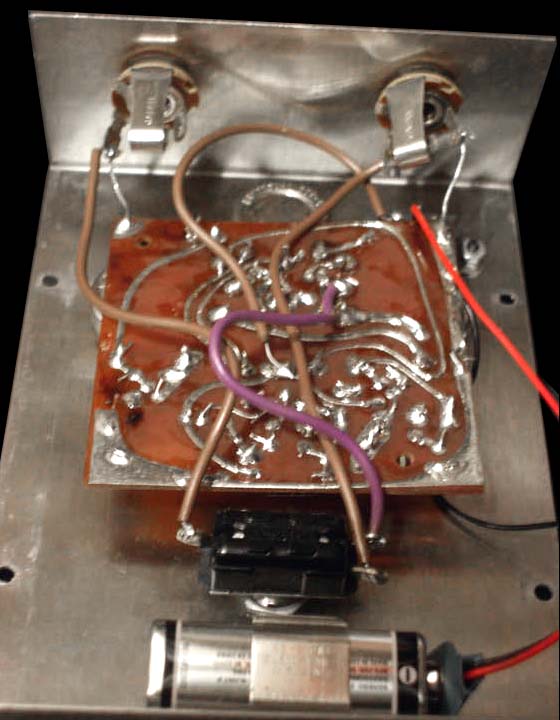
 ..
..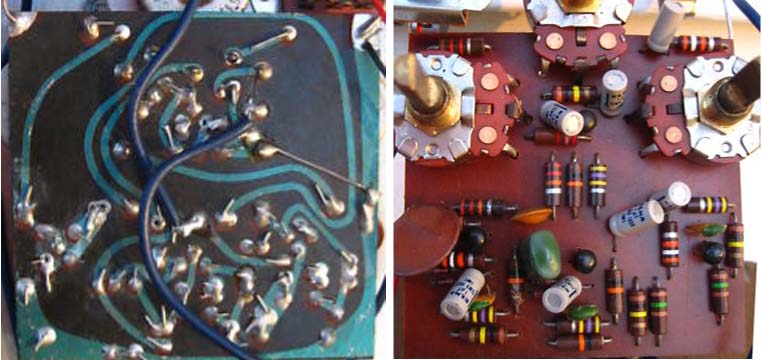
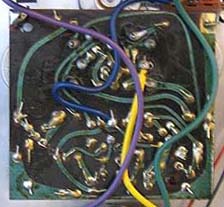
Shown above - The two pcb board colors commonly seen in Foxey Lady Triangle Big Muffs. Note that the trace pattern on the example in the middle differs slightly from the one to the right. Since these are the exact same pcb as the V1 Triangle Big Muff, both of these pcb versions are also found in that pedal
CONTINUE - BACK TO THE HISTORY OF THE BIG MUFF PART 1 (Vintage USA)
MARVELTONE, WABASH, LYLE, AND EVEN MORE FOXEY LADY OEM BIG MUFFS
Circa 1973-1975
Manufacturer: Electro-Harmonix
Place of Manufacture: Manhattan, New York USA
The V1 triangle knob Big Muff was changed around 1973 to a larger version with the three knobs mounted in a row, the V2 "Ram's Head" version. Likewise, the triangle knob Foxey Lady OEM (original equipment manufacturer) version made by Electro-Harmonix for Guild was changed to the new V2 configuration. This would be, I beleive, the fifth incarnation of the Foxey Lady for Guild! Essentially, as you can see in the photos, this is the exact same production pedal as the V2 Big Muff, only with different silk screened graphics for the OEM version. The Foxey Lady was produced alongside the V2 up until the middle of the 1970s. As with the V1 and V2 Big Muffs, circuit board component types and values frequently changed during the production. E-H was known to use whatever was on hand on a particular production day, which makes the sound vary from unit to unit. This was very common for Electro-Harmonix, but it also means there was no one set schematic, or one sound that defines these OEM version, just as there was not one for the Big Muff. Most will have unique tonal characteristics that differ from each other, though in general they all have the trademark Big Muff sound.
In the mid 1970s Electro-Harmonix also made OEM versions of the V2 for the Marveltone,Wabash, and Lyle brands, pictured below. Marveltone was a brand owned by Targ & Dinner Music Company, a large wholesale distributor of music instruments based in Chicago in the 1970s. Targ & Dinner guitars and other instruments were made in the USA starting the 1920s, but around the time this version of the V2 was made, the Marveltone Distortion Sustainer, they were importing almost everything from Japan. Targ and Dinner's building was located on Wabash Avenue, a famous music street in Chicago. Another large music instrument retailer and distributor located on the same street was David Wexler & Co. They also had an OEM version V2 Big Muff made by Electro-Harmonix. It was called the Wabash Distortion Sustainer, named after their street address. It is interesting that both versions were made for competing companies located on the same street. Knobs on some of the Marveltone V2 Big Muffs are the same the "reactor tower" shaped knobs Electro-Harmonix used on some early V2 "Ram's Head" Big Muffs, and the blue silk screen ink color used on the Wabash version is the same blue ink color used on some V2 Big Muffs manufactured around the same time. Knobs types and rubber skid pads used indicate the Marveltone version was manufactured first, prior to 1975, then the Wabash version after 1975. The circuit used in the Marveltone was the first violet variant.
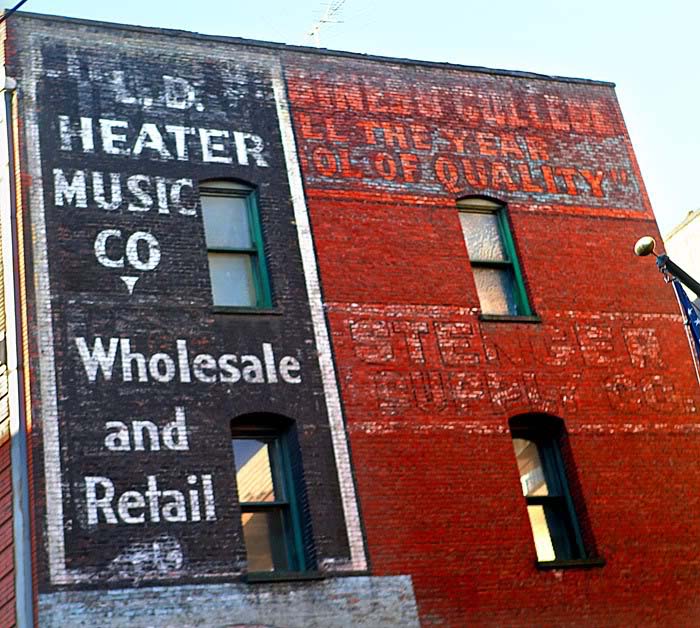
The Lyle Distortion Sustainer version of the V2 Big Muff is very rare. It was distributed by the L.D. Heater Music Company, the only American distributor of Lyle Guitars, based in Portland, Oregon USA in the 1970s. The Lyle brand was owned by the Japanese Aria company , who primarily made clones of Gibson and Fender USA guitar models. L.D. Heater was owned by Norlin, which also owned Gibson, Epiphone, Ampeg, and several other related companies. Electro-Harmonix was contracted to make this version of the V2 for L.D. Heater. They distributed it under the Lyle name circa 1973-74, model #L600. The knobs used and the violet ink color are the same seen on some V2 Big Muffs with violet/purple graphics that were made around the same time, and the circuit is in fact the first violet circuit. The word OFF is also missing from the graphics, as on many V2 Big Muffs made around this time. This OEM version is also unique in that the TONE and SUSTAIN pots are swapped in opposite positions from the other OEM V2 Big Muffs. Other than that, this was essentailly a production violet V2 Big Muff with different silk screened graphics.
CLICK A PHOTO TO ENLARGE
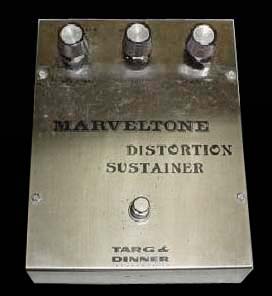
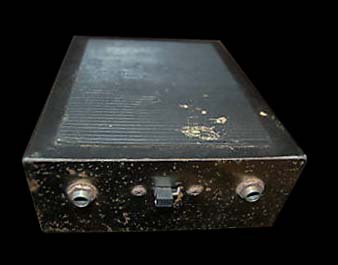
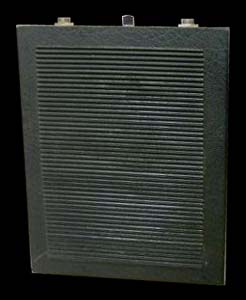
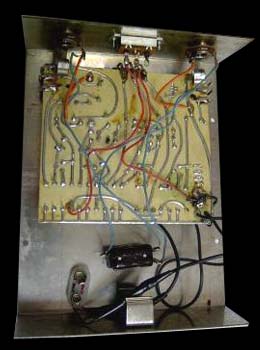
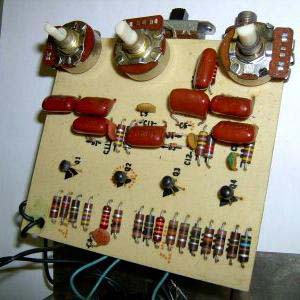

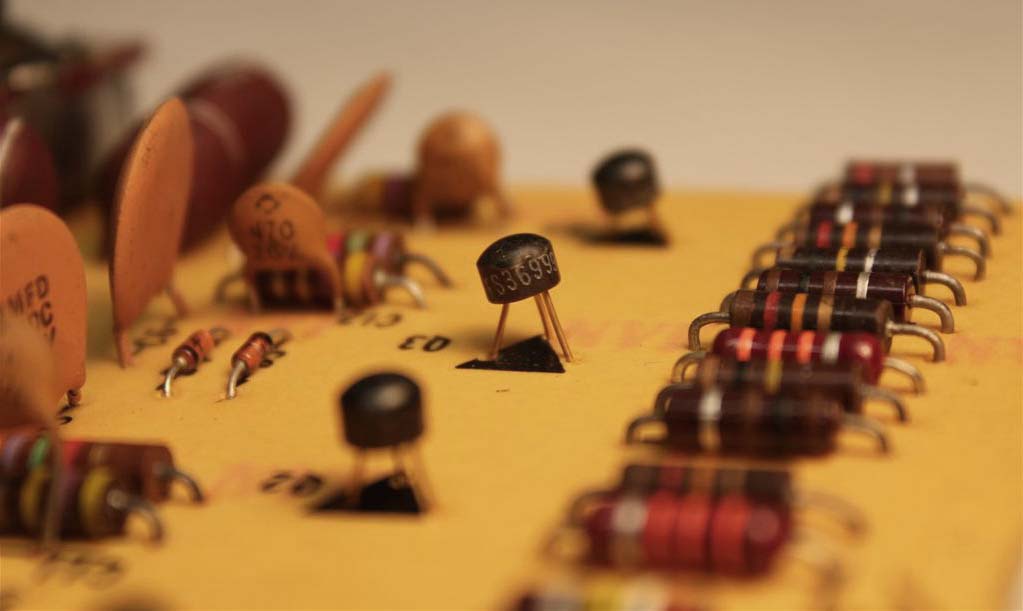
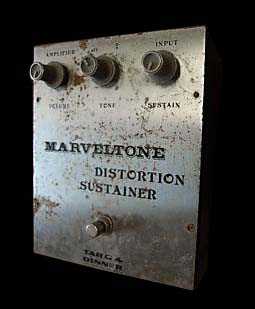
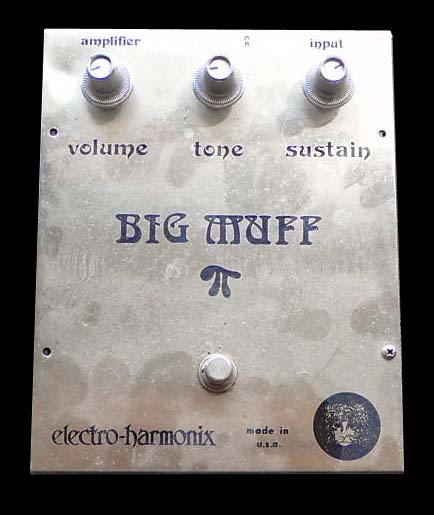
Shown above - Examples of the Marveltone Distortion Sustainer, an OEM version of the V2 Big Muff made for Targ & Dinner of Chicago by Electro-Harmonix. Note the V2 "Ram's Head" Big Muff shown on the bottom right the exact same "reactor tower" shaped knobs as the example on the left. Many Big Muffs were made with these same knobs circa 1973-74, as well as several other E-H pedals. The circuit on the top right is the first version of the "violet" Ram's Head Big Muff circuit. The circuit on the bottom is a nearly identical variant to the violet.
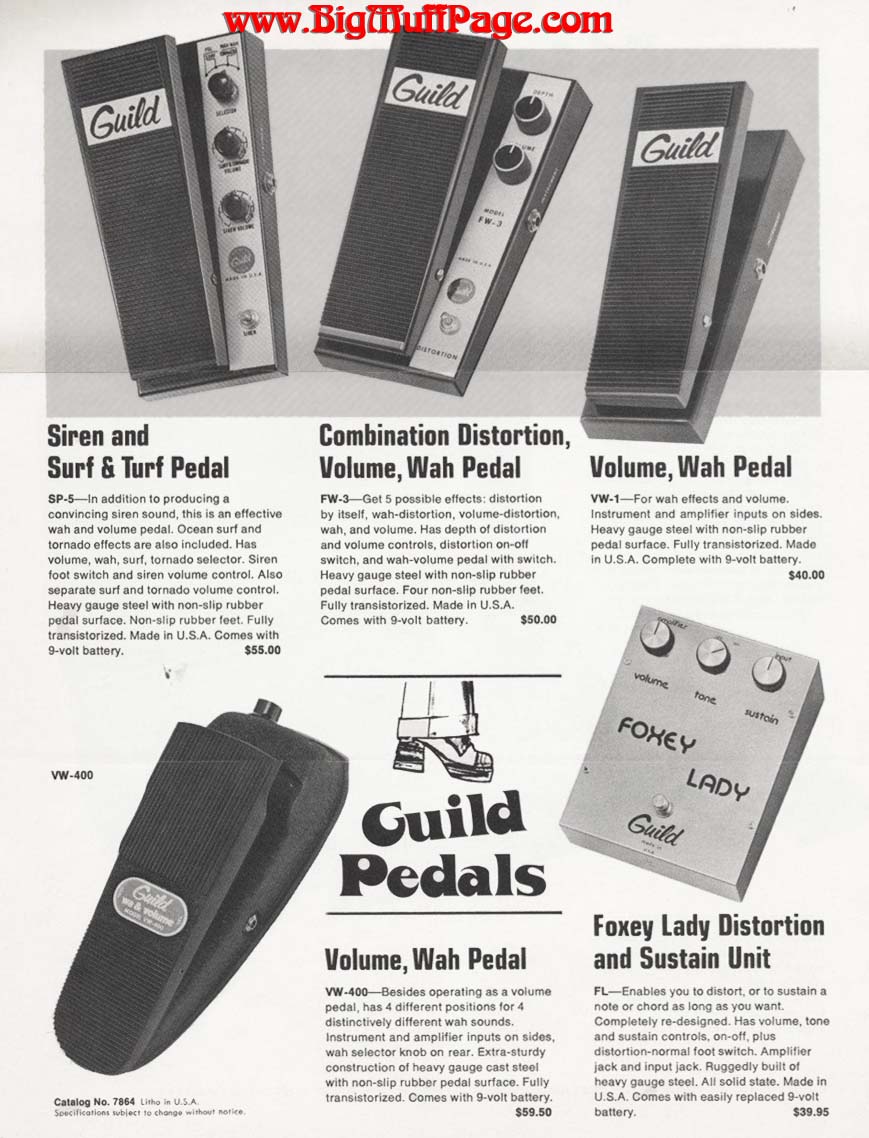
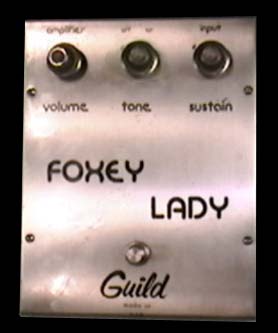

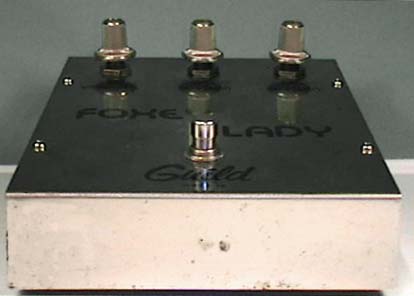

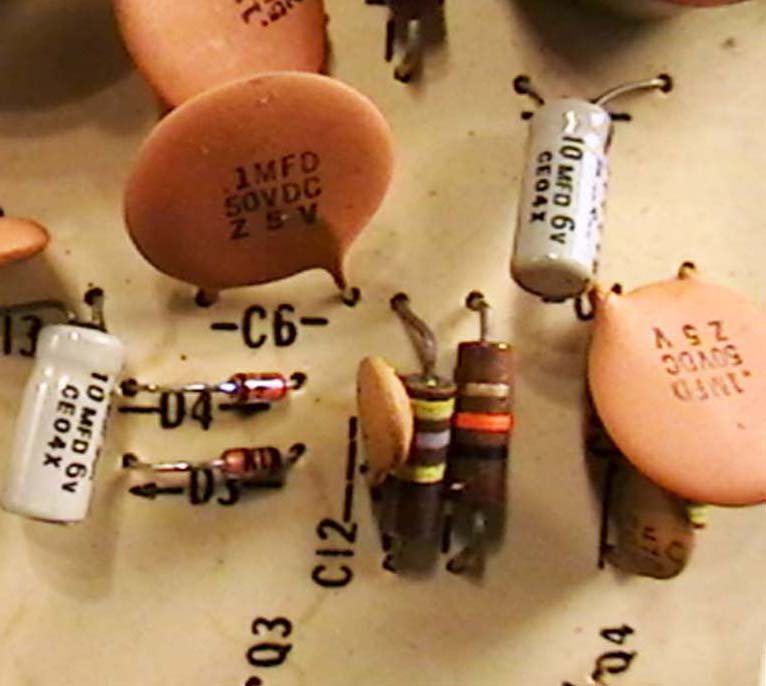
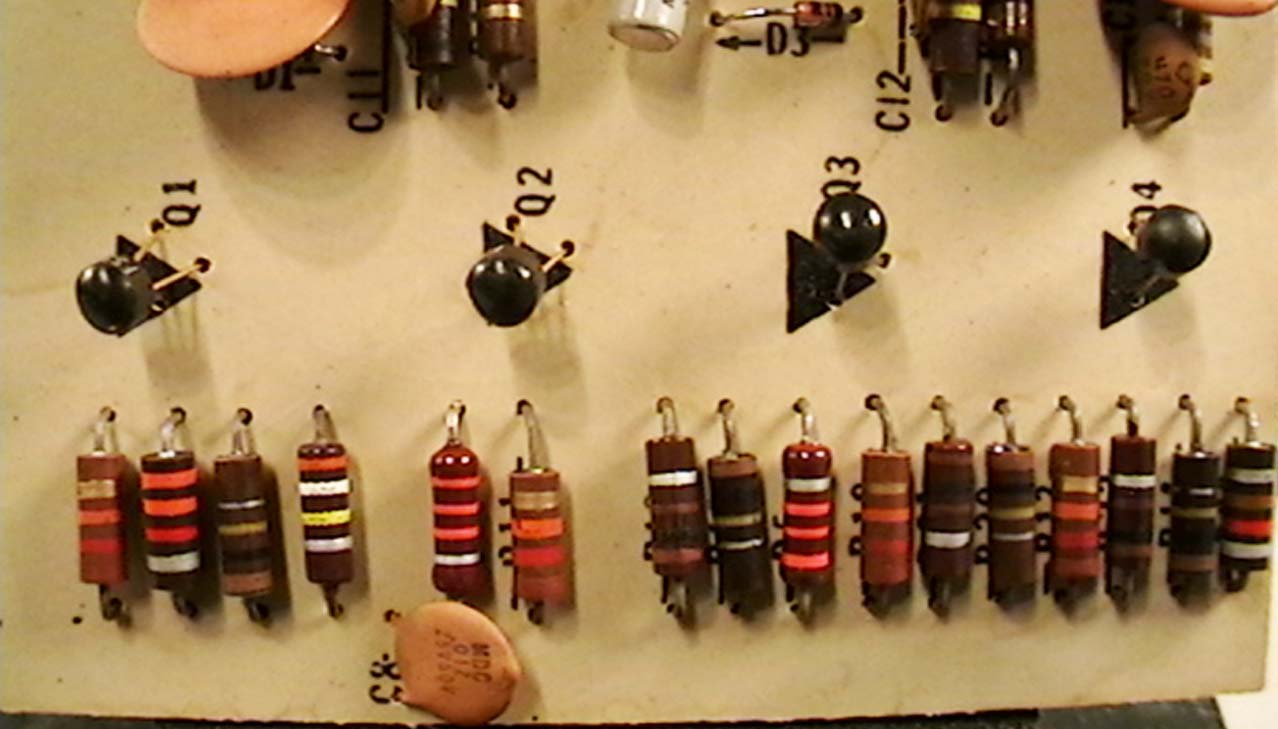
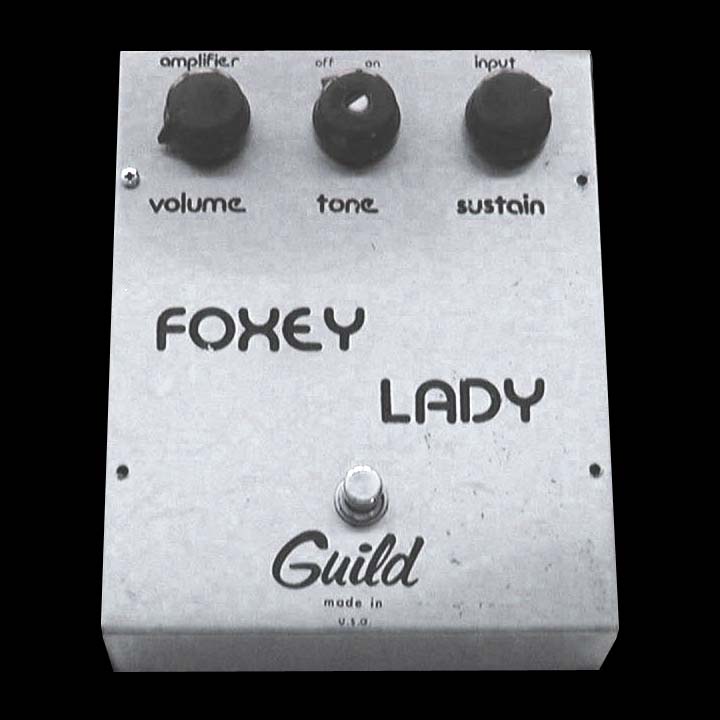
Shown above (left to right) - Guild Foxey Lady advertisement and the Foxey Lady/V2 Big Muff made for Guild by Electro-Harmonix. "Reactor tower" shaped knobs, rubber skid pad on bottom, and circuit are identical to a Big Muff variant made circa 1973-74. Note the 1973-74 era "Ram's Head" Big Muff shown above with the exact same knobs (thanks to AG for the pix).
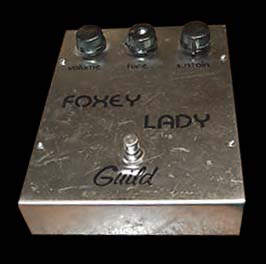
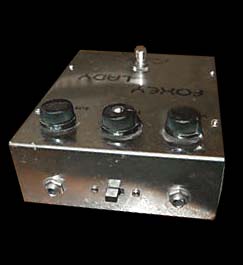
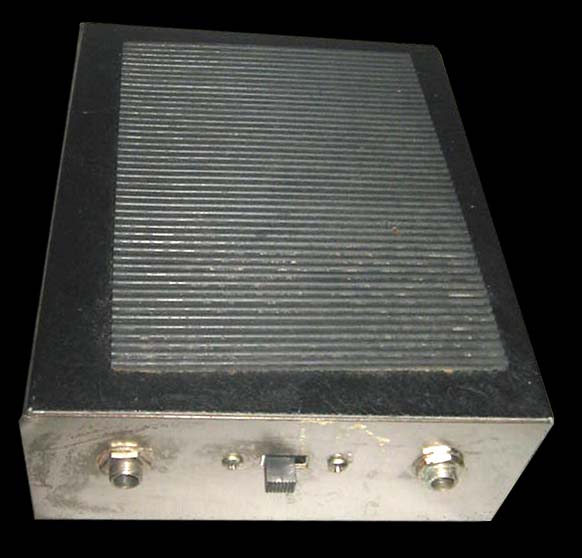
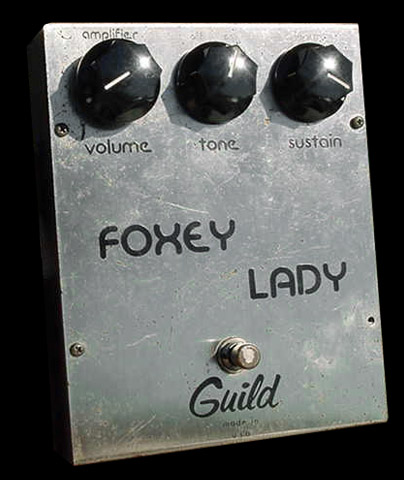
Shown above (left to right) - The Foxey Lady OEM version of the V2 Big Muff made for Guild by Electro-Harmonix circa 1975, with rubber skid pads on bottom. The odd knobs on the Foxey shown on the right are likely after market replacements.
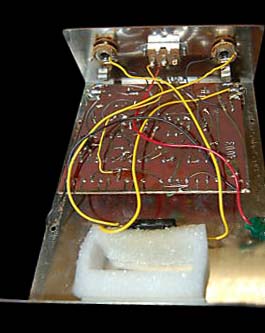
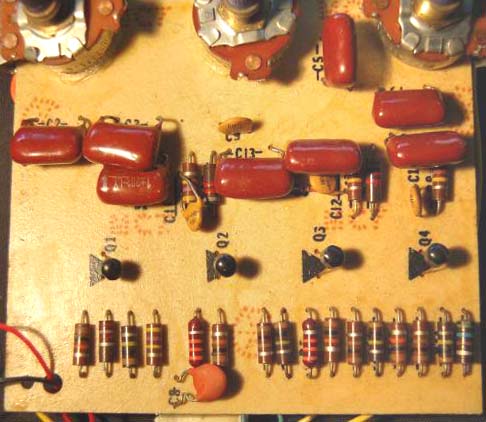
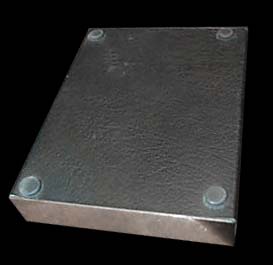
Shown above - Foxey Lady from around 1974 or 1975, after Electro-Harmonix changed the V2 Ram's Head Big Muff skid pad to four rubber feet. This circuit is the "violet" Ram's Head Big Muff circuit circa 1973-74.

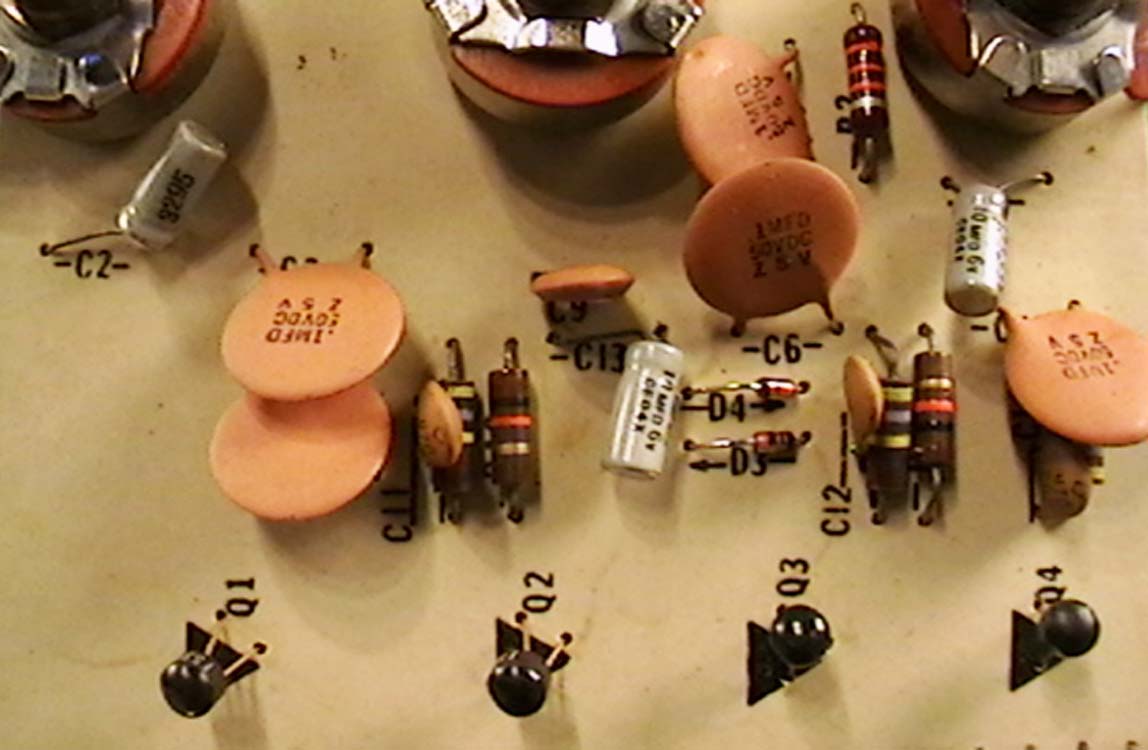
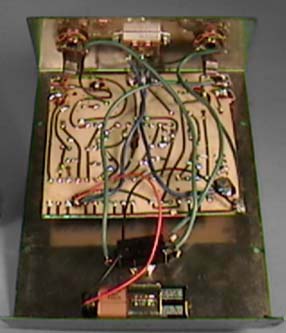
Shown above (left to right) - A Foxey Lady circuit with FS36999 transistors and electrolytic capacitors, including the rubber skid pad on bottom. This "white can" Big Muff circuit variant dates to around 1974-75.
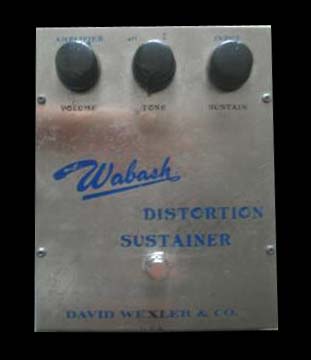
Shown above - The Wabash Distortion Sustainer, an OEM version of the V2 Big muff made for David Wexler & Co of Chicago, Illinois by Electro-Harmonix. The knobs and ink color match the V2 Big Muff made around 1975
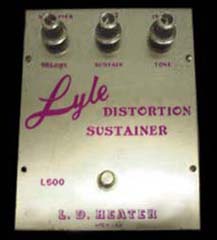
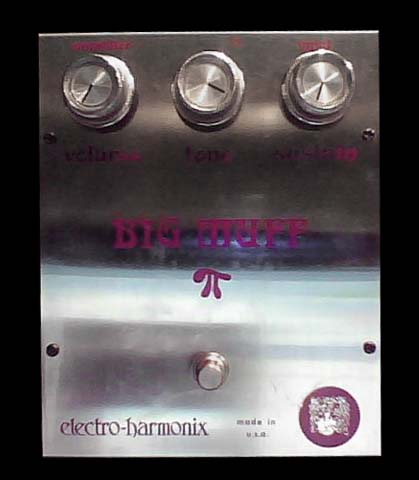
Shown above - The Lyle Distortion Sustainer, an OEM version of the violet V2 Big Muff made for L.D. Heater Music Co. of Portland, Oregon by Electro-Harmonix circa 1973. Some of the violet V2 Big Muffs at the time were made with these same "reactor tower" shaped knobs and purple ink color, as on the examples shown on the right. Note the word OFF is missing from the graphics, indicating that these were all made prior to 1975.
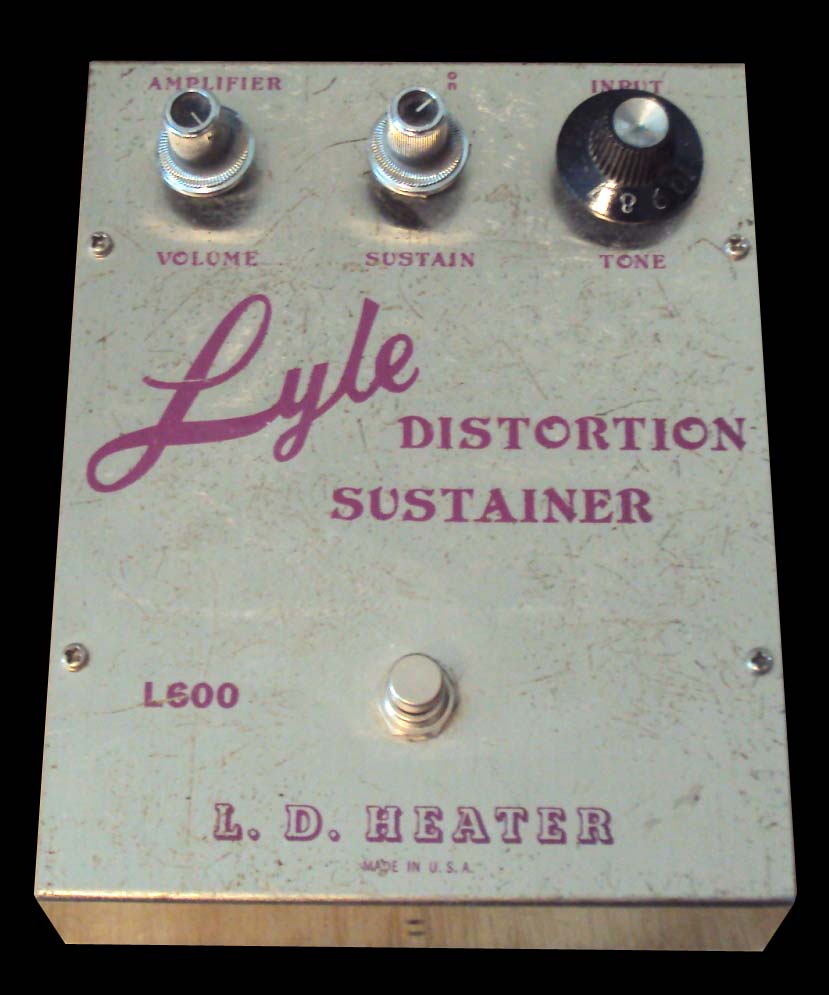
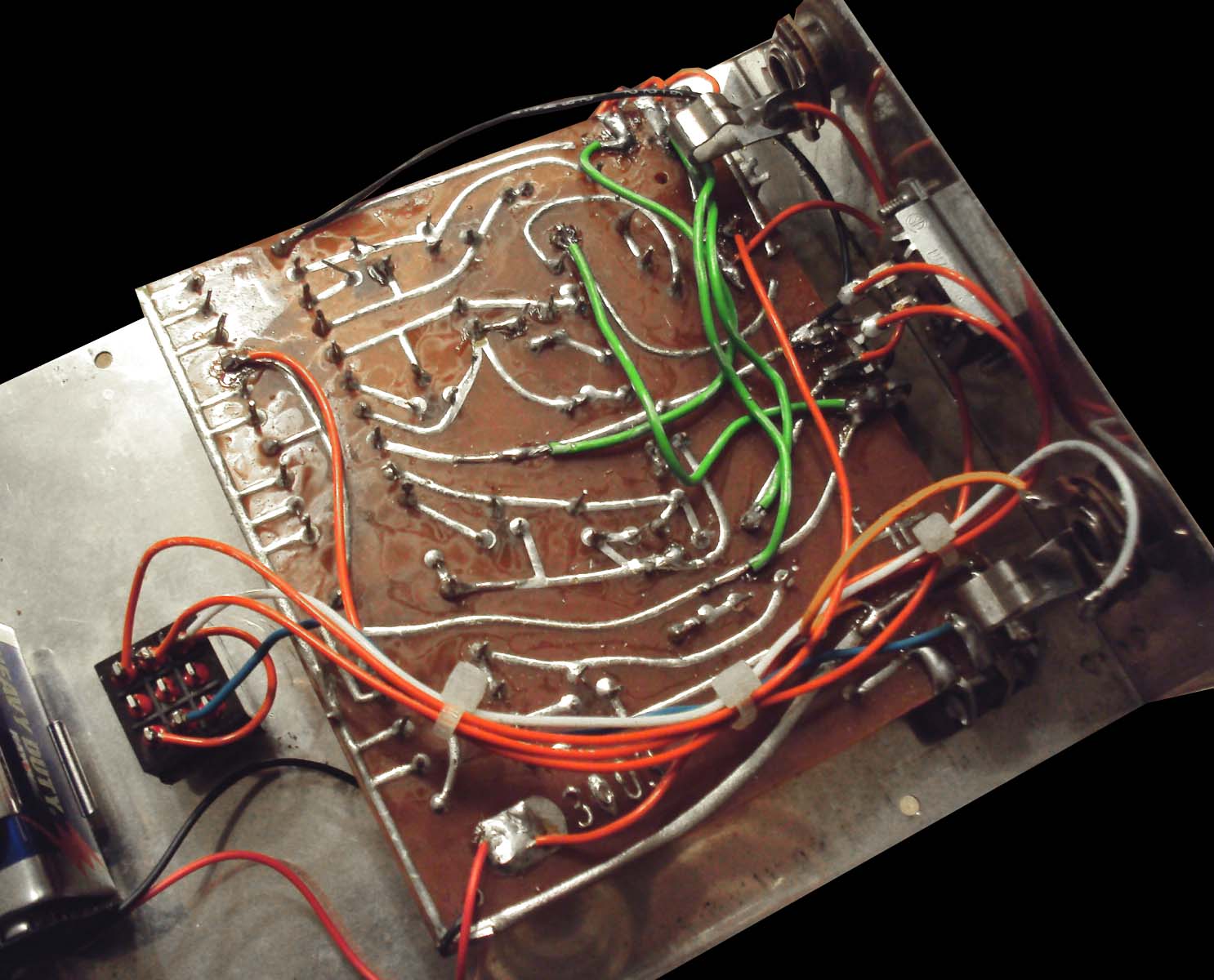
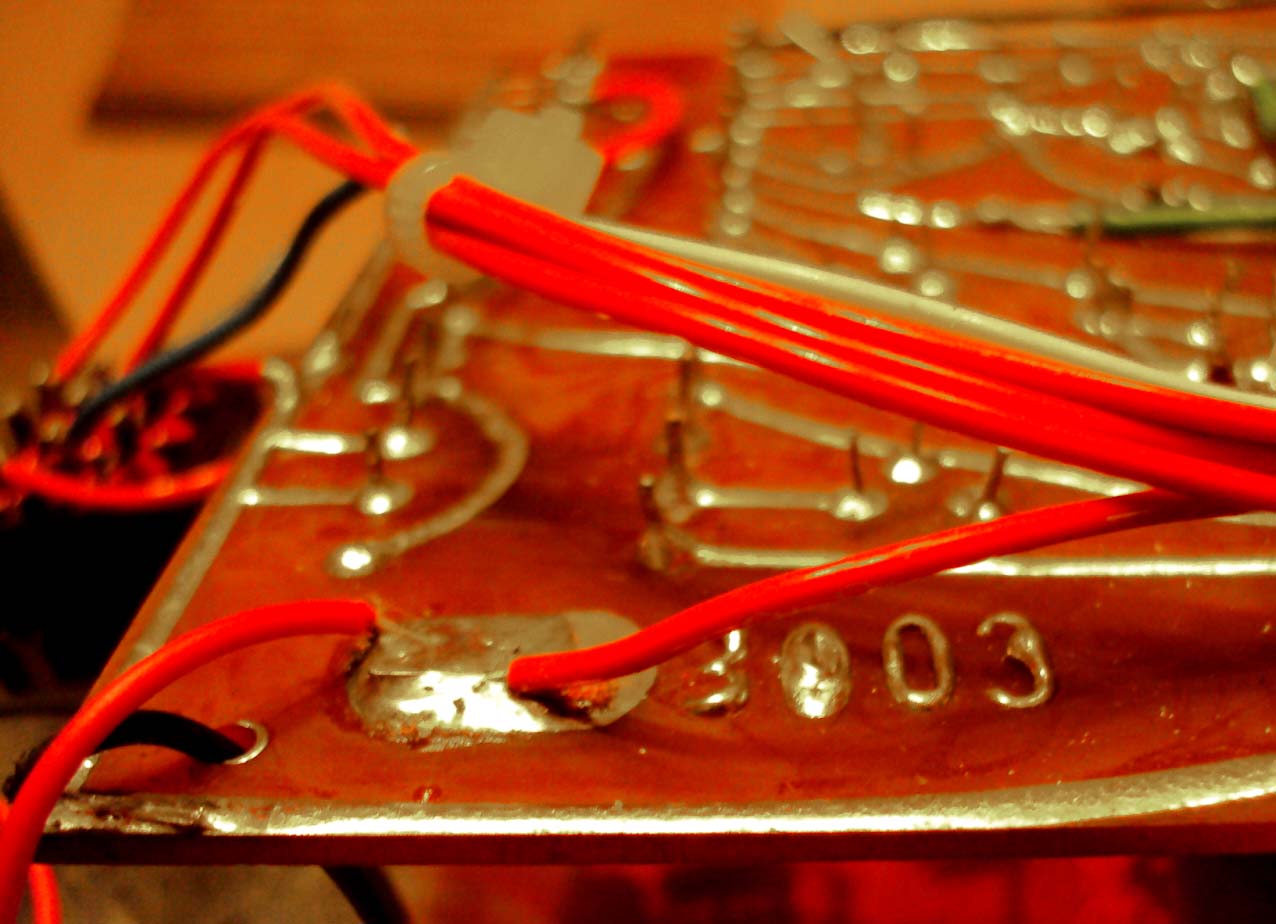
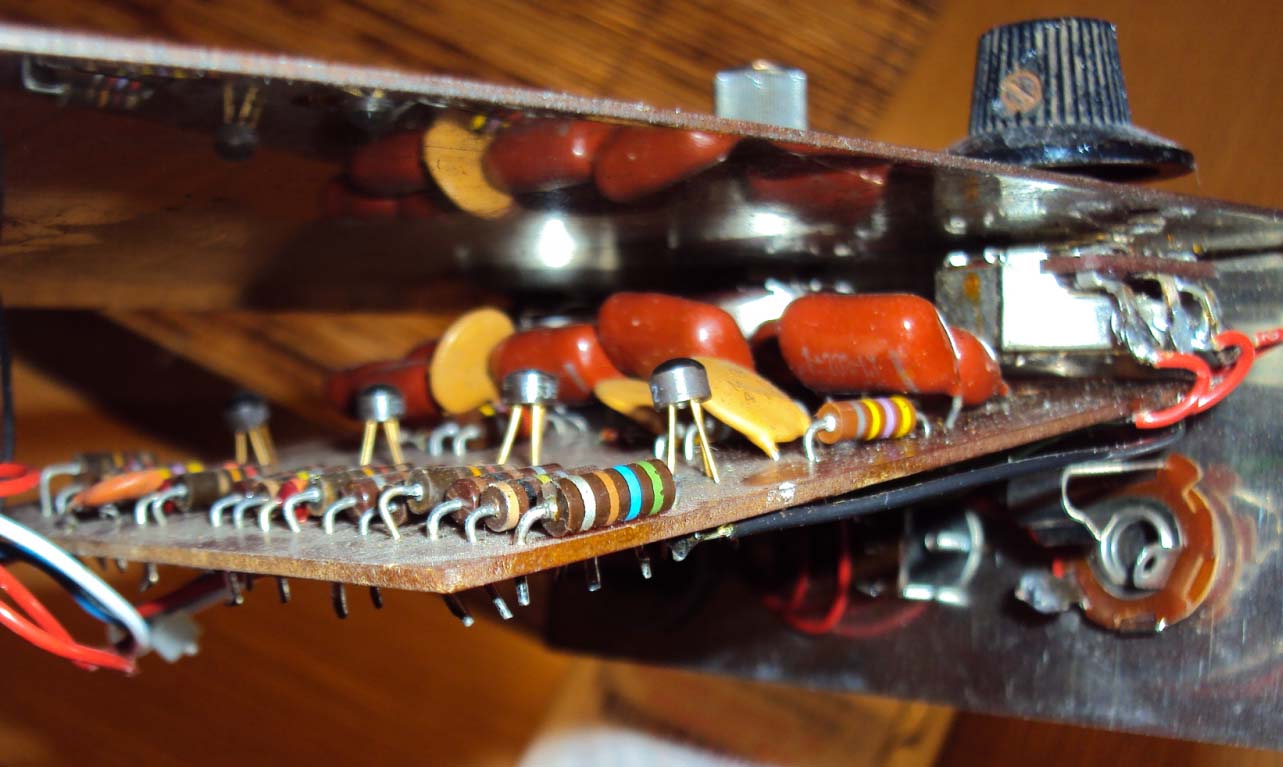
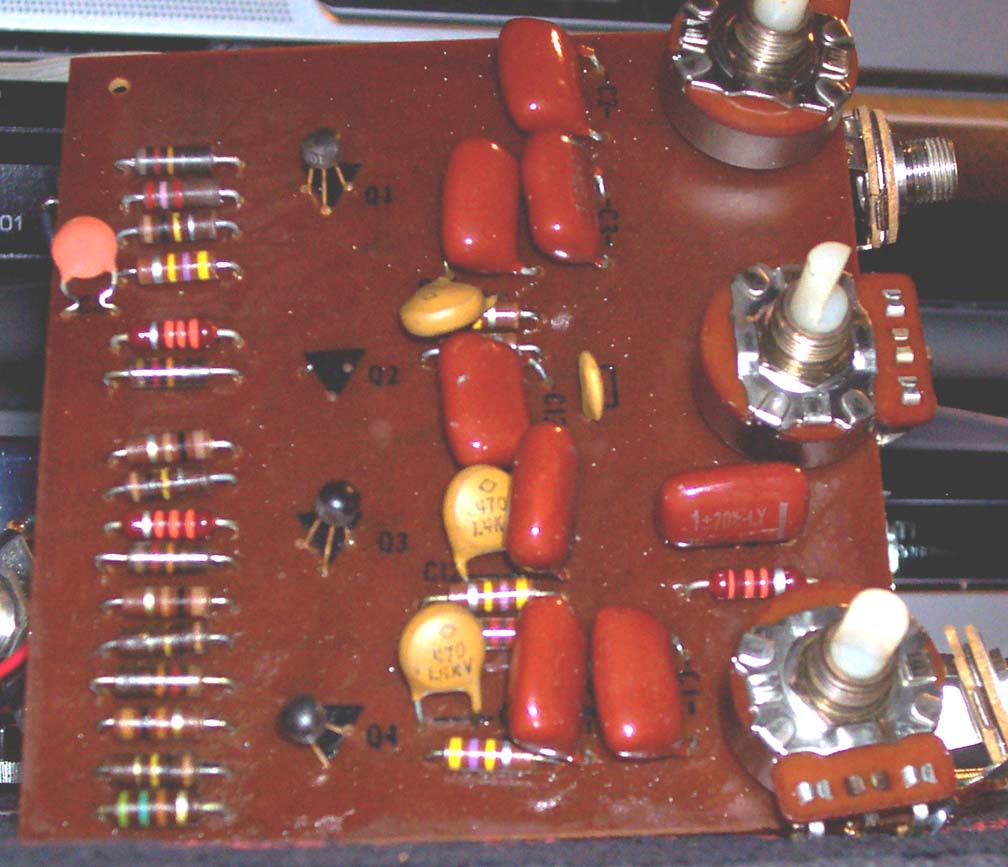
Shown above - Another example of the Lyle Distortion Sustainer with one replacement knob and true bypass switch modification (a big thanks to Gino for the pix). Note that the tone and sustain pots have swapped positions. The pots are dated 1973, and this exact circuit and knobs appear in the violet Big Muffs made circa 1973.
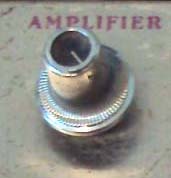
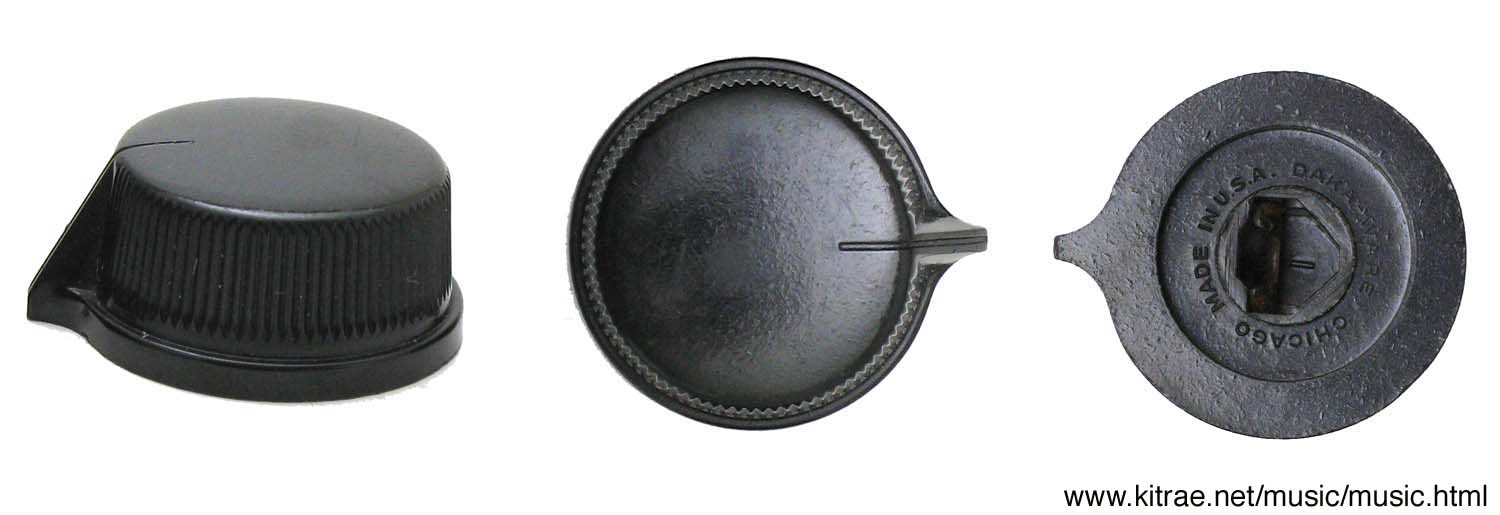
Shown above (left to right) - "Reactor tower" shaped silver knobs that were used in the early to mid 70's on V2 Big Muffs, Marveltone and Lyle OEM versions, as well as many other E-H pedals. Some of these knobs had indicator lines on top (shown above), some with indicator dots, and some had blank tops. On the right are Daka-Ware knobs manufactured by Davies Molding of Chicago. Electro-Harmonix typically used these on later V2 and V3 Big Muffs, and the Foxey Lady OEM version.
CONTINUE - BACK TO THE HISTORY OF THE BIG MUFF PART 1 (Vintage USA)
THE MOGWAI "ROCK ACTION" BIG MUFF
2001
Manufacturer: Electro-Harmonix
Place of Manufacture: Manhattan, New York USA
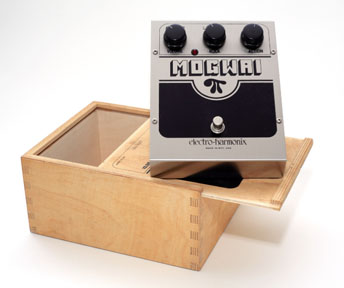
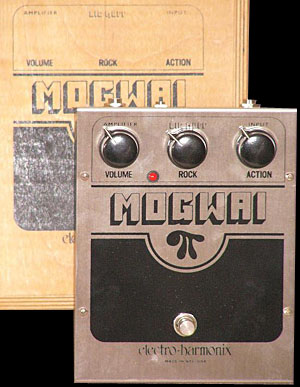
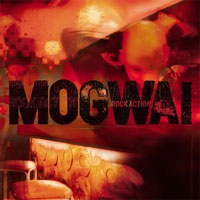
The Scottish band Mogwai were big users of Electro Harmonix pedals and guitarist Stuart Braithwaite uses a V9 Big Muff. In 2001 the bands management contracted E-H to make a limited edition Big Muff for them with custom Mogwai graphics. Reportedly only 100 of these were made for promotional purposes to promote Mogwai's third album, Rock Action, released in April of 2001. The graphics were created by Andy Vella of Vella Design, based on the standard Big Muff graphics. Vella also did the cover art for the album.
The album was recorded and mixed in New York at Tarbox Road Studios, Cassadega, with additional recording at Sorcerer Sound, Manhatten, and Cava Studios, Glasgow. Sorcerer Sound was located in Manhatten, just a few miles south from where Electro-Harmonix manufactured the Big Muff. The album is named after Stooges drummer Scott "Rock Action" Aston. Stooges singer Iggy Pop often referred to Scottas as "Rock" Asheton, or "Rock Action". Scott later changed his legal name to Rock Action.
Some sources on the web say it has a "slightly more extreme sound", indicating the circuit has been altered for this version. In reality it was just the stock USA V9 reissue Big Muff from 2001 with special graphics. That would be the 3003A version of the circuit, which does sound slightly different (less bassy, slightly brighter) from the later 2007 revision.
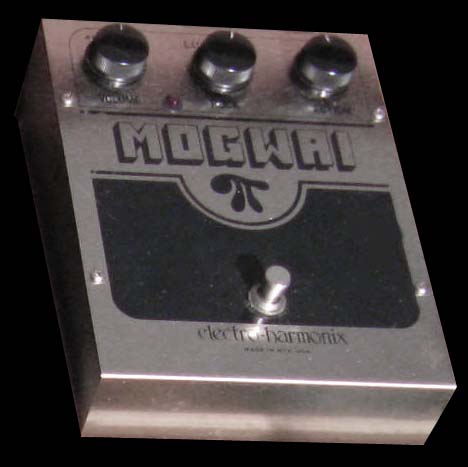
The graphics were all black with MOGWAI used in place of the BIG MUFF name, and TONE SUSTAIN were replaced with ROCK ACTION. The knobs used were the Davies Molding Daka-Ware style reissue knobs with white indicator line, used on the V9 Big Muff in 2000. The Mogwai Big Muff shipped in the wood crate used for those early Big Muff reissues, with the same custom Mogwai graphics as used on the pedal. These are extremely rare.
Shown above - The Mogwai "ROCK ACTION" Big Muff, a 100 piece limited edition special order of the USA reissue Big Muff by the Scottish band Mogwai (thanks to Jorg for the left pic) used to promote their third album, Rock Action.
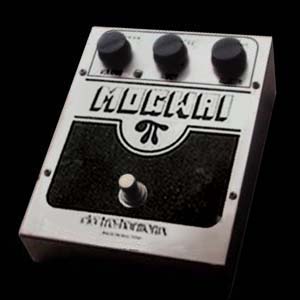
See DiscoFreq's Effects Database for a thorough listing of all the Big Muff clones and variants throughout the years.
HISTORY OF THE BIG MUFF PART 2 (Russian)
HISTORY OF THE BIG MUFF PART 3 (modern USA)
This page is not authorized, affiliated, or associated with Electro Harmonix in any way
Website and contents ©2007 and ©2010 Kit Rae. All rights reserved. Linking to this website is allowed, but copying the text content is strictly prohibited without prior authorization. No part of this work may be reproduced, stored in a retrieval system, or transmitted in any other form, or by any means, electronic, mechanical, photocopying, recording, computer networking, or otherwise without prior permission in writing from the copyright holder(s).
Kit’s Secret Guitar, Gear, and Music Page
Guitar stuff, gear stuff, soundclips, videos, Gilmour/Pink Floyd stuff, photos and other goodies.
Contact: nasnandos @ kitrae.net (remove spaces around @ to email)
Copyright Kit Rae.













VISIT MY SWORDS, KNIVES and FANTASY ART WEBSITE www.kitrae.net