THE BIG MUFF π - A HISTORY OF ALL VERSIONS - Part 1
Click on any Big Muff in the image below to go directly to that section
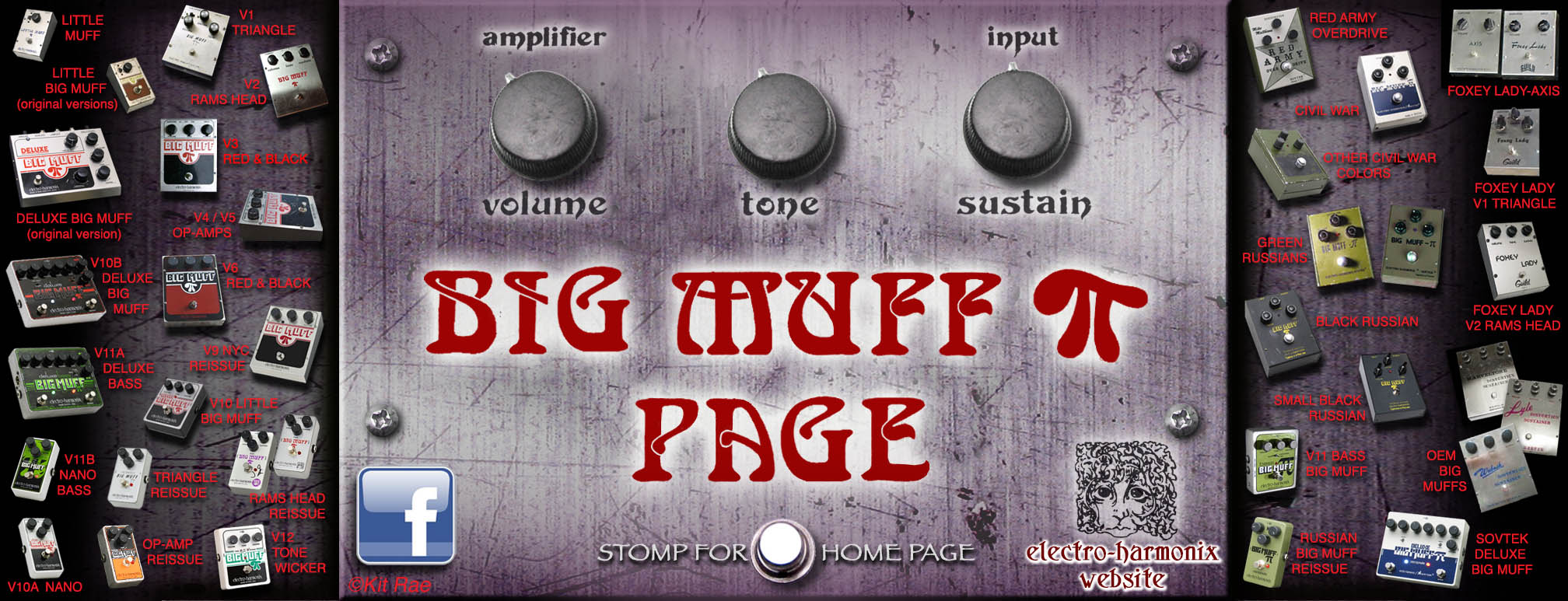
NOTE: Last update March 2020. This website is constantly updated as new information becomes available. Version, Edition, and Revision numbers listed here are not actual Electro-Harmonix identifiers. They are my categorizations, for identification purposes only. Permission required to repost any information from this site in any ebay listing. Website and contents ©Kit Rae.

THE BIG MUFF STORY BEGINS - MIKE MATTHEWS and JIMI HENDRIX
The Big Muff tale starts in the early 1960s with Mike Matthews, a college student studying electrical engineering at Cornell University in New York. Matthews was also a keyboardist playing in a rock band at the time, and for side work he was a part time band promoter. He worked with acts that frequented the New York City area, such as the Byrds, the Isley Brothers, Lovin' Spoonful, The Mamas and the Papas, the Rascals, and Chuck Berry. Matthews was considered a good keyboard player and he has claimed the Isley Brothers actually asked him to quit school and join them, but Mike chose to stay in school. One artist Matthews promoted at the time was Jimmy James, a budding guitarist with the Curtis Knight and the Squires band. He became friends with Jimmy, who would later change his name to Jimi Hendrix. Matthews has claimed that Jimi wanted to form a band with him at the time. Some sources have said that Matthews himself was influential in Hendrix's decision to leave the Squires and start singing, and Matthews own words indicate this, but it may also be fair to say that Matthews was infuenced in the business direction he would take by Hendrix's guitar sound, and the other fuzz tone guitar sounds that were becoming more and more popular in Rock and Roll at the time. Matthews graduated from Cornell with a five year degree in 1965, the year Keith Richards plugged his guitar into a Gibson Maestro Fuzz-Tone pedal and recorded the Rolling Stones #1 hit (I Can't Get No) Satisfaction. Matthews got a job working for IBM in sales. His preference was to play keyboards in a band full time since rock and roll was his love, but he was married to a wife who felt the financial security of a steady job was more important. Matthews began thinking of other ways he could make money on the side to allow him to pursue his passion.
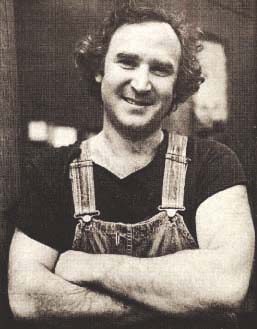
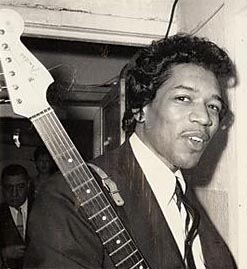
Shown above - Mike Matthews and Jimmy James, who would later be known as Jimi Hendrix
RE-BRANDING FUZZRITES, the GUILD FOXEY LADY and the ELECTRO-HARMONIX AXIS
Circa 1967
Fuzz tone guitar was a hot commodity at this time, and the market for fuzz pedals was growing rapidly! The first Rock and Roll fuzz tones came out of America in 1962 on the Ventures song 2000 Pound Bee, using a hand made Red Rhodes fuzz pedal, and Gibson was the first to the market with a production fuzz pedal shortly after that in 1962, the Maestro Fuzz-Tone (FZ-1). It wasn't until the 1964 that Dave Davies of the Kinks popularized fuzz tone in the United Kingdom with You Really Got Me. Around 1965 Gary Hurst reworked the Maestro Fuzz-Tone into the Tone Bender fuzz pedal, and it was featured on the Beatles' Rubber Soul album the same year. The Tone Bender was being produced by Sola Sound in London, and sparked the UK's entry into the fuzz pedal market. Sola later made a Mark II version for Vox, and yet another version for Marshall called the Supa Fuzz. In America the guitar company Mosrite brought the Ed Sanner designed FUZZ-rite pedal to the market in 1966. Mosrite also repackaged the same pedal for Guild around 1967, called the Foxey Lady fuzz. Also in 1966, Vox made their own version of the Tone Bender in Italy and Arbiter Electronics Ltd. in the U.K. copied a Tone Bender circuit for their Fuzz Face pedal. Jimi Hendrix was the poster boy for this pedal, making it hugely popular. Other popular fuzz users were Jeff Beck, Pete Townshend, and Jimmy Page (See the fuzz pedal timeline here for a detailed list of nearly all the fuzz pedals on the market at this time).
A Few Notes Notes on Circuit Design - There is much debate on how much actual 'designing' went on in the creation of these early fuzz circuits. It should be noted that basic amplifier circuits appeared in Mullard, Valvo, GE, and Phillips application books in the 1950's, '60's and '70's, as well as radio and electronics magazines. Those resources offered examples of audio amplifier circuits, diode clipping circuits, tone control circuits - practically everything found in modern fuzz/distortion/overdrive pedals. Electronics engineers at the time often used these references, and many of those ideas were simply considered textbook examples of common electronics principles. Combinations of these pre existing circuit stages were cobbled together by engineers and modified to work as a whole circuits. The job was often to get what the boss or the client wanted as quickly and as inexpensive to make as possible. That was how most circuit design was accomplished back then, and it is not much different today. I would speculate that 90% of all pedal circuit design is based on ideas that previously existed. When a person is credited as the "designer" here, it is in reference to the person most directly responsible for putting together the end circuit design in the pedal, regardless of whether or not it was based on something that existed previously.
Utilizing his electrical engineering skills, Mike Matthews worked on several unique but unsuccessful inventions on the side during this time at IBM. His big break came when he was given a contract to take over production of the Guild two-transistor fuzz pedal called the Foxey Lady. Guild, based in Rhode Island at the time, was primarily a large guitar maker but they also had other related products made under their brand name. It was Guild founder Alfred Drunge's idea to name their fuzz pedal the Foxey Lady, capitalizing on the popularity of Jimi Hendrix's fuzz tone, which had become hugely popular since the release of Are You Experienced in 1967. Mosrite, another guitar company, had previously been making the Foxey Lady pedals for Guild. That version of the Foxey Lady was actually the same fuzz pedal as Mosrite's own FUZZ-rite pedal, with a Germanium transistor circuit designed by Ed Sanner. It was simply re-branded and re-boxed for Guild. Mosrite made a small quantity of these until they went bankrupt, then at a NAMM show around 1967 Guild contracted Mike Matthews to take over production.
Matthews partnered with William (Bill) Berko to make the Foxy Lady pedals. Berko was already making fuzz pedals one at a time in his audio amp repair shop on 48th Street called ABCO Sound. This new Foxy Lady was essentially the Ed Sanner designed FUZZ-rite circuit with a few mods by Berko. Matthews soon realized Berko was not doing much work, so he went solo to find another manufacturer. With $1000 of his own money he contracted Aul Instruments in Long Island City to make the pedals. This extremely rare version of the Foxey Lady was housed in a simple, gray folded sheet metal box, with two control knobs. Every week Matthews would deliver a few hundred of them to Guild and get paid.
Guild had good success distributing the pedal and in October 1968 Matthews founded his own New York company, Electro-Harmonix (E-H), and began making Foxey Lady pedals himself. This new version of the two-knob FUZZ-rite circuit used Silicon transistors rather than Germanium, and included a few extra parts for transistor biasing. This was the technically the third version of the Foxey Lady, and it was housed in a thinner sheet metal box with a more stylish Foxey Lady font. E-H also later marketed the pedal under the name Axis Fuzztone, one of the first E-H branded products. It was the exact same circuit and enclosure as the Foxey Lady, just different graphics and knobs. The enclosure box was the same size as the one that would later become the first Big Muff Pi. Interestingly, some early point-to-point wired versions of the E-H Axis pedal may have used the Muff Fuzz circuit with a Big Muff hi-pass/low-pass tone control design. I have seen photos of one example with 1970 pot dates that includes it, shown on the wonderful Tone Machines blog (thanks to the pedal owner, Jerms), and another collector claims to have owned an identical one.
The Axis name was inspired by Jimi Hendrix, taken from his 1967 Axis:Bold As Love album title. Hendrix actually used a pedal at the time that would later be called the Axis, but that was a custom pedal designed and made by his guitar tech, Roger Mayer, not the E-H pedal. The E-H made Axis/Foxey Lady pedals are very rare as I have been told under 3000 of both versions were made, with the Axis being the rarer of the two. They shipped in a white corrugated cardboard box.
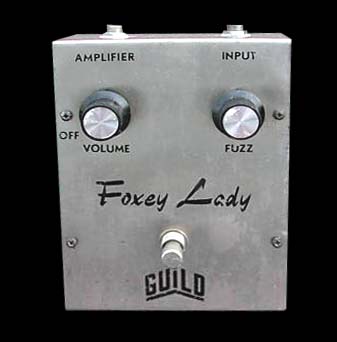
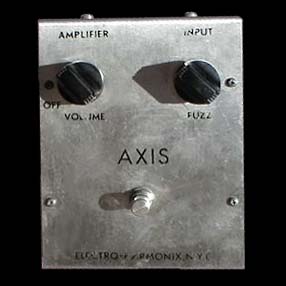
Shown above - The Electro-Harmonix made version of the Guild Foxey Lady from 1968, and the Electro-Harmonix made Axis fuzz pedal, a rebranding of the Foxey Lady. The circuit was a modified version of the Mosrite Fuzz-rite.

 ...
... ...
... ...
... 
THE “TRIANGLE” BIG MUFF π - VERSION 1
1970-1973 (Pots date as early as 1966 and typically as late as 1972, though some have been seen dated 1973)
Circuit Designer: Bob Myer (with some modifications by Mike Matthews)
Circuit Variants: Approximately 17
Edition Versions: 2 - First edition on perf board manufactured circa late 1969, second edition with separate on/off switch in early 1970
True Bypass: No
Power Supply: Current draw approximately 3 mA. 9V battery only, or use a 9V battery snap adapter like the 1 Spot CBAT and connect to a standard negative center power supply like the Boss PSA120T, 120S, or 1 Spot 9V AC Adapter. See POWER section below for important adaptor and daisy chaining power requirements.
Enclosure Size: 6" x 4 1/2" x 1 3/8"(short end) x 2"(long end) / 151mm x 113mm x 35mm(short end) x 50mm(long end)
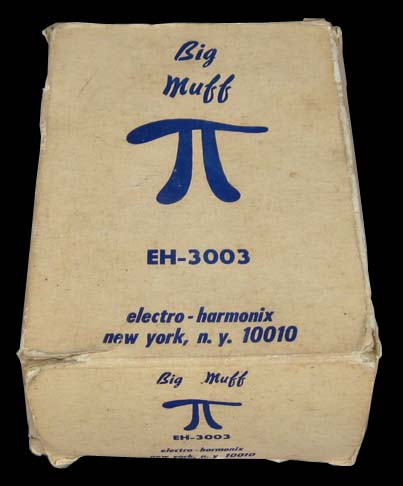
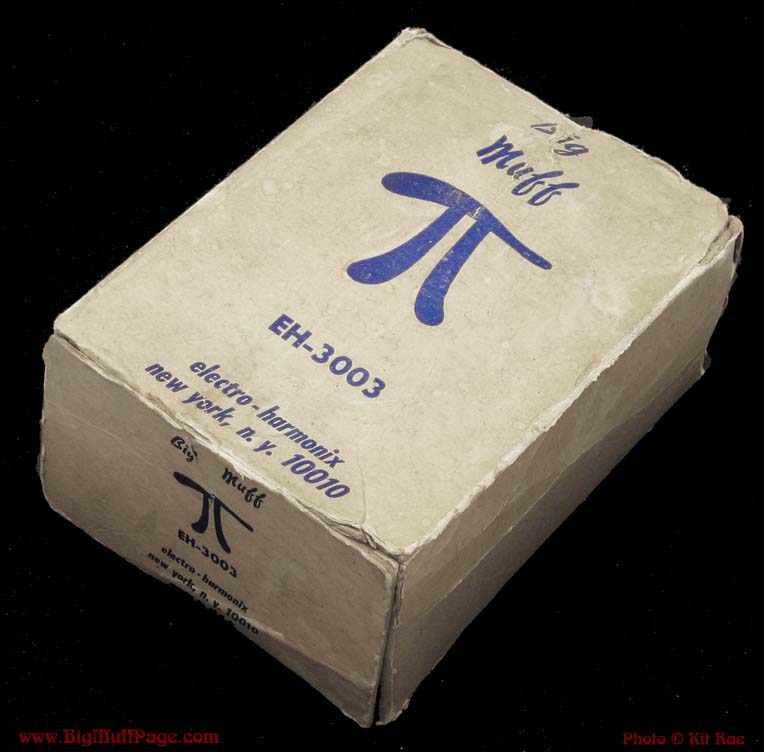
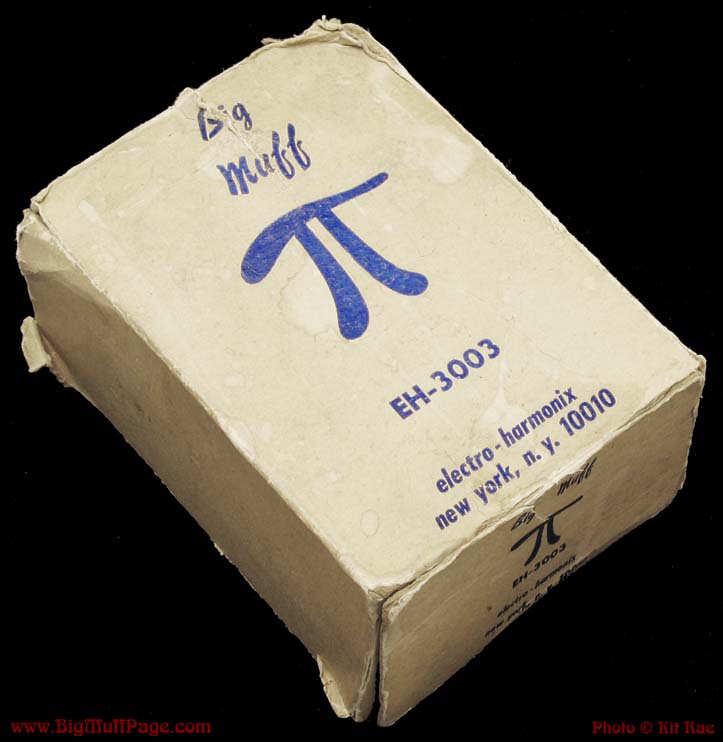
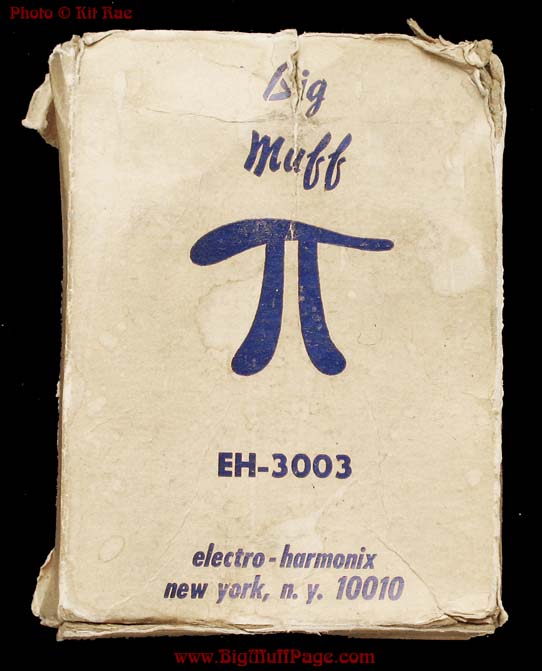
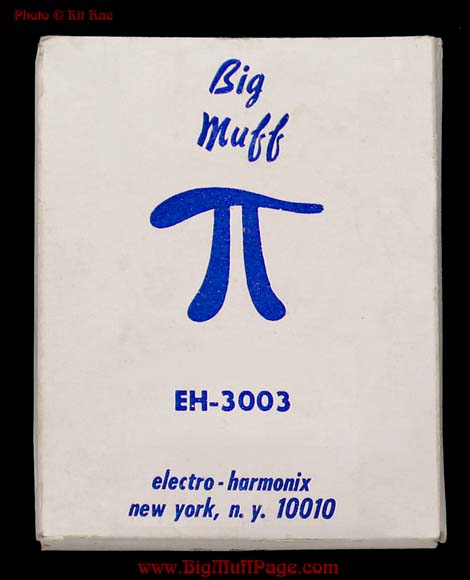
Packaging: White corrugated cardboard box with blue printing
Place of Manufacture: The first address was 1204 Broadway, New York, NY, 10001. EHX later moved to 15 West 26th Street sometime before 1971 or 1972
Replacement Parts
In 1968 Mike Matthew's was introduced by his colleages at IBM to Bell Labs inventor Robert (Bob) Myer (incorrectly spelled Meyer or Mayer in some other sources - not to be confused with Roger Mayer, another effects pedal designer at the time). Myer had been at Bell labs for 12 years, mostly working on transistor circuits for military applications. He did consulting and design work on the side and created circuits for several other companies before meeting Matthews. The two began work on a new stomp box circuit that would compete with the other popular fuzz guitar tones of the mid to late sixties. The pedal, which was originally supposed to be a “distortion free sustainer”, was to be released under the E-H label.
Myer created a prototype pedal but had to add another pre-amp booster stage before it because he over-estimated the output voltage of the guitar. Myer was not a musician. Matthews was, but his instrument was the keyboard. To test the pedal, Matthews would plug a guitar into an amplifier and simply pluck the guitar strings. The sustainer, which would eventually become the E-H Black Finger compressor, was built to Bell labs standards and was very complicated and expensive. It still needed work, but Mike did like the small volume boosting pre-amp Myer had built and the overdriven signal it sent to the amp. He wanted to make a product out of it, and paid Myer $500 cash for the design. Myer has said he simply "slapped together" the booster, which became the simple, single transistor, LPB-1 (Linear Power Booster). Even though similar amplifier circuit designs existed previously, this is considered one of the first guitar-amp overdrive pedals made in America. Matthews sold this first E-H branded product by mail order in 1968 and soon quit IBM to focus exclusively on his own company. The LPB-1 ushered in the age of pre-amp overdive distortion, giving makers the idea to add multiple gain stage pre-amps inside their amplifiers. Hartley Peavey, owner of Peavey Electonics Corp., was one of the first makers to incorporate this into one of his amplifiers. Matthews took the profits from the LPB-1 and reinvested them back into the company by paying Myer for more design work. Myer understood now that Matthew's only needed simple circuits that could be made inexpensively, rather than the more complex and expensive circuits he had been used to building under Bell Labs standards.
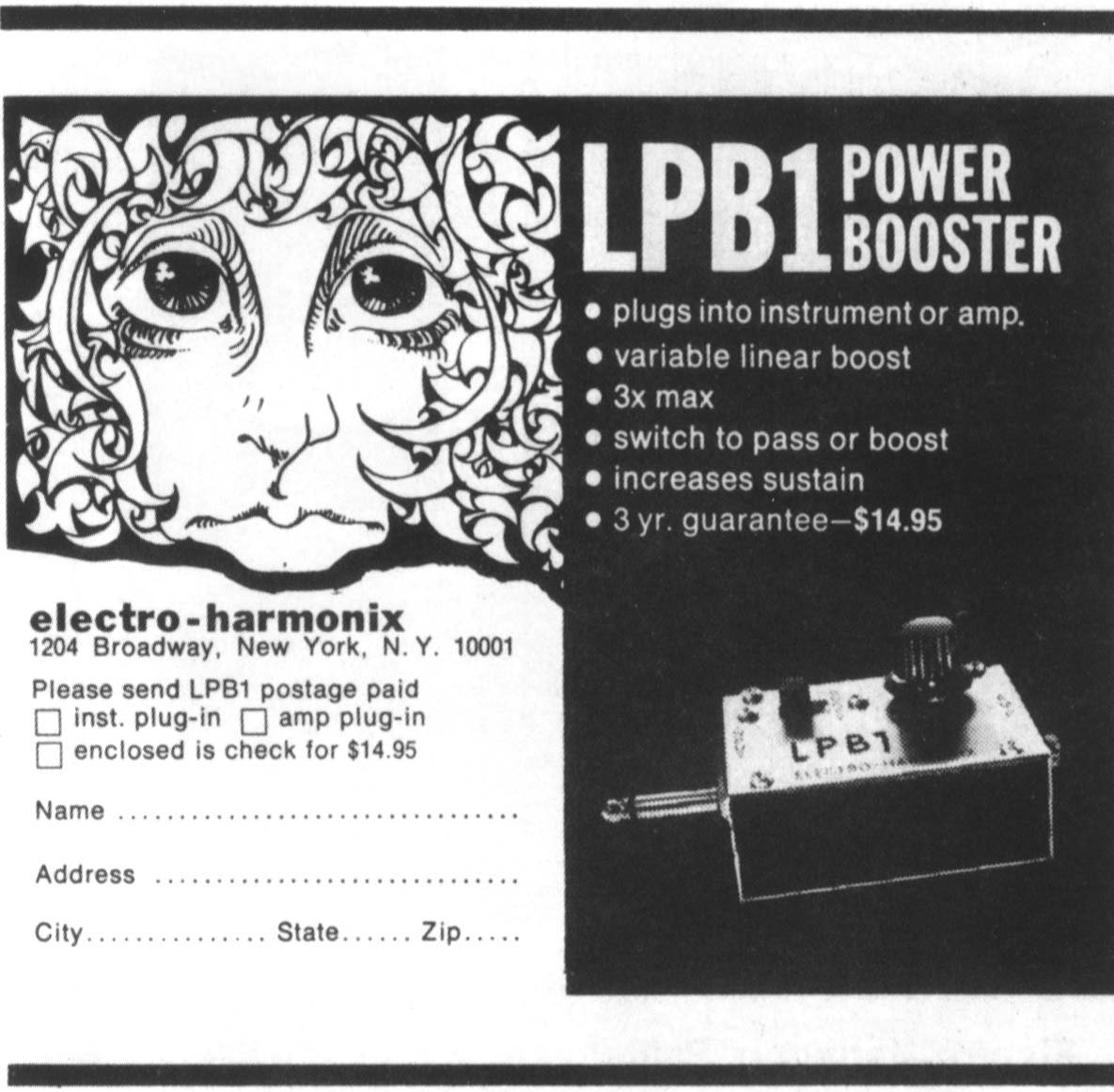
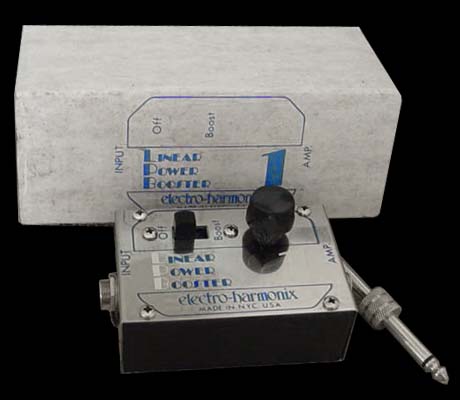
Shown above - The first Electro-Harmonix pedal from 1968, the LPB1 Linear Power Booster, which was originally a pre-amp boost for the E-H Black Finger compressor prototype
The mail order selling of the LPB-1 at full list price ($14.95) by E-H did not make much money, but it helped pay for the advertising costs which spread the E-H name around and created a demand for the product. E-H sold to the retail stores/dealers at a discounted price, so they could still make their margin, and that's where the bulk of the pedals were sold. A host of other Myer designed E-H products followed in 1969, each fitting into the same LPB-1 box. One of these was the Muff Fuzz, an analog two transistor fuzz tone pedal. Matthews named it a “muff” because in his words it had a “funky, soft, muffled sound”.
To follow the LPB-1 Matthews wanted to make a three knob distortion unit in a bigger enclosure, one that would have a lot of sustain. Bob Myer was again asked to work on this new design. He assembled a four stage, silicon transistor circuit, much different than the Muff Fuzz, or any other fuzz circuit around at the time, and with a much different sound. Two transistors took the role of input and output amplifiers and two handled the distortion clipping stages. This circuit, based on common multi stage amplifier and clipping circuit designs, rolled off the high harmonics and harshness of the distortion to create a very smooth sound via soft-clipping diodes. It had a unique distorted fuzz tone with a hint of an octave buzzing just under the surface. The tone control was also unique. The signal split apart into high pass and a low pass filters, which were then blended back together with a potentiometer. One end of the pot rotation was mostly low pass signal and the other end was mostly high pass. The blend design lost some bandwidth and gain, creating the trademark mid range notch, or "scooped mids" the Big Muff is so well known for. The output stage then recovered the gain lost in the tone stage. As noted above, this same tone control also appears to have been used in some early point-to-point wired versions of the E-H Axis pedal.
Matthews spent some time refining the electronics by trying different resistors and capacitor values to get the perfect sound for this unit. And perfection is what he got. This was the first Big Muff Pi. When compared with all of the versions that would follow, many consider those early the best sounding Big Muff ever made. That claim is a bit misleading however, as the chosen component values for the circuit would constantly change over and over throughout the years, making not just one Big Muff Pi tone, but several variations.
"The Big Muff was designed after analyzing the distortion units in use at that time. It is one way of getting sustain with acceptable distortion using diodes as soft limiters. I never thought at the time it would become so popular. It was not designed to Bell Labs standards, but I knew then what Mike wanted. Low cost and easy to build. At that time the Fairchild company had line of inexpensive plastic transistors that I was using at the (Bell) labs. I believe those are what I used in the first design (Ed - those were in fact Fairchild 2N5133 transistors). However I think the other component values had a much larger effect on the sound. The Big Muff generates harmonics of the input signal which are filtered by the circuit design and produce the differences in the sound."
-Bob Myer in 2010"When I got the prototype from Bob, I loved the long sustain. This was done by cascading the circuit into additional sections, each one clipped by twin diodes. However, when you clip, the tone can be a bit raspy...so I spent a couple of days changing capacitors to roll off distortion in the highs, and eventually found that the best long sustaining tone that was a "sweet violin like sound" was done by having three capacitors in different parts of the circuit rolling off the rasp. We plunged into production and I brought the very first units up to Henry, the boss at Manny’s Music Store on 48th Street, NYC. About a week later, I stopped by at Manny’s to buy some cables, and Henry yelled out to me 'Hey Mike. I sold one of those new Big Muffs to Jimi Hendrix'."
-Mike Matthews in 2007
Since this was in a larger enclosure, and was a bigger sounding pedal than the Muff Fuzz, Matthews simply added the word 'Big' to the name. It was model number EH-3003, a circuit designation that would last through many versions. This Version 1 Big Muff was released in 1970 (possibly late 1969) and is now well known as the "Triangle" Big Muff, so nicknamed for its triangular knob layout. E-H was selling around 3000 units a month, and it became their best seller. The list price was $39.95, but it could found for $30-35 retail, according to accounts from a few original owners. The Big Muff was also supposedly sold in a less expensive kit version for $26.95 that you could assemble yourself.
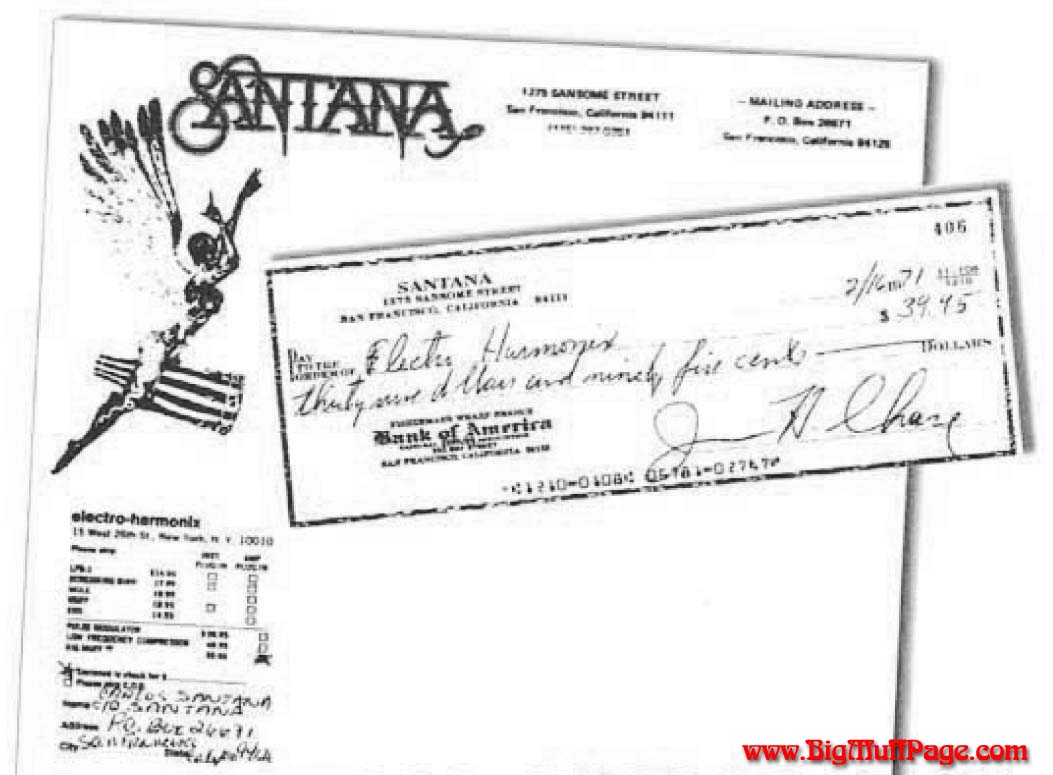
Carlos Santana purchased one in February 1971 and John Lennon got his in August 1971 in New York. Steve Howe of Yes recorded with one in 1971, and Robert Fripp of King Crimson was also recording with one (in the Foxey lady enclosure) in 1971. One of the earliest documented recording of the Triangle Big Muff was by guitarist Tony Peluso, who recorded the solos for The Carpenters hit Goodbye to Love in 1972 with the Big Muff, using a Gibson guitar recorded directly into the recording board, with no amplifier. A very rocking solo for the time, and very heavy for the Carpenters, the use of the Big Muff in this song led the way for the rock and roll power ballad. In 1973 the funk/soul music scene was hammered with the famous Big Muff solo from the Isley Brothers hit, (Who's) That Lady, played to perfection by Ernie Isley. It was recorded directly into the mixing board with a Strat, Roger Mayer Octavia, and V1 Big Muff.
1971- THE FIRST PRODUCTION YEAR? - Most sources state (at the time this was written in 2006) the Triangle Big Muff went into production in 1971. Mike Matthews has stated that he personally hand wired a few thousand of the very first production Big Muffs and that he still has a copy of an order for a Triangle Big Muff he sold to Carlos Santana in 1971 (see scan below). E-H began advertising the Big Muff in 1970, selling them by mail order from ads, and through dealers. Many V1 owners and sellers (a big thanks to all of you!) have contacted me over the years contradicting the 1971 date, indicating purchase dates of V1 Big Muffs in 1970 and late 1969. A Big Muff owner in Argentina, Carlos Lenoir, verified they were sold as early as 1970 with a reciept for a Triangle Big Muff he bought in the famous Manny's Music store in New York City, dated 9/25/1970. Many more V1 owners have contacted me since posting that infomation to also confirm they had made their V1 purchases, both the V1 and the Foxey Lady three-knob version of the V1, in 1969 and 1970. The date is by no means a huge issue, but does help to to verify another mystery, the Jimi Hendrix Big Muff legend.
Mike Matthews has claimed to have seen Jimi using a Big Muff in the studio, a claim many of the the "1971" daters have argued to be false since Jimi died in 1970. Mike Matthews has admitted that he was the culprit behind the 1971 date. Some time in the late 1970s, a guitar magazine writer interviewed Mike and asked him when Electro-Harmonix came out with the Big Muff. Not thinking too much about it at the time Mike blurted out "around 1971", and that date stuck with writers from that day on. Mike has since traced the events at the time to determine the exact year and verified it as 1969, and this corresponds to circuit designer Bob Myer's memories of 1969-70, as well as several original owners memories of the purchase date. So what is the real production year? Without actual records to confirm, it is difficult to say, but the earliest reciept I have seen is September 1970. The pot codes stamped on the back of the potentiometers are also frequently used to determine the date of manufacture, although this can be very misleading since Electro-Harmonix was said to have purchased pots and other components in bulk, which were sometimes not used up in manufacturing until years later. Many Triangle Muff pot codes are dated 1966, two years earlier than the founding of Electro-Harmonix! Read more about pot date codes here.
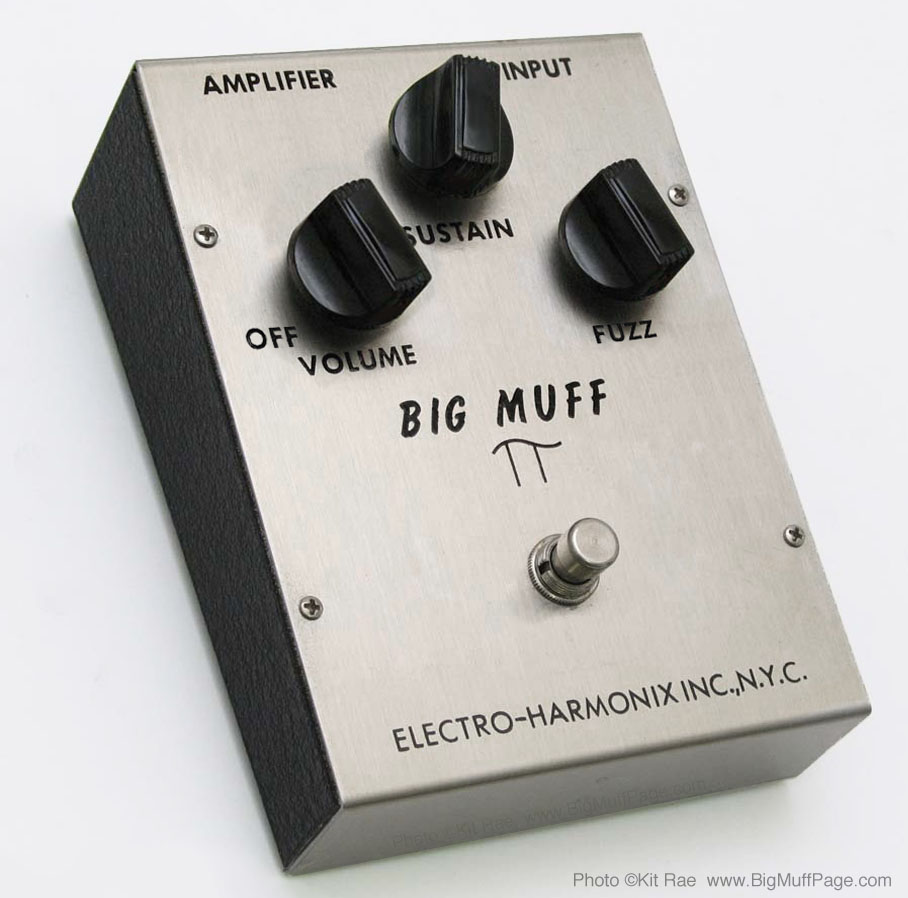
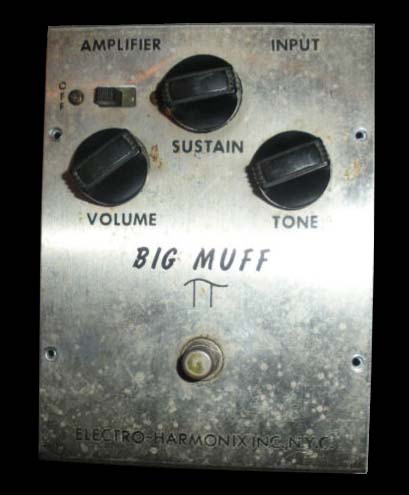
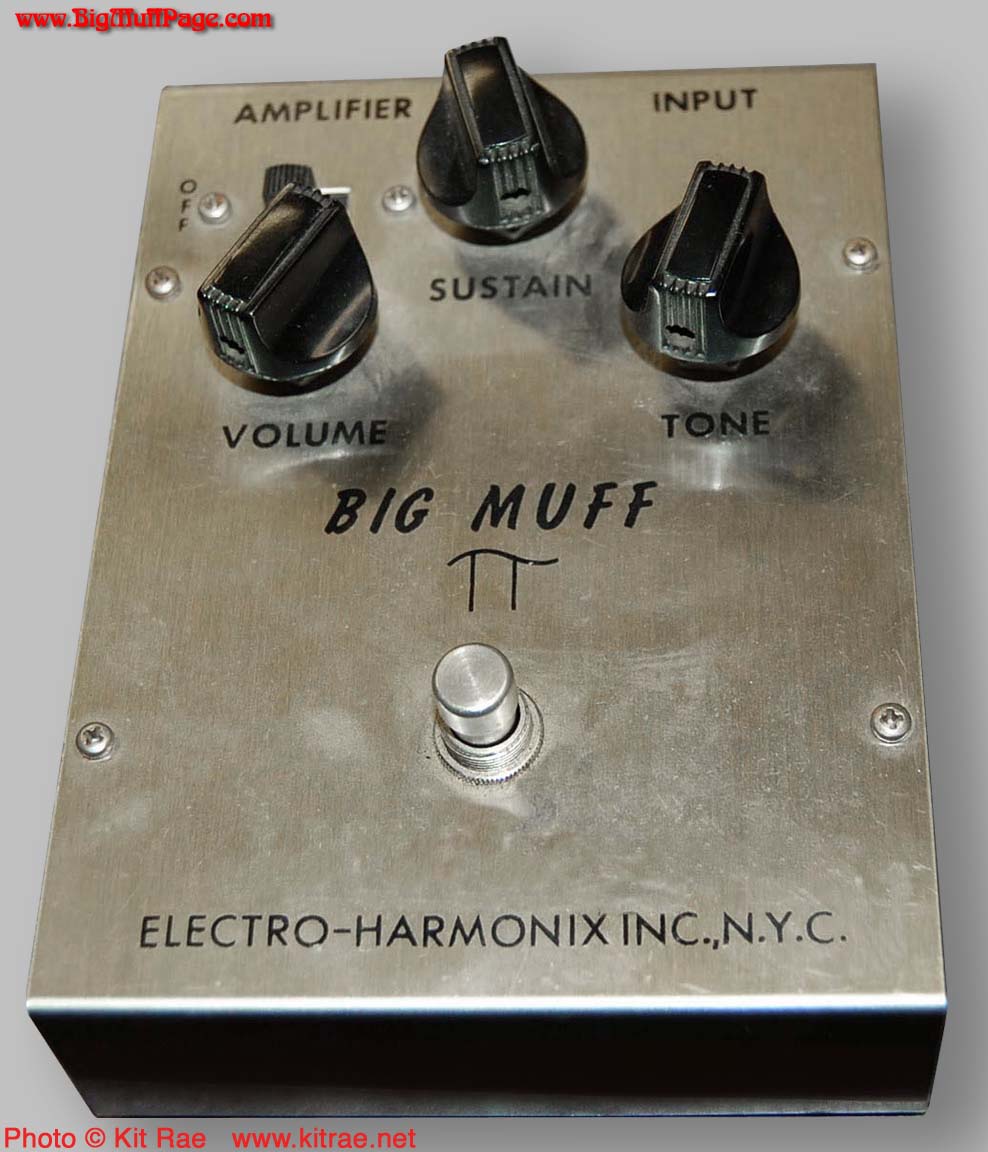
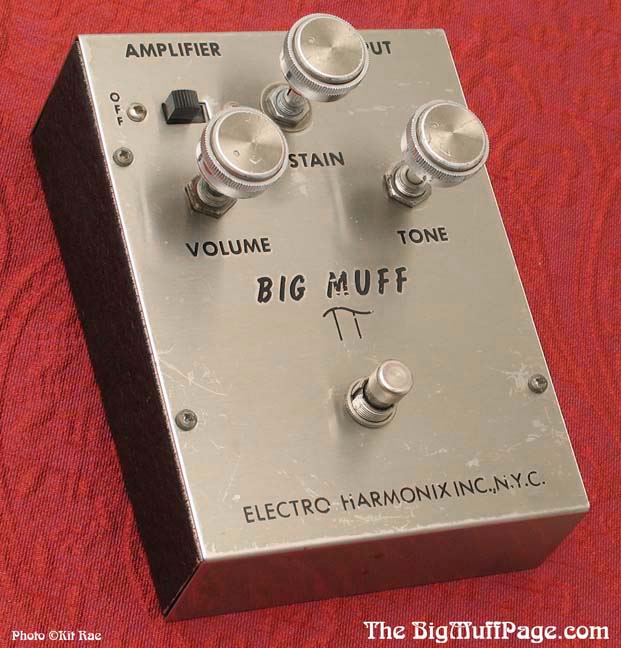
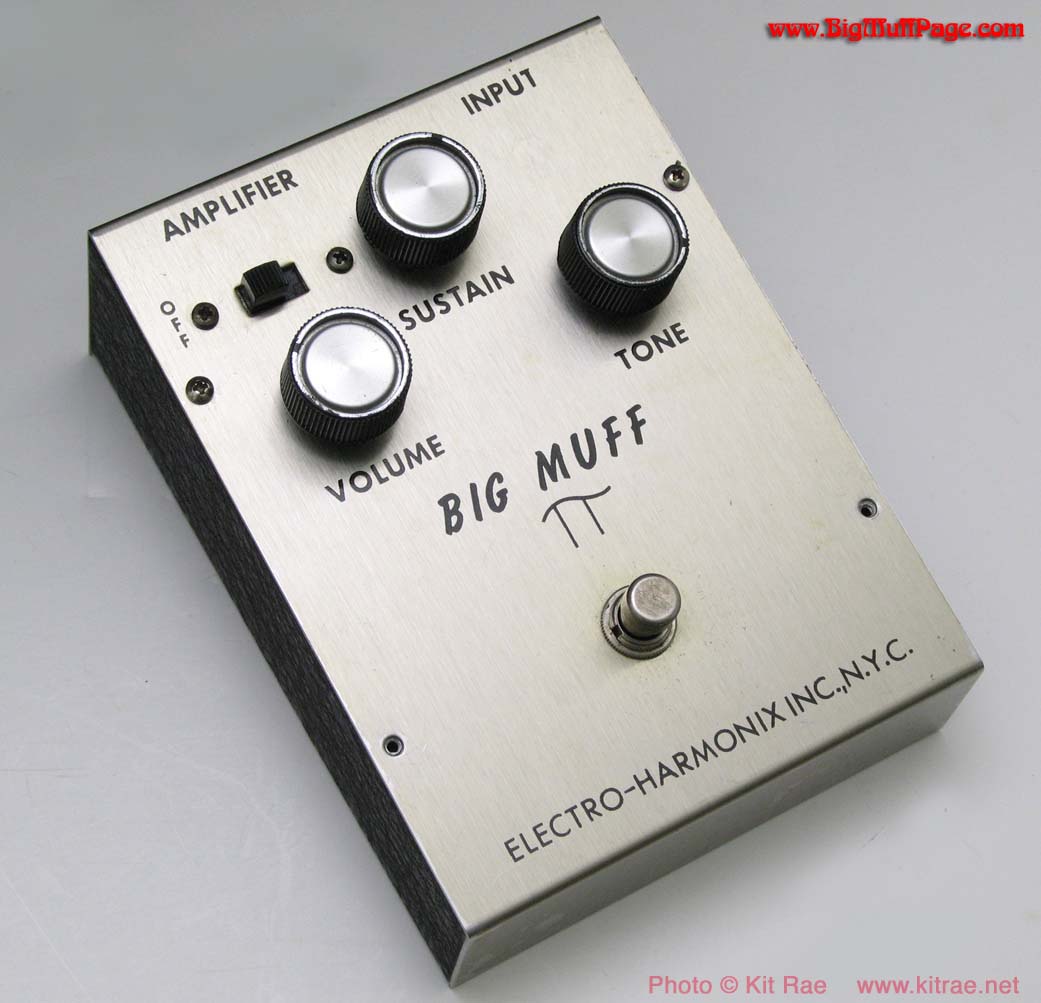
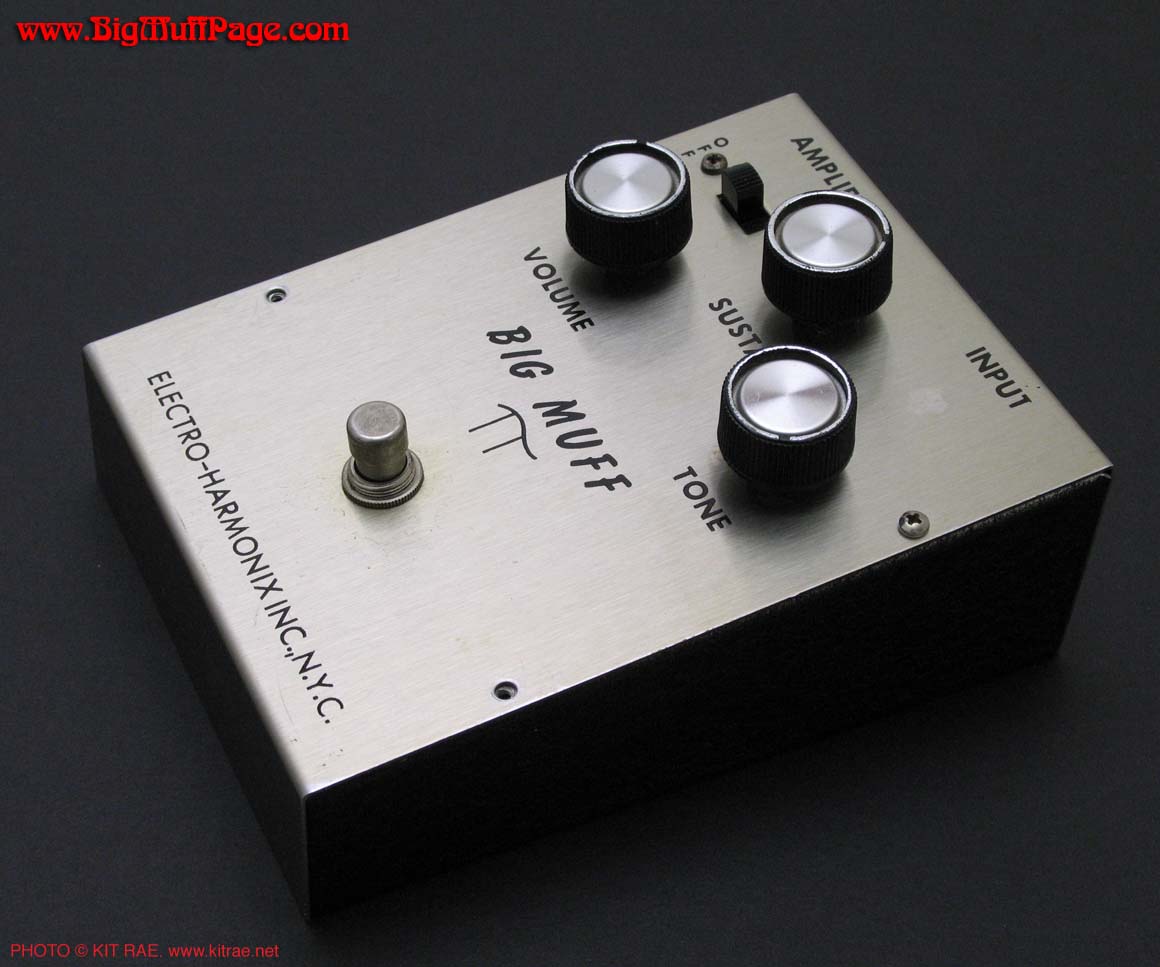
GRAPHICS - Screen printed below the BIG MUFF name on the top of the box was the mathematical symbol for pi (π ), which has remained on every Big Muff since the original. The first edition models produced in 1969 had a VOLUME knob, a SUSTAIN knob, and a FUZZ knob. The word OFF was just to the left of the volume pot. Some time in 1970 the word FUZZ was changed to TONE for the second edition. All first edition V1's are marked FUZZ. All second editions are marked TONE.
π SYMBOL - Electro-Harmonix has a history of unique and wacky names and graphics for some of their early pedals. Using slang and slightly colloquial terms, they came up with such names as the Hog's Foot, Screaming Tree, Soul Preacher, Hare-Lip, Black Finger, Bad Stone, Chill Switch, Switchblade, Electric Mistress, and Hot Foot, among others. The meaning behind many of these names, or lack of meaning, may be somewhat baffling to people who are not from, or are not familiar with American English. The Black Finger, for example, was a slang drug term in the 1970s referring to the color of a person's finger after scraping the black tar from a cannabis pipe bowl, then rolling it into a ball in order to smoke it. The EHX Black Finger name was more likely a reference to the fingers of Jimi Hendrix, as EHX advertised this pedal would give you the Hendrix "Lady" sound. Bad Stone does not necessarily mean anything, but the two words sound cool together as the name for a phaser effect pedal. Then there were some of the more crude names like English Muff'n, Tube Zipper, Bass Balls, Muff Fuzz and Big Muff. Muff Fuzz may have stemmed from Mike Matthews "muffled fuzz" tone description of the sound, but 'muff', 'fuzz', and 'muffin' are also crude American slang terms for a woman's vagina. The associations were definitely intentional and meant to appeal to the male Rock and Roll guitarist. 'Big Muff' slang simply meant 'large vagina'. The slang was even carried forward when clones of the Big Muff were made with such slang names as Swollen Pickle and Large Beaver. Then there is the use of the π symbol on the Big Muff. Many people from outside the USA have emailed asking me to explain the significance of the symbol. Enough people are genuinely baffled by it that I feel it is necessary to explain, however crude it may be.
The π symbol is the lower case sixteenth letter of the Greek alphabet. In 1737 it was adopted as the standard symbol for the irrational mathematical constant pi, which is the ratio of the circumference to the diameter of a circle, roughly 3:1 (more approximately equal to 3.14159). It is also the first letter of the Greek word for perimeter, as in circumference. Use of the ratio can be traced back to the ancient Egyptians, Mesopotamians and Chinese. It is even used in the The Hebrew Bible (I Kings 7, 23, II Chronicles 4, 2). π has fascinated mathematicians throughout history as it cannot be represented as a simple fraction, its decimal representation has an infinite number of digits, and does not end with a repeating pattern of digits. You can actually convert the digits of the pi sequence into musical notes in numerical sequence, and it is a strangely non-repeating melody that seems to go on for infinity. Was the use of π some high-brow reference to this irrational mathematical constant? Was it a reference to the seemingly infinite way the values of the circuit components can be changed, yet still sound like a Big Muff. Or possibly some deeper meaning? Well, no. π is represented by the Latin word Pi, which is pronounced like 'pie' in English, as in cherry pie. The word pie is simply another crude American slang term for, you guessed it, a woman's vagina. Hey, this was rock and roll, it was the 1970's, and that is what guys in rock bands were into. Electro-Harmonix was not afraid to boldly market to their target consumer.
CONTROLS / KNOBS - The first edition models, likely produced in late 1970 had a VOLUME knob with the on/off switch built into the potentiometer (pot), a SUSTAIN knob, and a tone knob labeled FUZZ, later changed to TONE. The tone knob was oriented with treble on the left (counterclockwise) and bass on the right (clockwise). The volume pot switch was then changed some time in 1970 to a separate surface mounted on/off switch for the second edition. Pots typically had D shaped shafts made of brass, steel, or plastic. E-H purchased over 150,000 surplus pots when they first started making pedals. The pots were all dated 1966, which is why you see '66 pots in Big Muffs made as late as 1971. An interesting detail about the pots is that none of them start at zero in the same place. This is due to the pots being mounted to the circuit board with the leads wrapping over the edges of the board - one over the left side, one over the top, and one over the right side. This made remembering your settings a bit of a headache. The foot switch was a standard Carling SPDT.
Several knob types were used during the production. The most common was a "pinch" style black Bakelite rectangular topped knob similar in style to Philco and RCA Victor radio knobs used in the 1940's/50's. These same d-shaft knobs were also used on the E-H Axis Fuzztone and Foxey Lady pedals. E-H purchased over 100,000 surplus knobs when they first started making pedals, and they were used on all other E-H products at the time. There were two versions of the black knobs, each with a different shaped post hole. One had a set screw in the side and one was a press on type. As these knobs ran out there were a variety of other silver and silver/black plastic radio/amplifier knobs used from other makers, including some made by Davies Molding. These knob types may have swapped back and forth at different times during production. I have counted ten different knob types that I have seen repeatedly, though there may be many more that were used in production. According to Mike Matthews, they kept changing knobs after the original knobs ran out because they had not found one to stay with for regular production. Although many V1 Big Muffs around today have aftermarket replacement knobs, most are original production knobs. Some of the D-shaft pot posts are much longer than others, which is why you will occasionally see V1 Big Muffs with the knobs raised ridiculously high over the pedal, although this did have the benefit of making foot dialing easy.
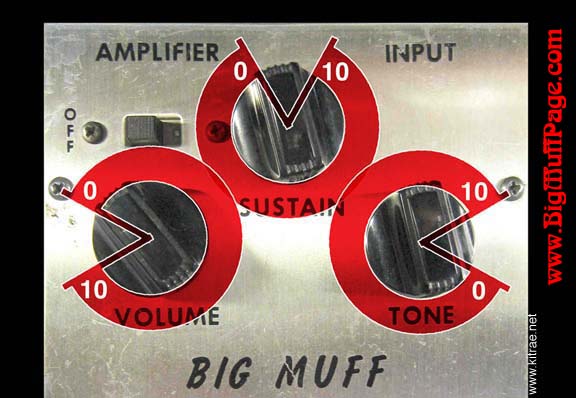
CIRCUIT BOARDS, COMPONENTS, VERSIONS and EDITIONS - The first and second editions I refer to here are characterized by the location of the power switch and the use of the words FUZZ and TONE in the graphics. First edition V1 Big Muffs with the on/off switch pot, and some second editions with the on/off switch, were made with a perforated circuit board, or "perf" board. There was no printed circuit board yet made for this early production. Sometime in 1970 E-H started using a printed and etched circuit board for all second edition V1's. I have also seen several examples of a V1 second edition etched pcb (pictured below) with a slightly different trace than the common pcb, although the circuit pathways are identical. It seems a mistake was made in the trace, fixed by a jumper wire soldered to the board. The same jumpered pcb was also used on some Foxey Lady branded V1's made for Guild. A corrected version of the pcb, made sometime in late 1970 or early 1971, was used in all subsequent V1's.
Early schematic traces of the V1 that appeared on the internet in the early 2000's were labeled "first" and "second" editions, or "version 1" and "version 2", leading people to assume there were two versions of the circuit. Those were simply tracings of two specific V1 circuits, but the fact is, there were at least 17 variants of the circuit made in long production runs.
At first glance there appears to be very little consistency in component types and values from one V1 circuit to another, leading some to believe production was sloppy, with parts seemingly picked at random. In reality, they were anything but random. There were at least 18 different circuit variants, each following a set schematic, and each repeated in production by the hundreds and thousands. I call these different schematics "circuit variants". There are many reasons for the variant circuits. The schematic seems to have been intentionally changed specifically to revise or update the sound, as with the early perfboard circuits, but the primary reason the schematic was changed several times a year was to work with the parts on hand at the time. Caps and resistors were bought in bulk, and exact values from batch to batch varied. For example, if 500pF caps were not available, 560pF caps were purchased. Other related cap and resistor values were tweaked in an attempt to keep a similar sound, and the schematic was updated. If there was a surplus of 33k resistors, you may see them used in R2, R5, R8, R13, and R11 positions. The next circuit variant may have them all changed to 39k. Basically, wherever they could get away with a value change to utilize bulk parts on hand, and not drastically affect the sound, they did. However, often these changes did affect the sound. Sometimes drastically.
"I’ve never done this, but if you were to take five Big Muffs from the same production line from 1973 and listen to all five, you would probably hear something different out of every one"- Mike Matthews, owner and founder of Electro-Harmonix.
The individual circuit variants not only had identical component values, but often identical component types. Components, especially capacitors, were made in many different shapes, colors, and materials by several different manufacturers, and often find each variant circuit used specific component types unique to that variant. That, and the fact that the knobs often changed for each circuit variant production run, has made it somewhat easy to identify which variant it is at a galnce. Sometimes just looking at the knobs I can tell which circuit is inside.
The wide range of circuit variants has led to some contention among Big Muff enthusiasts about what a V1 is supposed to sound like, so hopefully this website will settle that issue. There were a few more common circuit variants that were made in larger quantities than the othere, but to make it clear, there was no single V1 sound. You can find V1s that cover just about the entire spectrum of possible Big Muff tones. Only about four or five of those variants are different enough to easily distinguish when comparing them to eahc other. The most common variant that was made in very large numbers is shown here (V166#11) and in the circuit photos below. It seems more than half of the V1's were made with that same set of component types and followed that exact same schematic variant. Another common variant is shown here (V167#1) . It does not follow either of the common version 1 and version 2 Triangle schematics found on in the early days of the worldwide web, but was in fact one of the more common variants, easily identified by the large green film caps and missing low pass filter cap. You can read more details about the workings of the circuit here. Schematics for many of the circuit variants are posted here.
- Circuit board colors were typically dark brown on the trace and populated sides, although later pcbs were coated in a blue-green solder mask on the trace side.
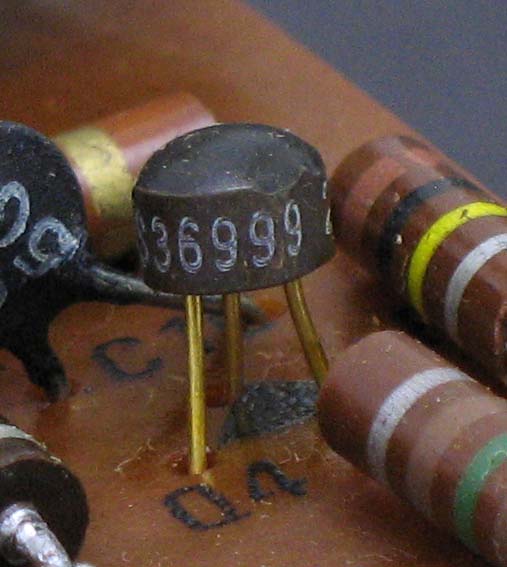
- Transistors were always Silicon, in the black button-top shaped TO-106 package (never the half cylinder shaped TO92 packages found on later Big Muffs). These were typically negative ground NPN (negative-positive-negative) Fairchild Semiconductor 2N5133 transistors, NPN transistors marked FS36999, or occasionally PNP 37000. The mysterious FS36999 has become legendary in Big Muff lore as the most desirable of all silicon transistors, though in reality it is the value of the other components that have the most affect on the sound. FS36999 were used in almost all the perf board first editions and most second editions FS37000's were used in later V1s. FS36999 and 37000 were not common Fairchild transistor numbers. The FS36999 are actually 2N5133 transistors that another company (not by EHX) had Fairchild custom mark with their own FS36999 house number. Many early Big Muffs had both 2N5133 and FS36999 transistors on the same circuit board, and sometimes both ID codes were marked on the same transistor. Large manufacturers often purchased electrical components from suppliers with their own house markings like this. E-H likely purchased a surplus quantity of transistors with these special marks. There is also some confusion from various sources (www.pisotones.com, B.Y.O.C.) stating the FS36999 was PNP, not NPN, but in the dozens of V1 and V2 Big Muffs I have owned with these transistors, none were PNP. There appear to have been several runs with the FS36999 marks, with the early versions being identified by a larger letter F. The FS36999 has also been speculated to be 2N5088s or BC239s, however, there were never were any 2N5088s or BC239s made in the TO106 package.
- Some rare Triangles were made with mixed transistors. Sometimes E-H used four of the same type, sometimes two of each type, and sometimes they included one odd transistor amongst the four, or one or two unmarked transistors. It seems E-H used whatever was on hand at the time, including 2N5133 and FS36999 (both NPN) in the same unit, four FS36999 transistors, four 2N5133 transistors, four FS37000 (PNP) transistors, four SPT87103 (NPN) transistors, four SPT3607 (NPN) transistors. Combos of two SPT3607 (NPN) and two SPT87103, and combos of two 2N5133 and two SPT87103 have also been seen in V1 Big Muffs.
- V1 circuits are seen with mostly ceramic type capacitors, but many used polymer and electrolytic caps. The very first V1's made on perf board had electrolytic, ceramic, and film caps. Sometimes you will see caps that appear more modern in these old circuits, an indication they may be after market replacements for the original caps, although this is rare.
- Resistors were always carbon composition, and the painted codes were not necessarily reliable indicators of the actual value. I have seen a few V1's with smaller carbon film resistors, and although these may seem to be after market replacements, they were used in production on more than one variant.
- Diodes were silicon type, but the actual model was unknown. The diodes had various markings such as SYL GD938, or SYL GY925 926, SYL, GY920, or GY819. Based on measurements, and the diodes used in later Big Muff versions, it is assumed these were 1N914/1N4148 equivalents.
POWER - Power is from a 9v battery only. You can also use a 9V battery snap adapter like the 1 Spot CBAT and connect to a standard power supply with a negative center barrel type jack, like the Boss PSA120T, 120S, or 1 Spot 9V AC Adapter. Note - while most V1 Big Muffs are negative ground (NPN) circuits, some are positive ground (PNP). The power of a PNP circuit cannot be daisy chained with standard NPN pedals with a negative center plug. The common ground on NPN pedals is negative, so if you daisy chain power to a PNP positive ground pedal it will short out the power. See the TRANSISTORS entry above to find out if your pedal is PNP or NPN. If you intend to add a standard 9V power jack that works with standard negative tip power supplies, you can find out where to wire the + and - wires by looking at the wiring diagram for your version, or simply follow the red(+) and black (-) wires from the battery snap.
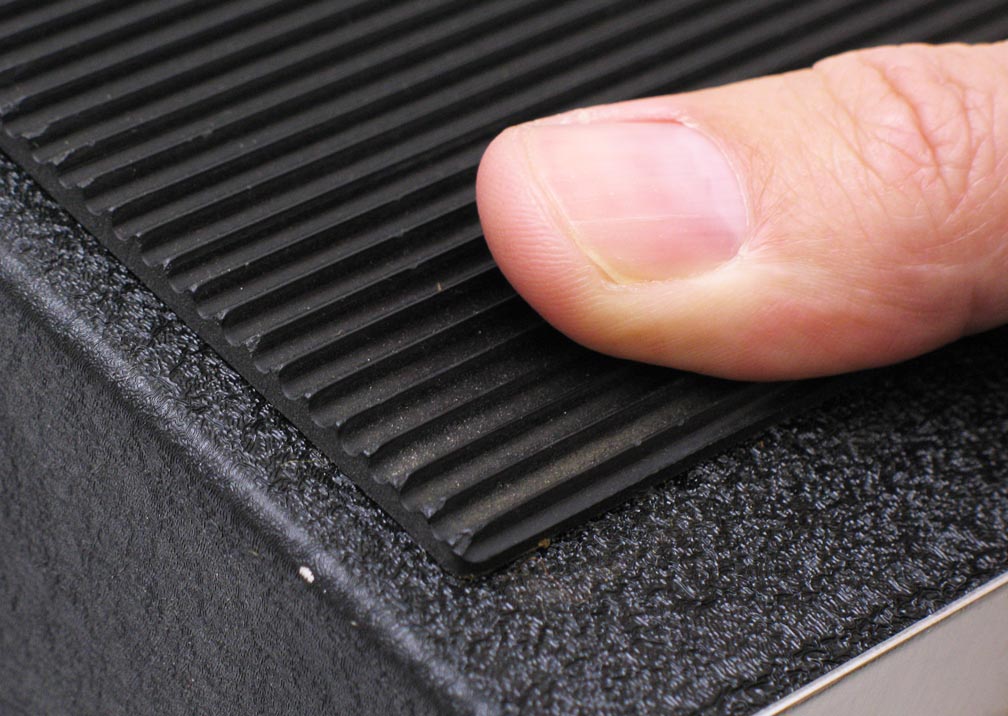
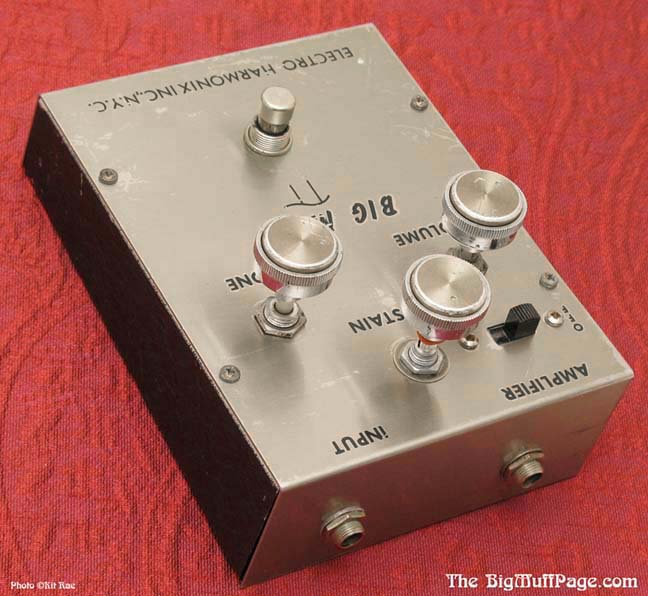
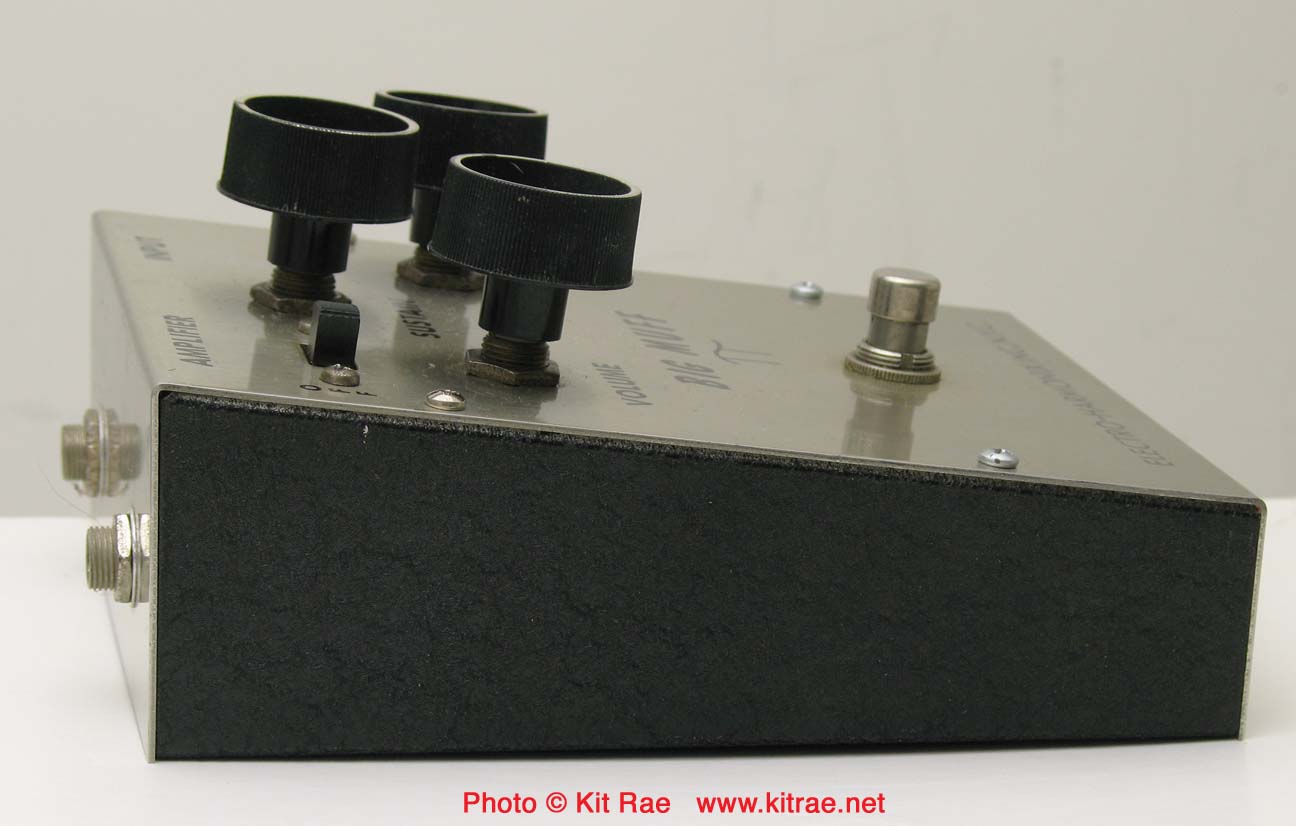
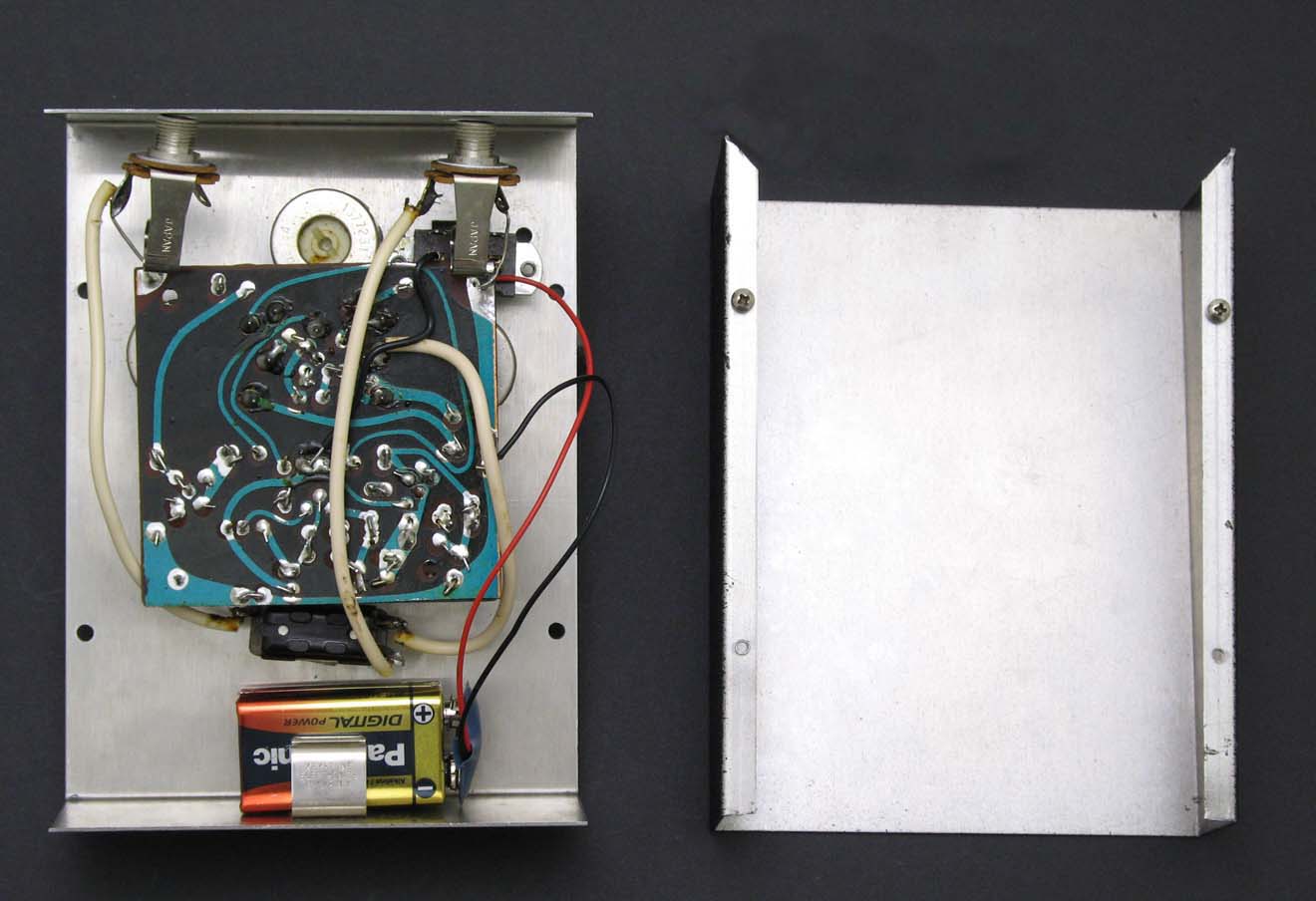
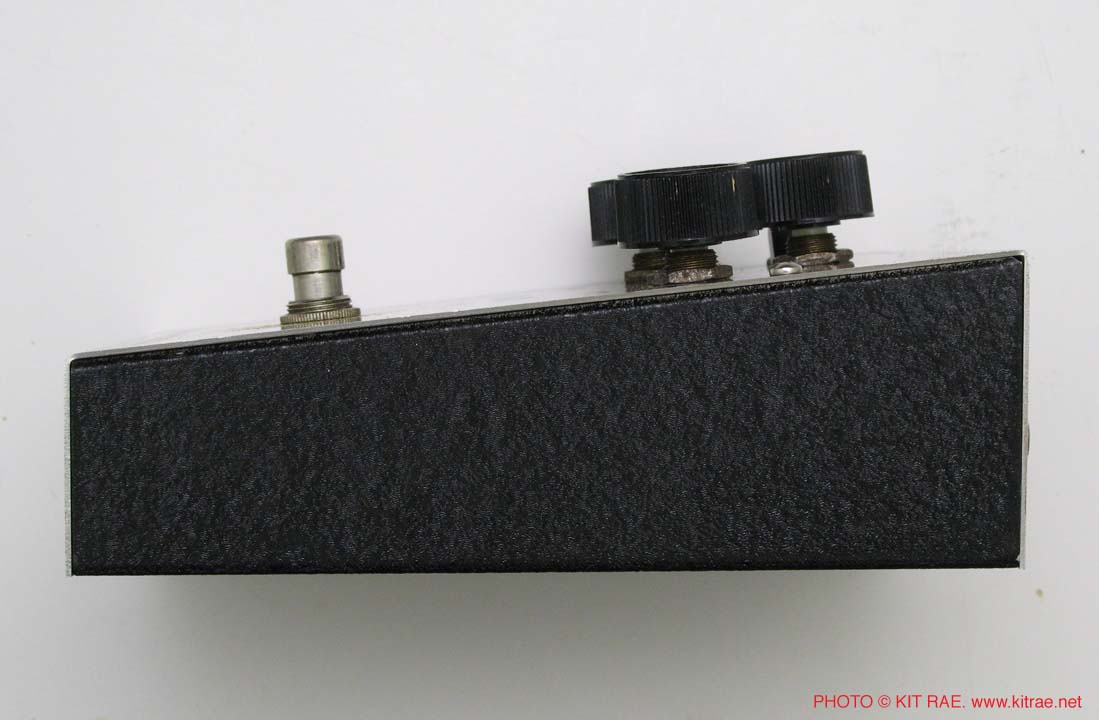
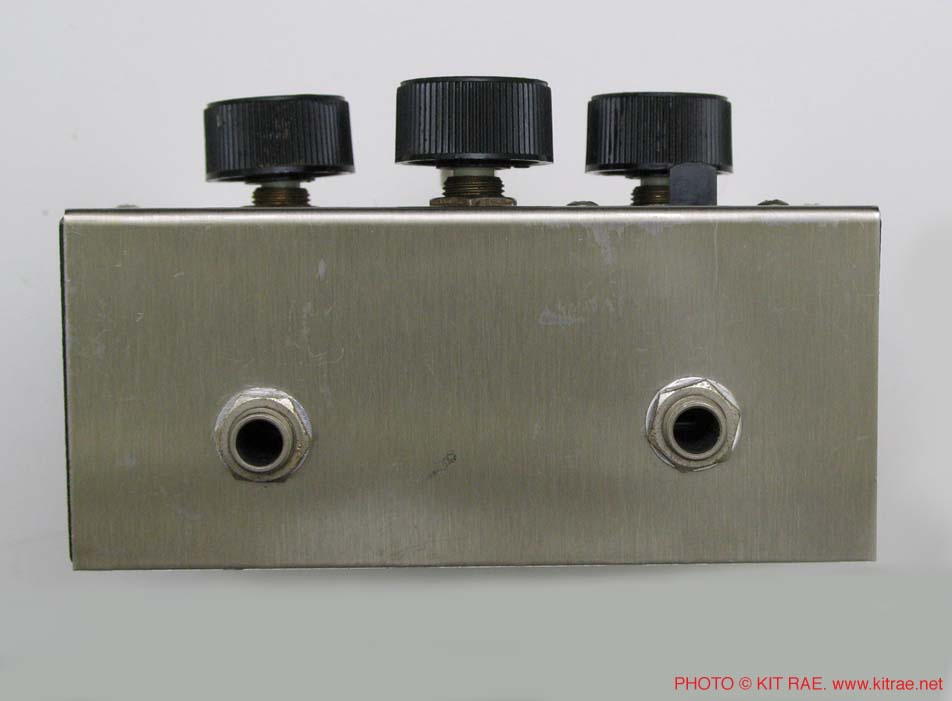
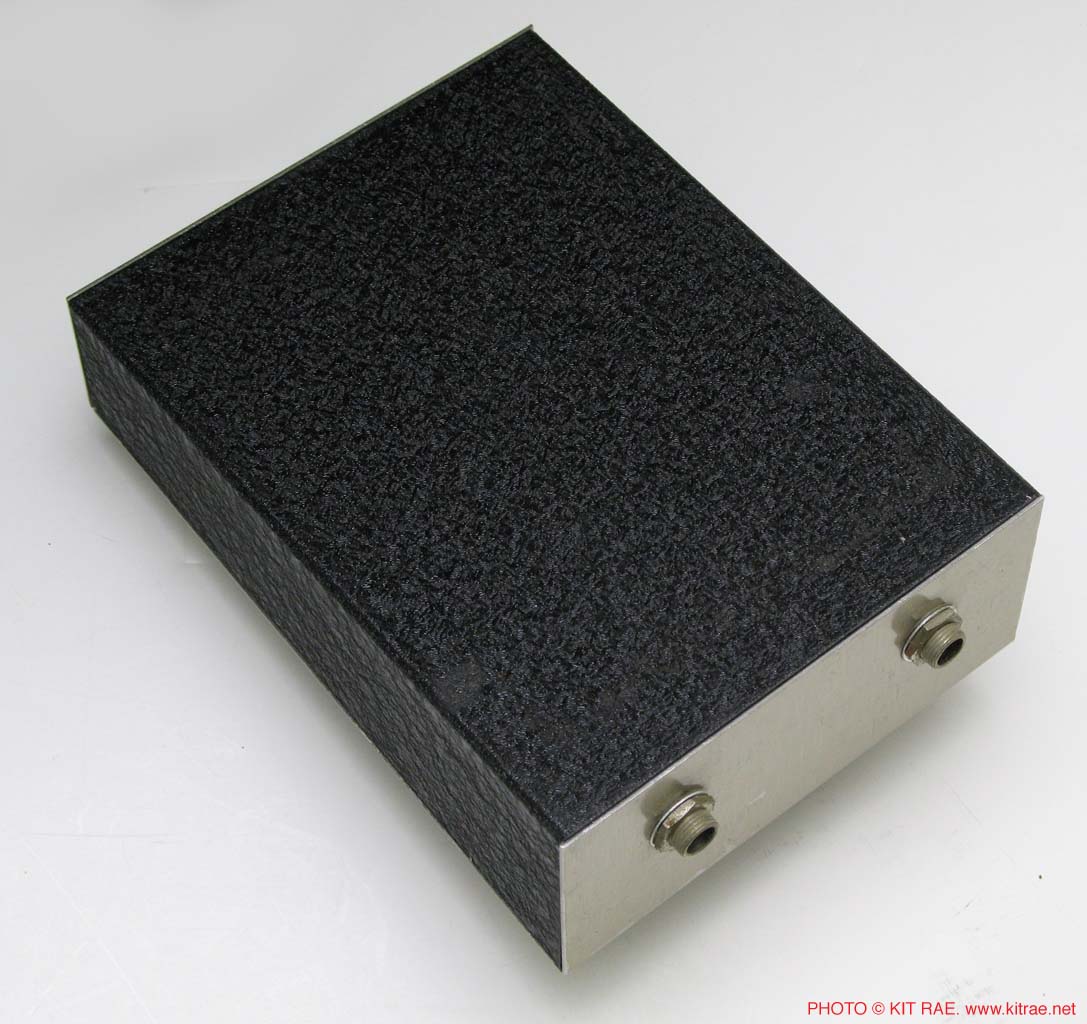
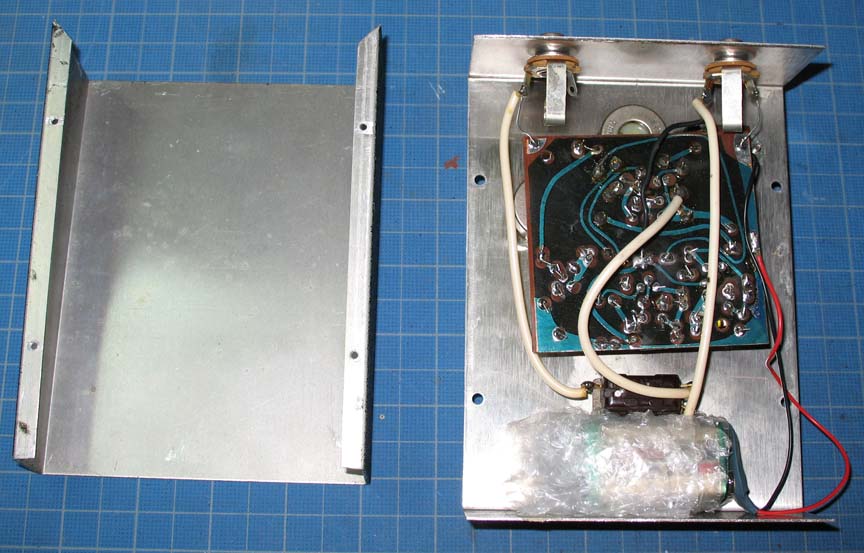
ENCLOSURE - The enclosure was a simple folded sheet metal, two piece box. There was no LED light and no DC current connector at this time. It ran off an internal 9V battery only, and you had to remove four screws to remove the top panel and change the battery. Covering the bottom was a black rubber skid pad. This was cut from 1/8"(3mm) thick ridged industrial floor mat, approximately 3 3/4"(95mm) x 5"(126mm). It is rare to find a V1 today with this intact. Usually it is missing or there is residue from the glue that held it in place still visible. Office and manufacturing supply companies often sell similar material, sold as rubber (or vinyl) runner/rubber mat/floor mats.
CLONES OR SIMILAR PEDALS - EHX made a Triange Big Muff Reissue in their nano sized enclosure in 2018. Since there were numerous variants of the real Big Muff V1 circuit there is no "one" version to clone, and some clones have modifications to the Muff circuit design. For those reasons most of these clones sound different from each other, and there have been many - Jordan Creator made by Jordan circa 1971, Mirano EF-1 Exiting Fuzz (Japan) circa 1971, Sekova Big Muff (Japan), Maccanbell Big Muff Sustainar (Japan), Elk Super Fuzz Sustainer (Japan), Elk Big Muff Sustainer (Japan), Electro Sound Big Muff Sustainer (Japan), Big Mag Sustainer (Japan), Hohner MF-50 Tri-Dirty Booster from around 1976 (USA). Ibanez OD-850 Overdrive/Maxon OD-801(third version, Japan) circa 1979, Ibanez 60s Fuzz - SF-5 metal case/FZ-5 plastic case (Japan) circa 1990. Some boutique clones are the BYOC Large Beaver (USA), Stomp Under Foot Tri Fuzz (USA), Dice Works Muff Diver (USA), Barber Trifecta (USA), Ronsound Hairpie Classic (USA), Wren and Cuff Tri Pi 70, and numerous others. The Skreddy Pedals (USA) Mayonniase was an exact clone of a specific V1. Skreddy's Pink Flesh and and Pig Mine are based around similar V1 component values, but modded for boosted mids and tailored EQ. See DiscoFreq's Effects Database for other Big Muff clones and variants made throughout the years.
THE V1 SOUND - What a V1 "Triangle" Big Muff sounds like is a bit complicated. The tone of the V1 Triangle Big Muff has been described as the best sounding of all the Big Muffs, but in fact, here is no single Triangle Big Muff sound. There are several. The reason many people say the "Triangle is the best" is probably due to a few early circuit traces of a couple of uncommon circuit variants that circulated for several years. Most clones were based on those, so that is what people who never played an original thought a Triangle was supposed to sound like. Considering that there were at least 18 different circuit variants used, there is probably more sound variance in the V1 than any other version due to this. The V1 and V2 (Ram's Head) Big Muffs both spanned a similar range of circuit variants, so in that regard, some V1s sound the same as some V2s, and many do not. In general, I find that most of the V1 circuit varants in my collection cut through a band mix very well, are very articulate for leads, and have a nice, warm crunch for power chords and palm muting.
The very early, and VERY rare perf board V1 circuits had a really unique sound in the low end and lower mid range that most of the later V1 and V2 circuits variants did not have. They were not especially high gain, but had smooth, long sustain, and fat, warm bass frequencies. Then there are some attributes that define a "typical" V1, and I use that term loosely. The most common circuit variant used did not sound all that different from some of the more common circuit variants in the V2 enclosure. The mid range was very "scooped", or removed. Sustain was exceptional, and gain was moderate, as was the low end. Then there are the other, less common V1 circuit variants that had much more low end, giving them a monstrous sound when playing power chords, but some found the low end too flabby and muddy. The bass and treble frequencies vary quite a bit from one circuit variant to another, as does the gain, fuzziness, and clarity on notes. In the extreme ranges you may find some are very bright, thin, and gainy/fuzzy sounding, some smooth and fat, some more thick and chunky, et cetera.
This wide variety in sounds is one reason V1 Big Muffs are so collectible. You can have two different V1 circuit variants that sound roughly the same through an amp. Then you blend both with an overdrive and you find one sounds very different than the other. Or blend both with a modulation effect like an Electric Mistress and one may filter the modulation frequencies differently than the other. You may even find that two different V1 circuits sound the same through one amp, but different through another amp.
Then there are the tone circuit differences. Two V1s, each with a different circuit variant inside, may sound nearly identical when both tone knobs set the at 12:00, for example. Dial both into the bass range and one may sound muddy and useless, where the other sounds warm and articulate. Or dial both to the treble side and one sounds harsh and trebly, but bright and compressed in the other. V1 and V2 Big Muffs are like that.
CLICK A PHOTO TO ENLARGE
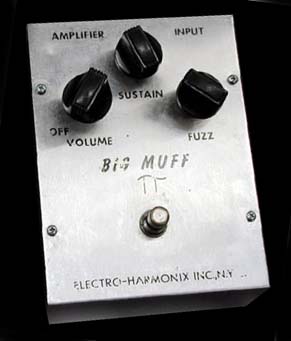
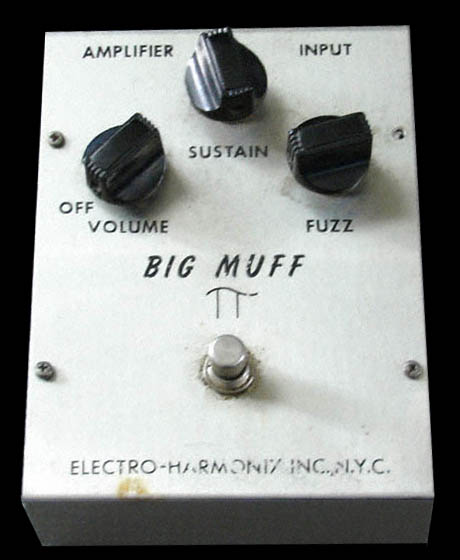
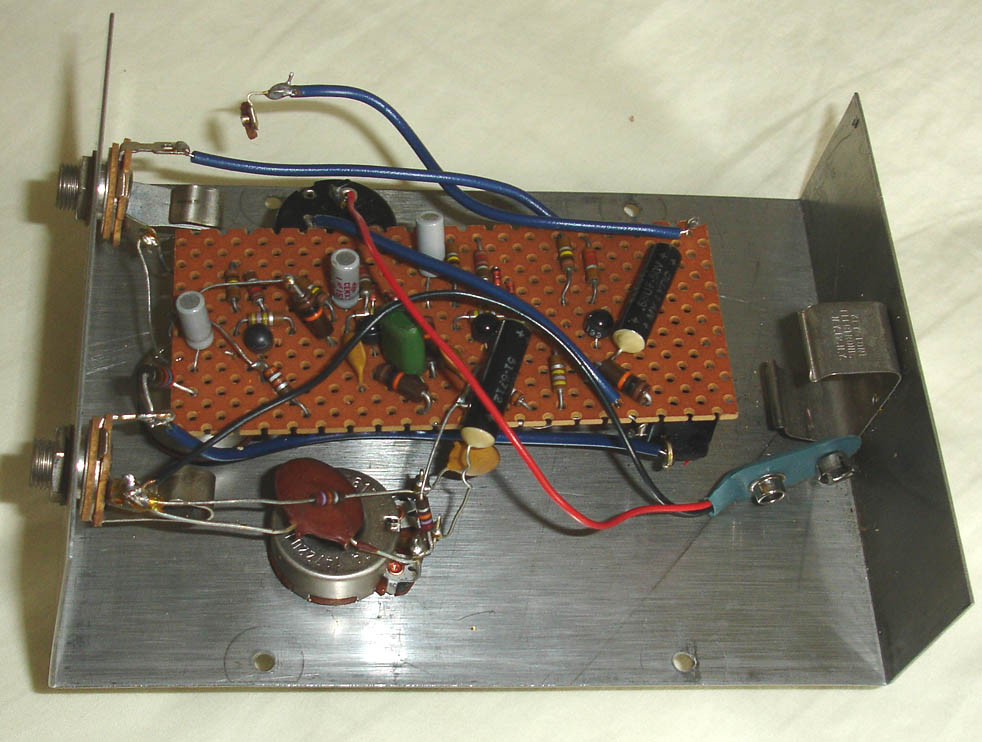
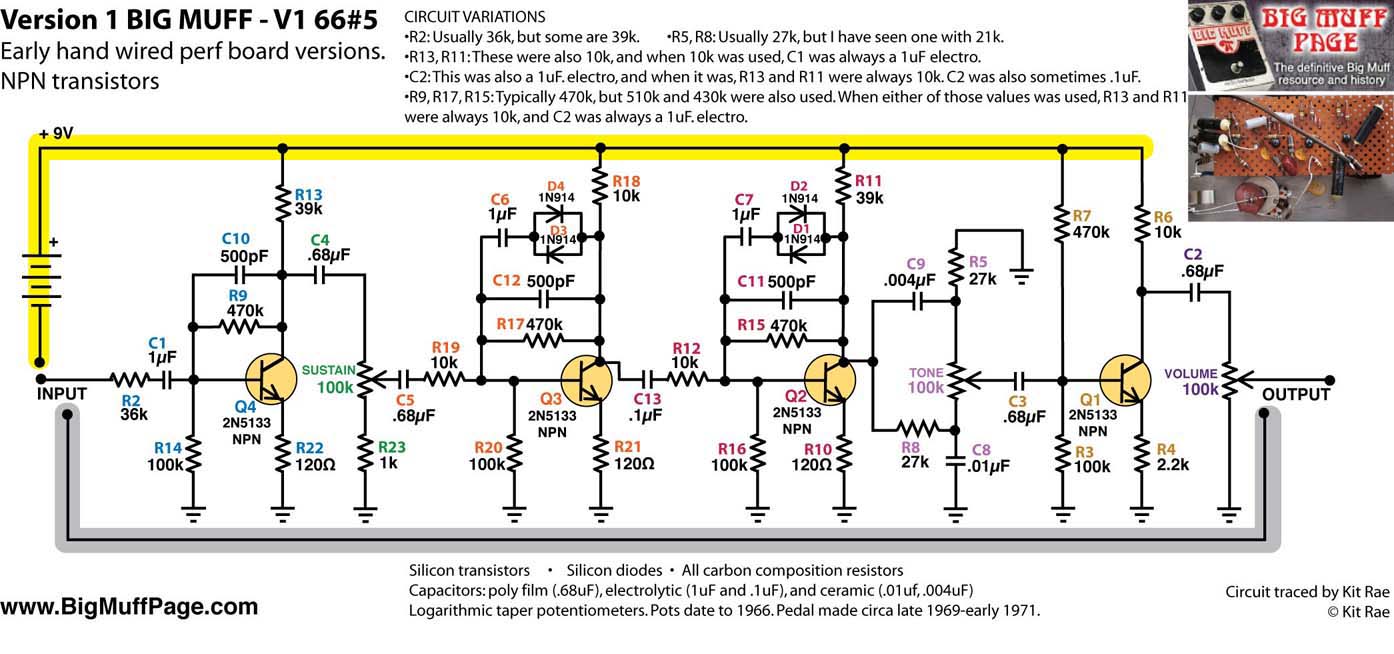
Shown above - Rare first edition 1970 V1 Big Muffs with on/off switch built into the volume pot, the word OFF to left of the VOLUME knob, and the word FUZZ below the right knob, which later changed to TONE. Note the triangular knob layout, which gave this version the nickname "Triangle" Big Muff. Very early V1 circuits were built on perf board with NPN 2N5133 transistors (Thanks to Jay M for the pix). Pots dated 1966. Bakelite pinch knobs were identical to the Axis Fuzztone knobs used in 1968. Shown on the right is a typical circuit schematic listing some of the variations.
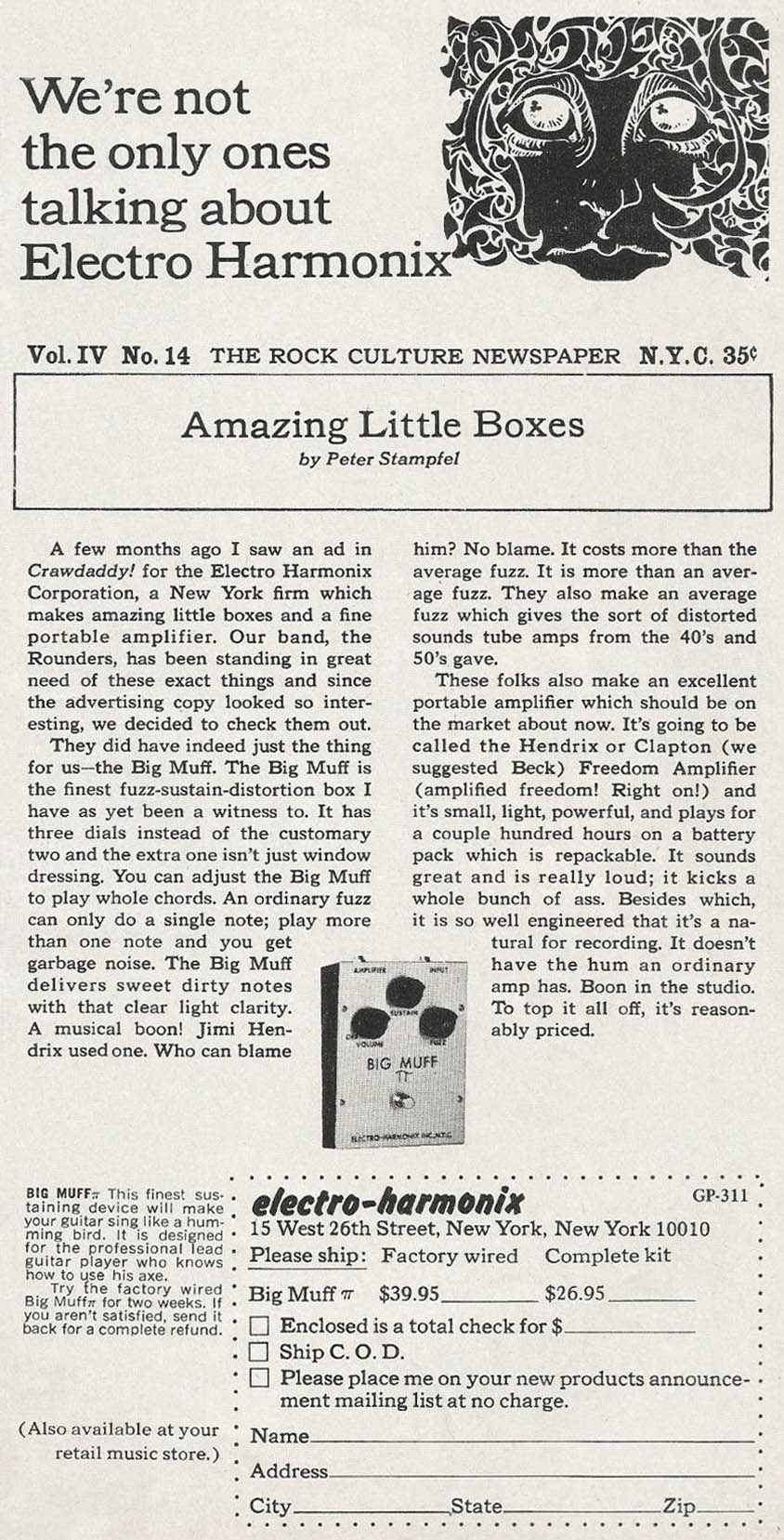
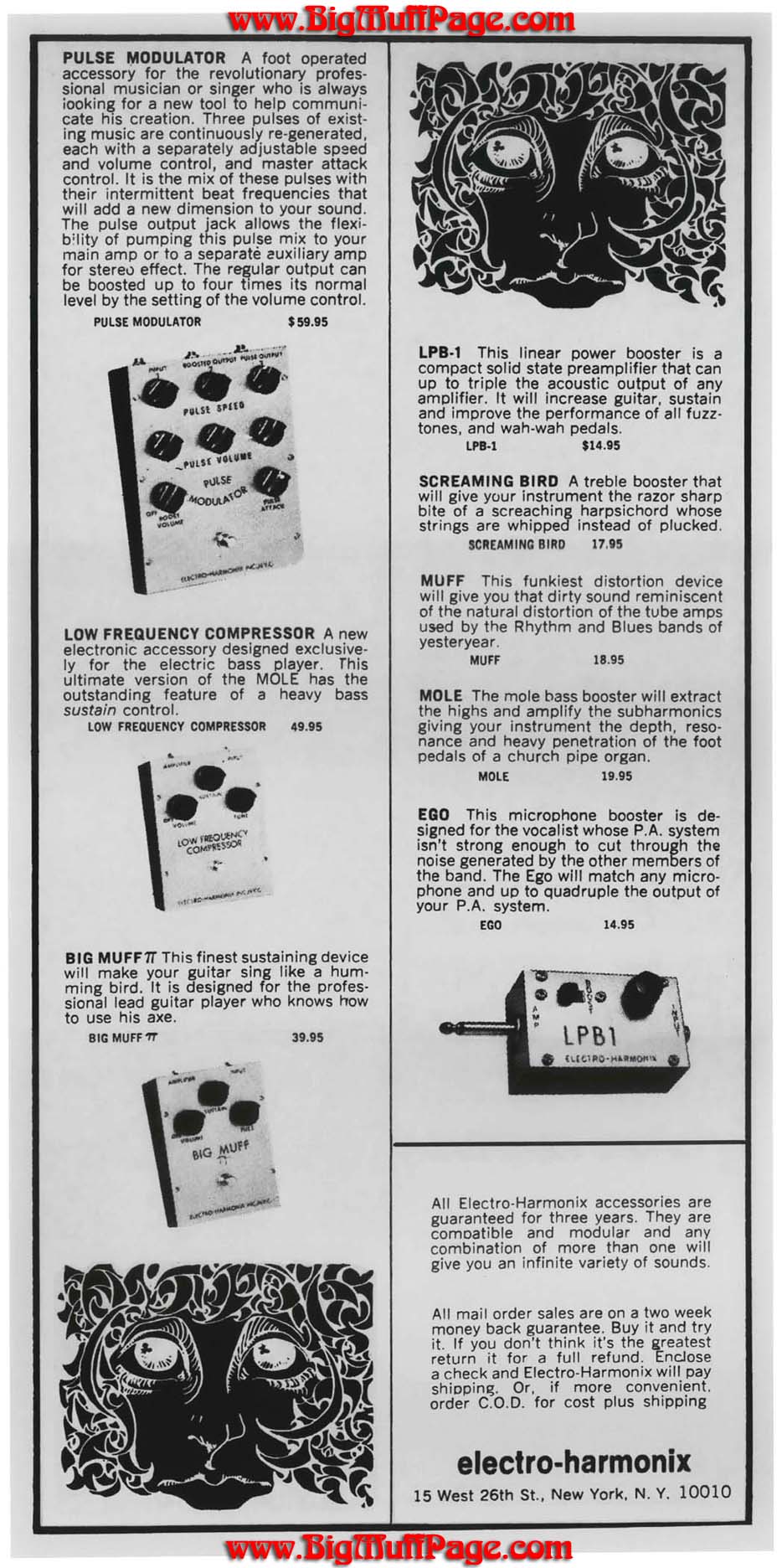
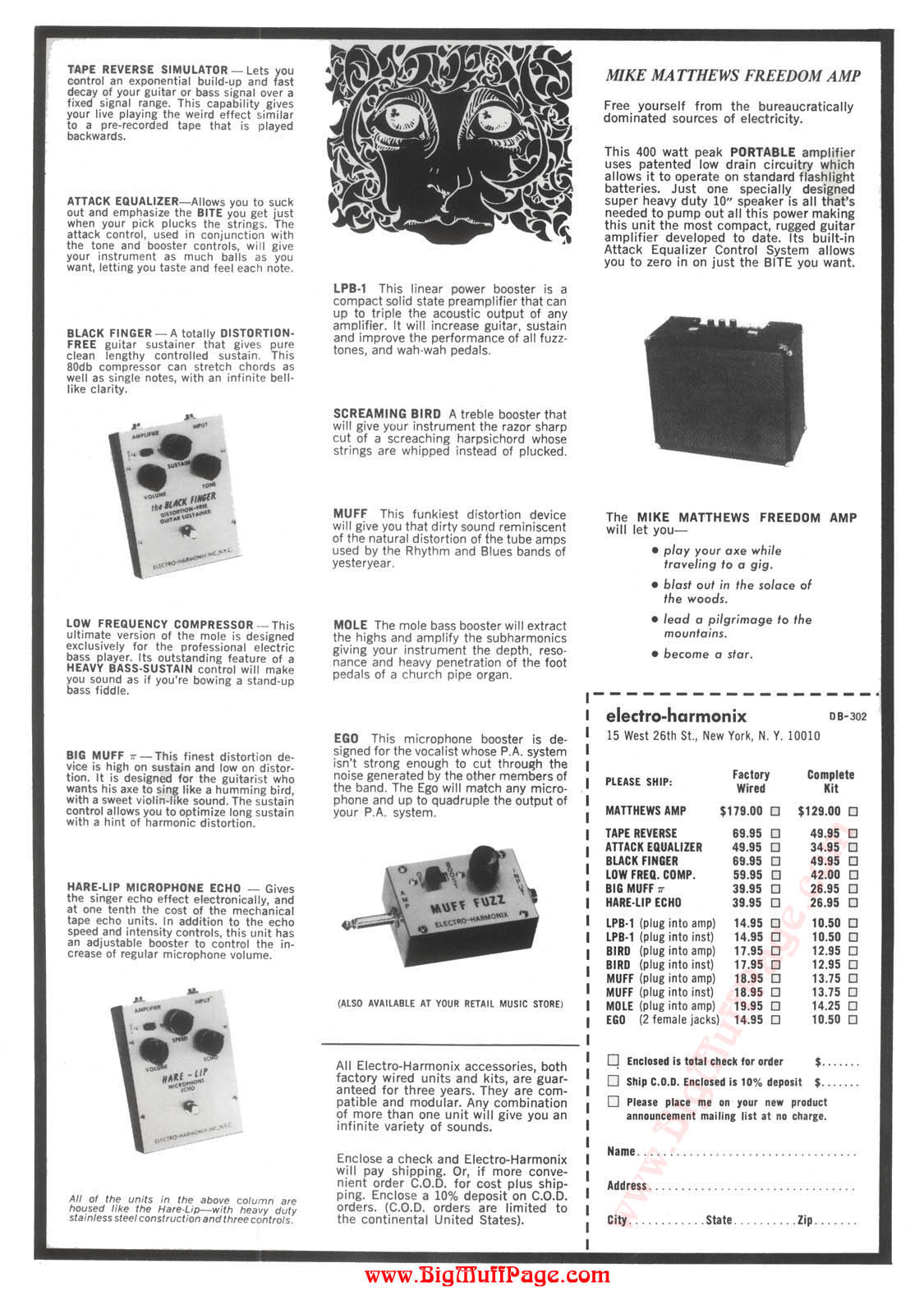
Shown above (left to right) - Vintage E-H 1971 ad featuring the V1 Big Muff , and another 1971 ad with prices for both the factory wired and complete kit versions, both listing the second address for E-H. Note the V1 Big Muff pictured in the first ad is the first edition, but at the time E-H was actually selling the second edition with the on/off switch on top.
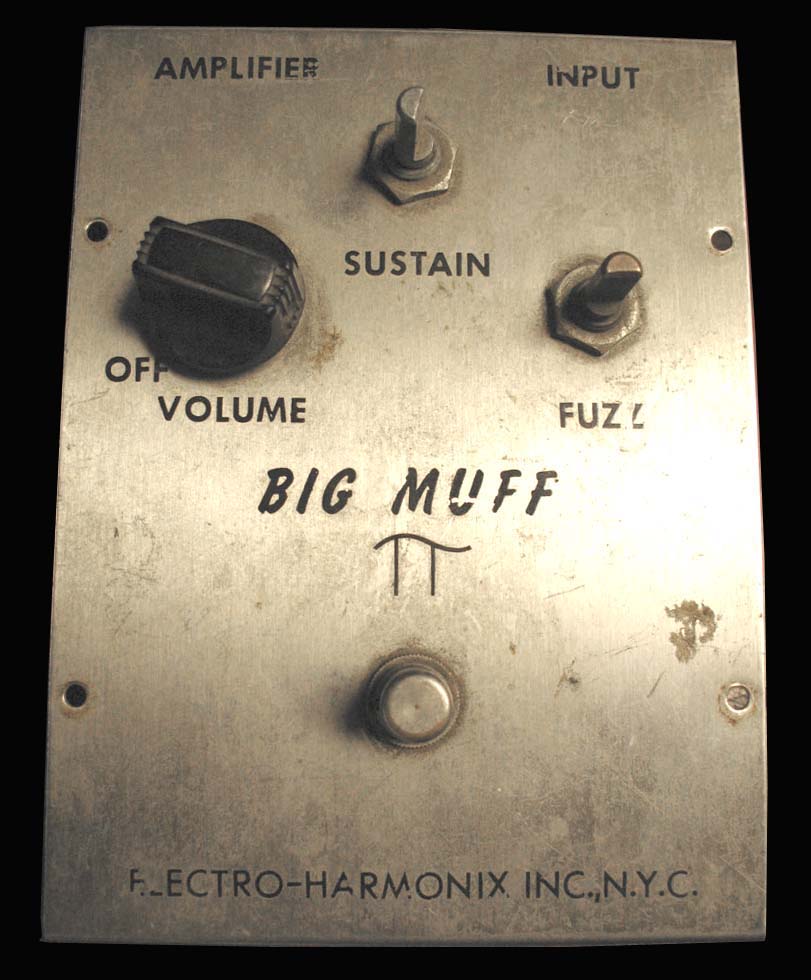


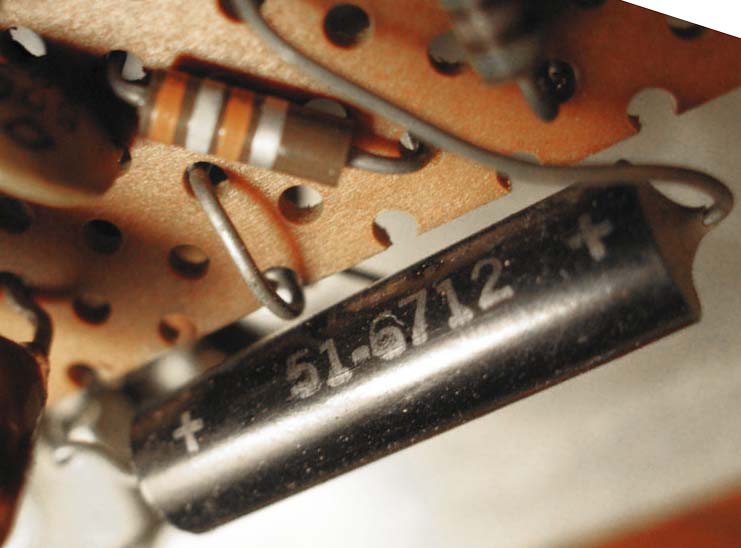
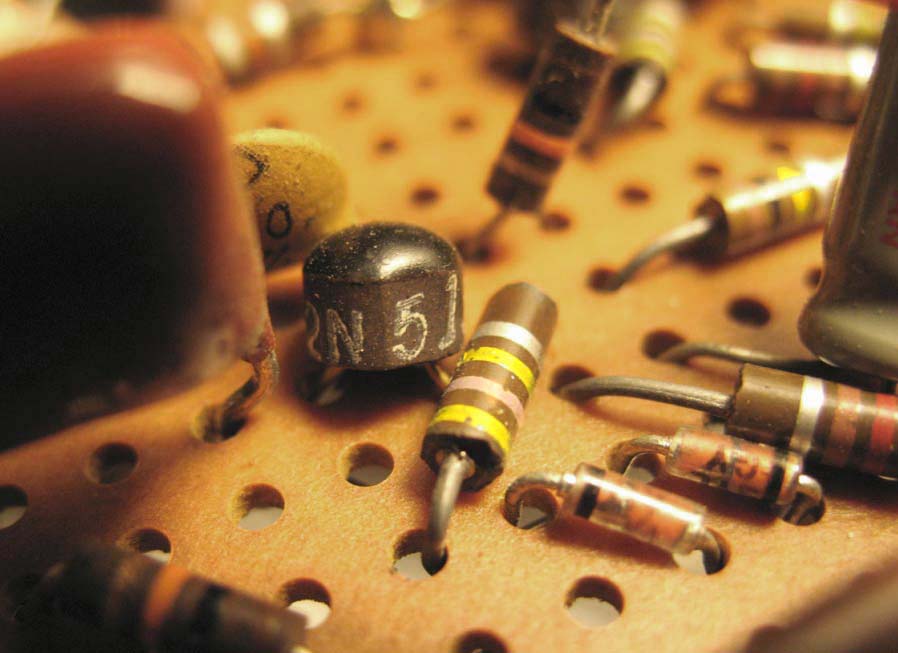
Shown above - Another first edition 1970 V1 Triangle Big Muff with on/off pot and perf board circuit, again with NPN 2N5133 transistors. Pots dated 1966 (Thanks to Richard for the pix)
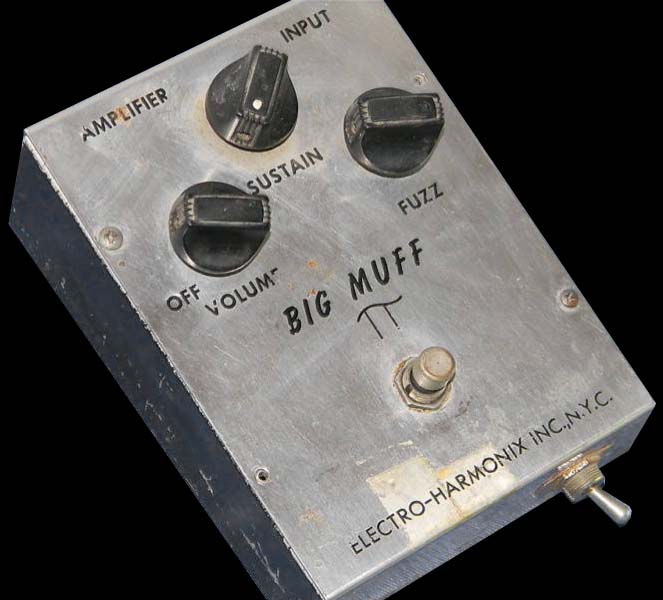
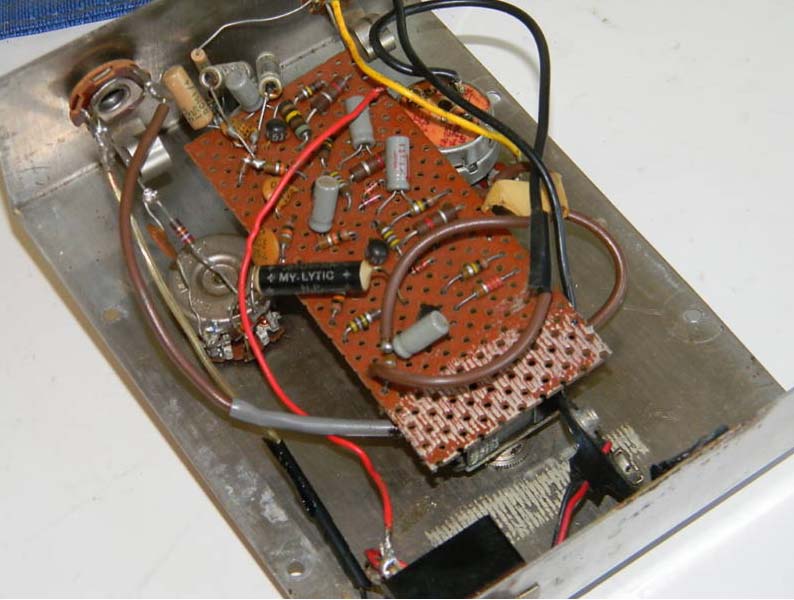
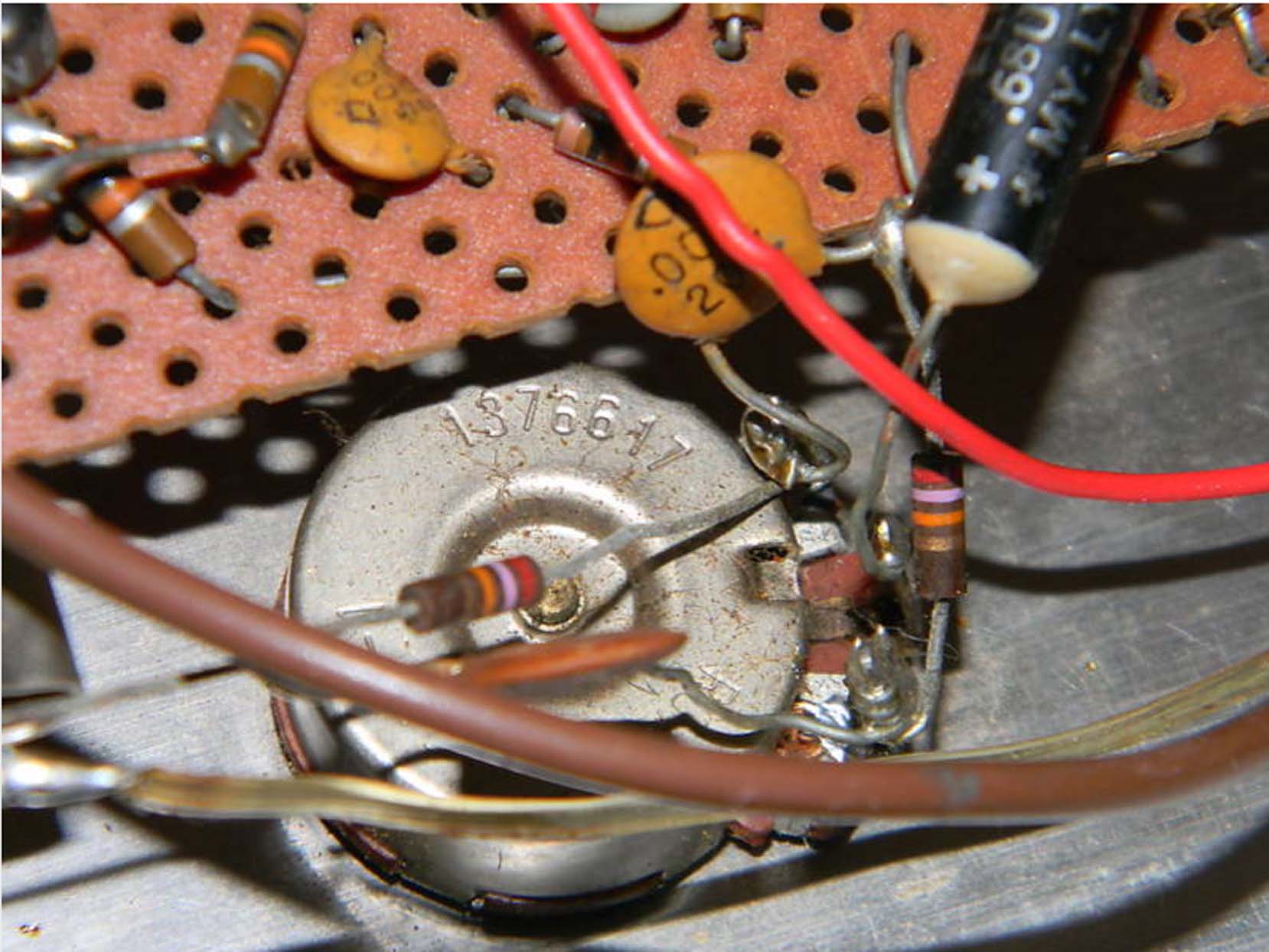
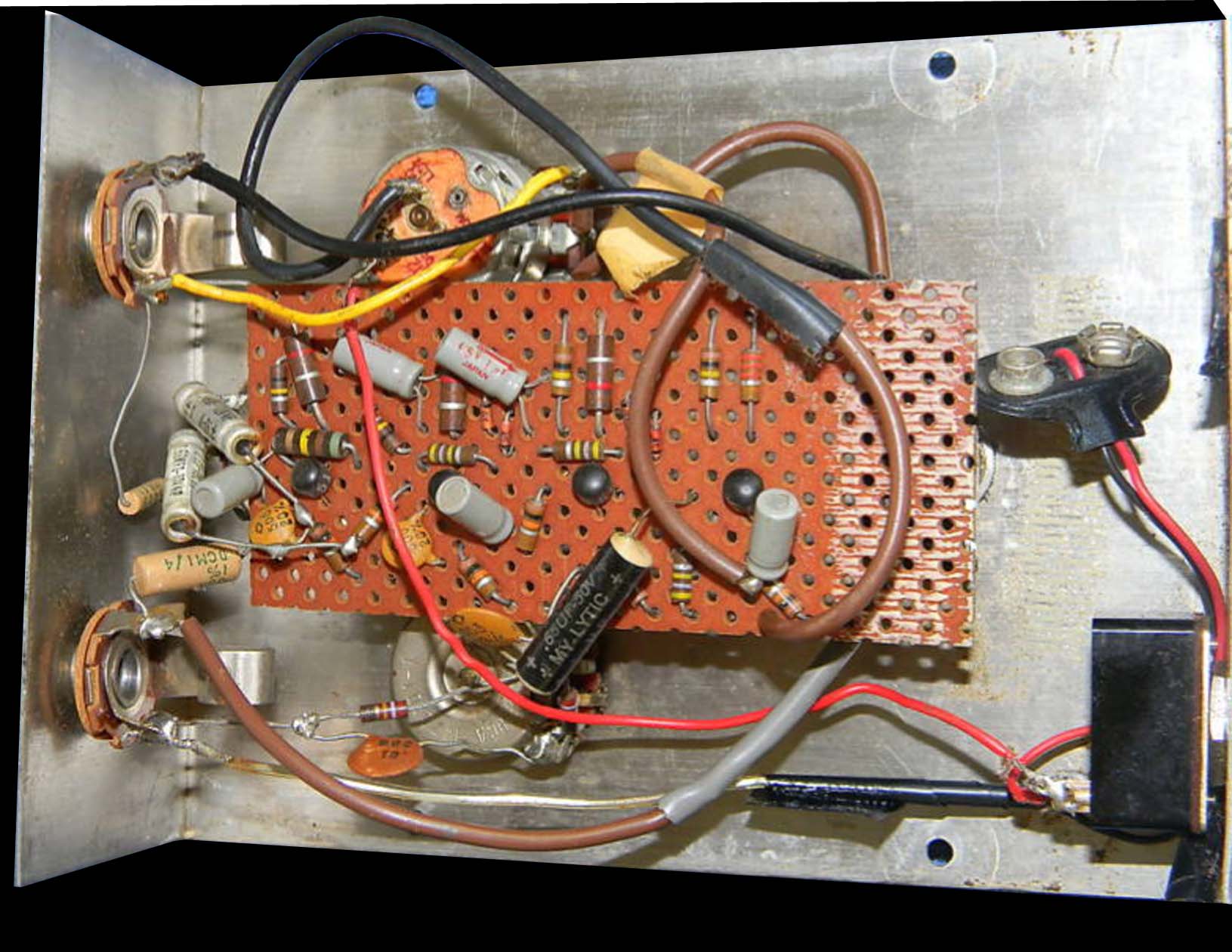
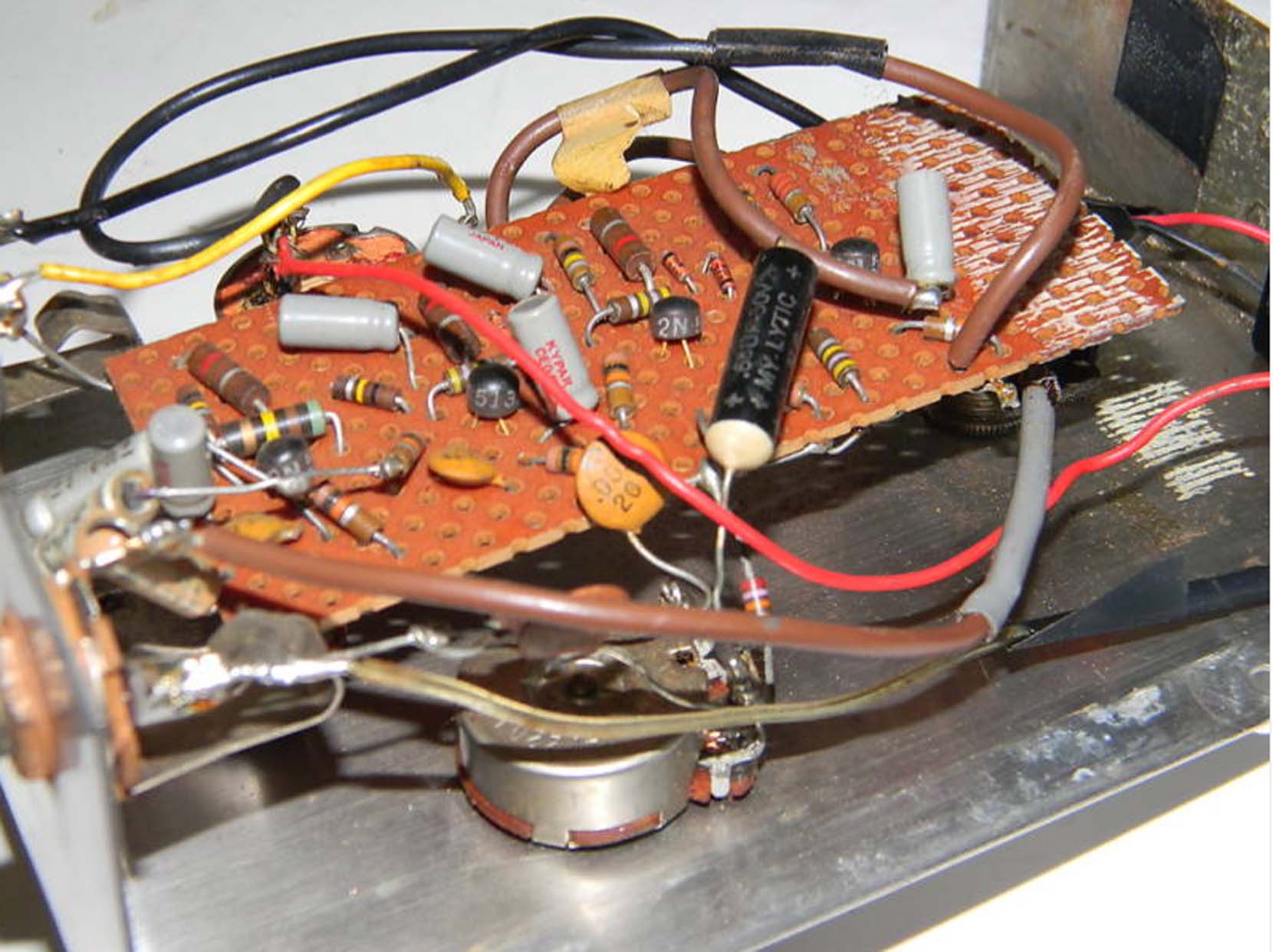
Shown above - Another first edition 1970 V1 Triangle Big Muff. Includes the on/off pot and perf board circuit, again with with NPN 2N5133 transistors. Pots dated 1966. This one has been modded with an added toggle switch. Note that none of the three perf board circuits shown above have identical components or values.
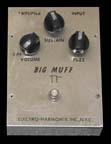
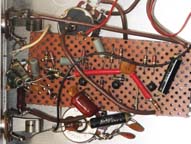
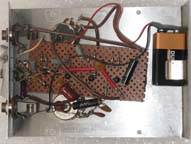
Shown above - Another first edition 1970 V1 Triangle Big Muff. Includes the on/off pot and perf board circuit, again with with NPN 2N5133 transistors. Pots dated 1966. (thanks to Ultraboreal for the pix)
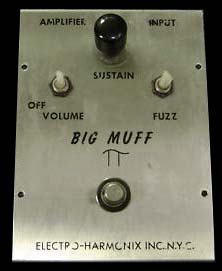
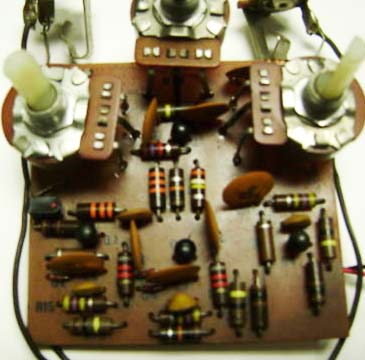
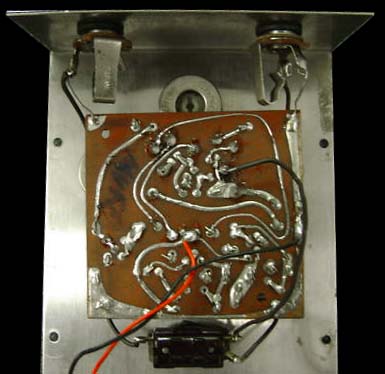
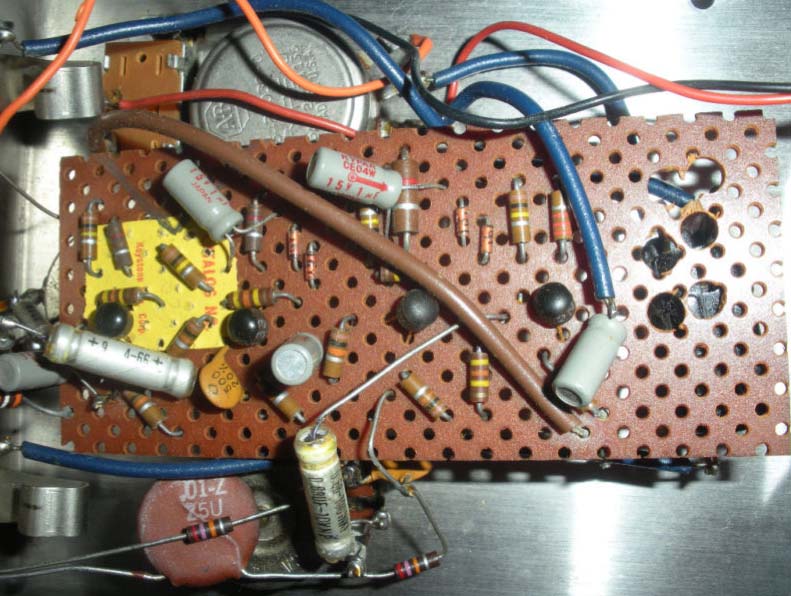
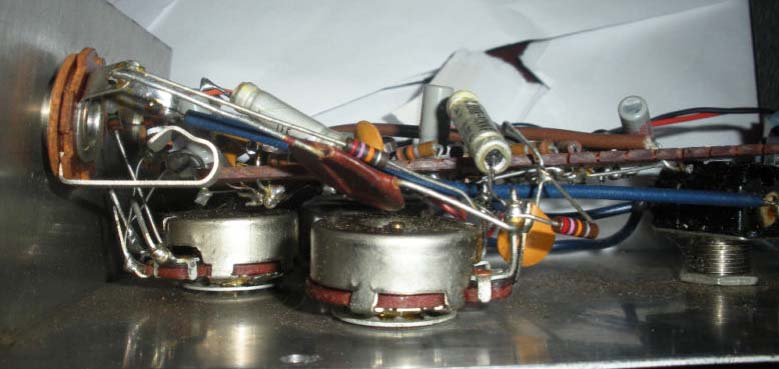
Shown above - A few odd V1 Big Muffs. (left) First edition 1970 V1 Triangle Big Muff with on/off pot and a very early printed circuit board. Note that many of the resistor values are different than the perf board examples shown above. 2n5133 transistors seem to be consistent on all first edition V1 Muffs. Pots dated 1966. (right) Another V1 with a perf board, but this time with the on/off switch.
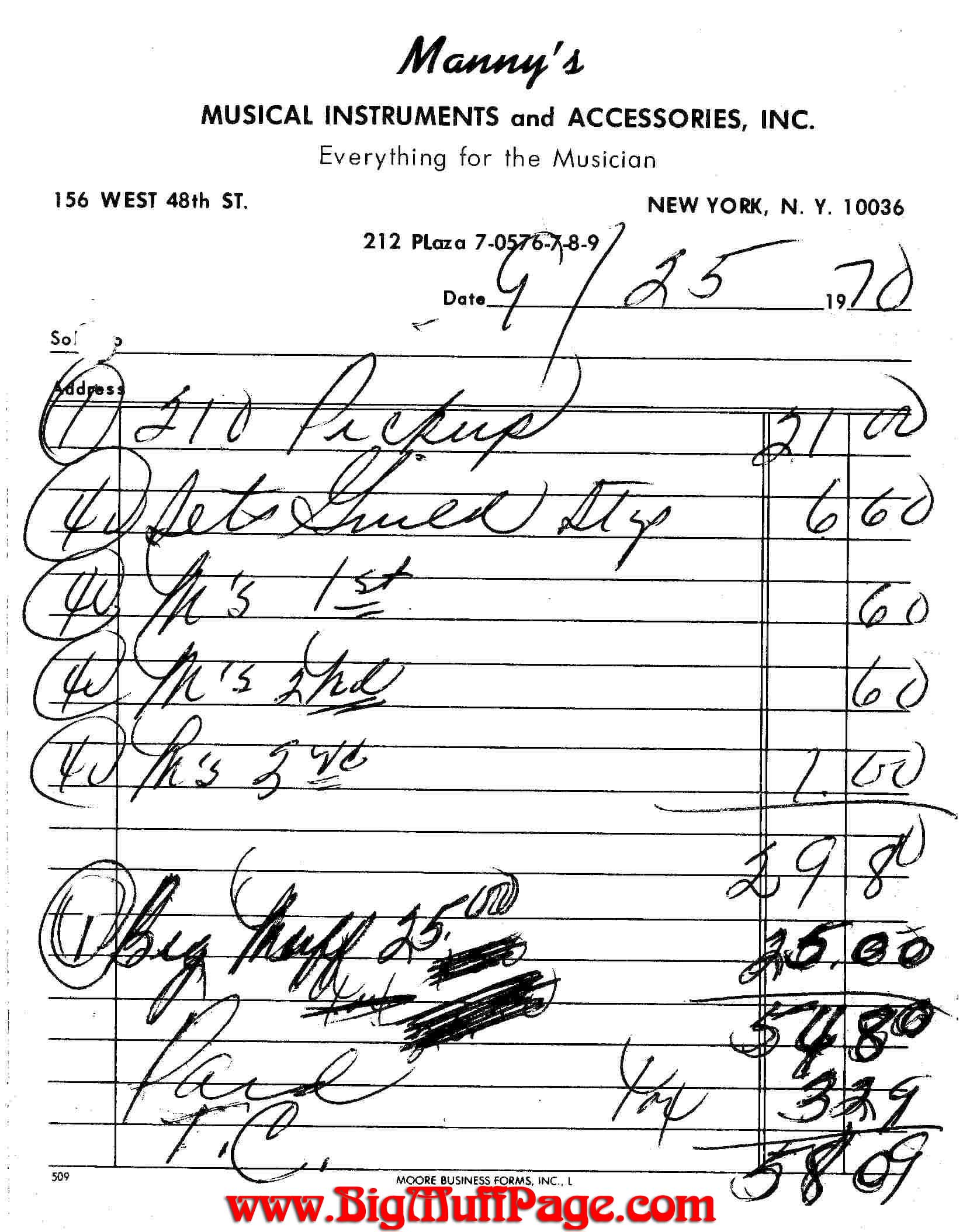
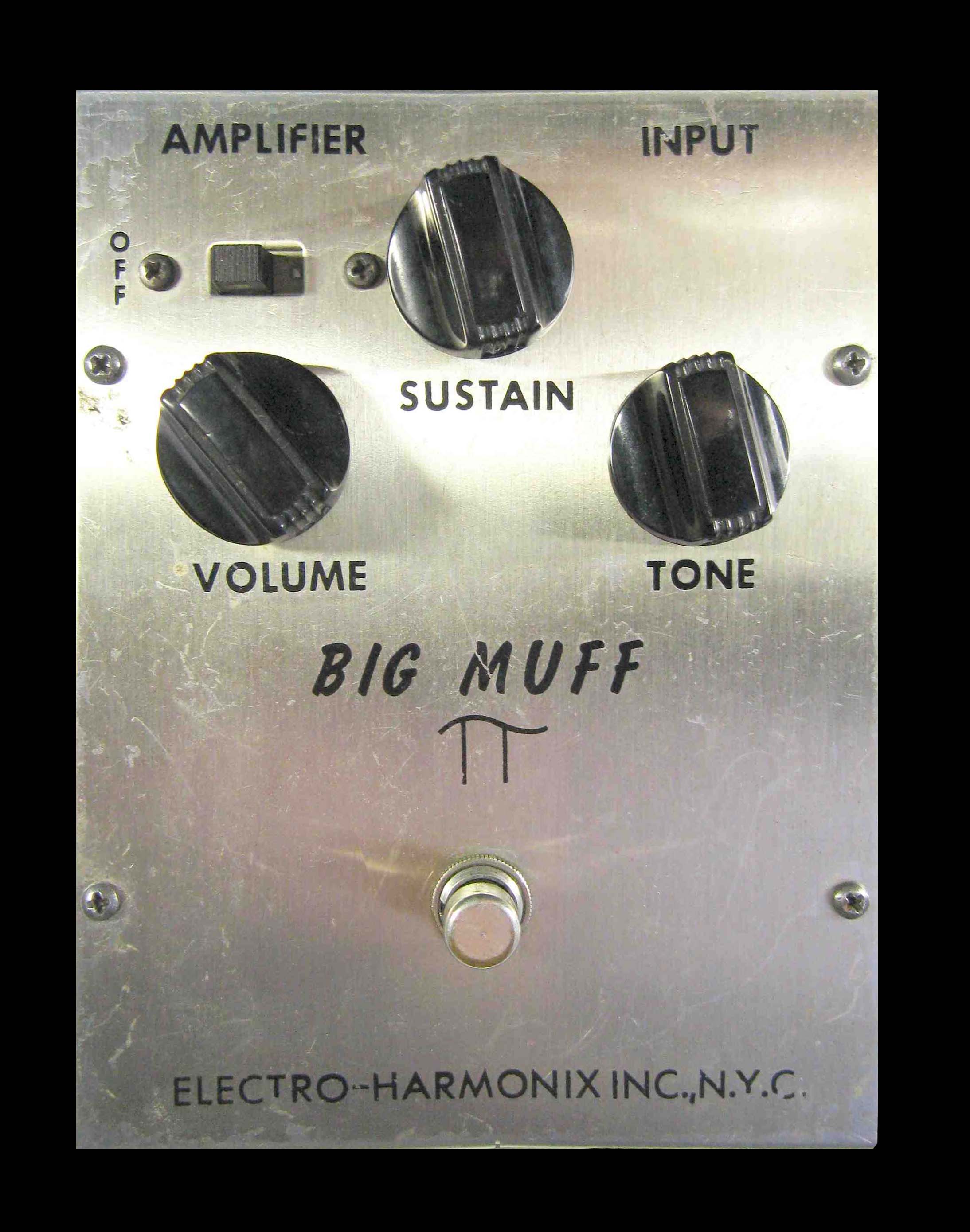
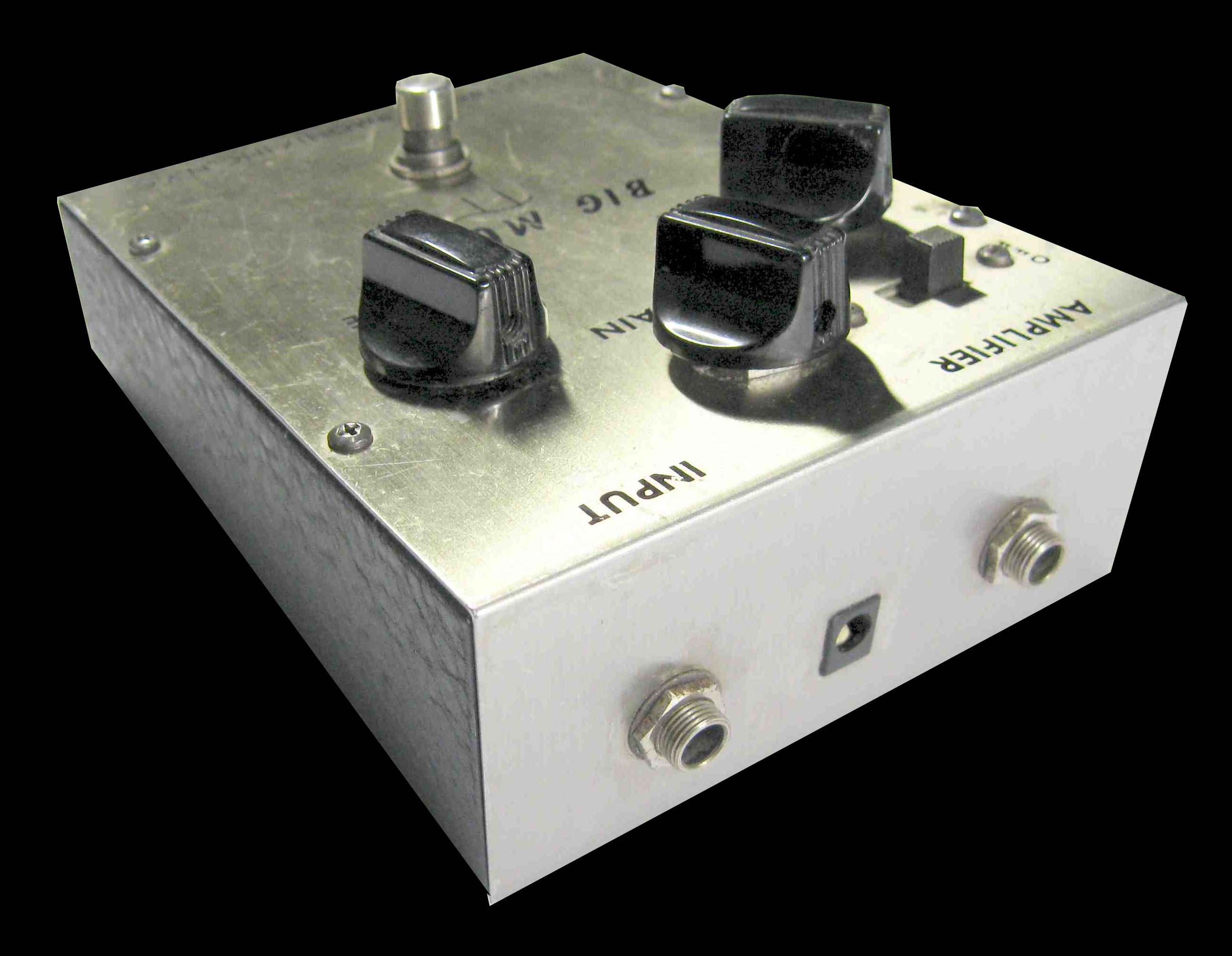
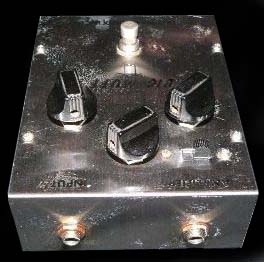
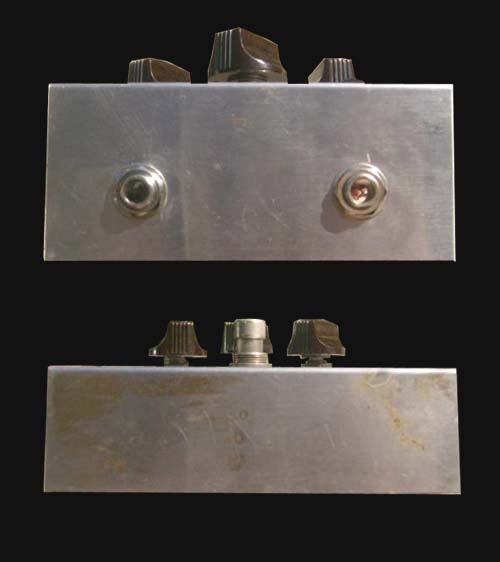
Shown above - Second edition V1 Triangle Big Muff and receipt from Manny's Music dated 9/25/1970. Muff pots dated 1966, though this second edition V1 Muff was actually built in 1970. Note the on/off switch added above the volume pot and the word TONE which replaced FUZZ on the V1 first edition (thanks to Carlos Lenoir of Argentina for the pix on left and receipt)
.jpg)
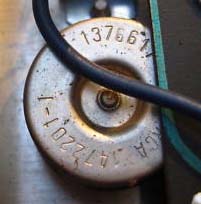
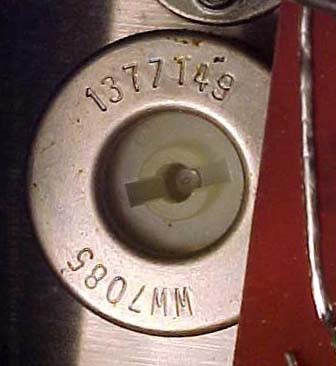
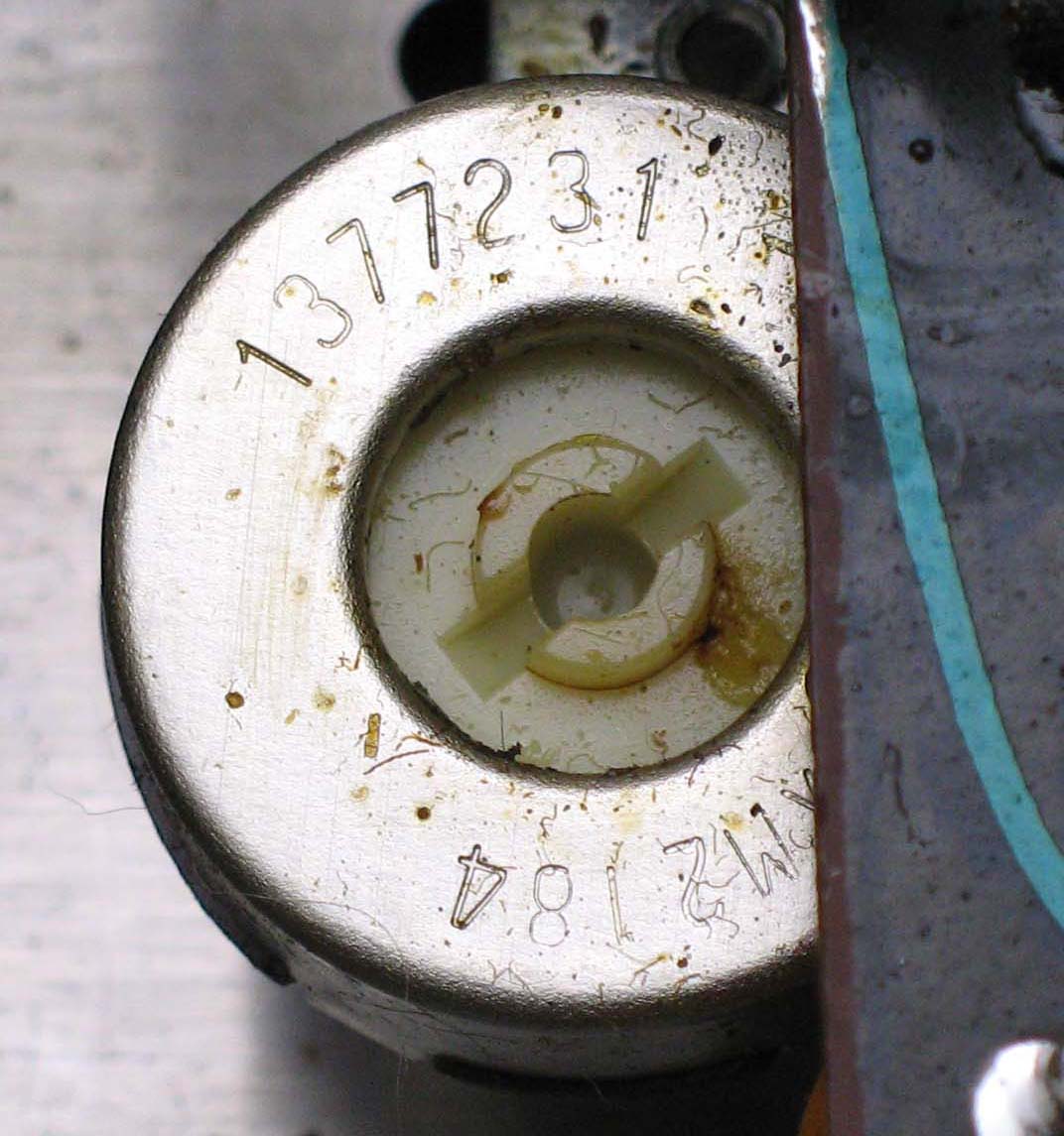
Shown above - Three of the common pot types and Codes found on V1 Big Muffs. Left to right pot dates are - 1966, 1966, 1971, 1972. Over 150,000 1966 dated surplus pots were purchased when E-H first started making pedals
 ..
..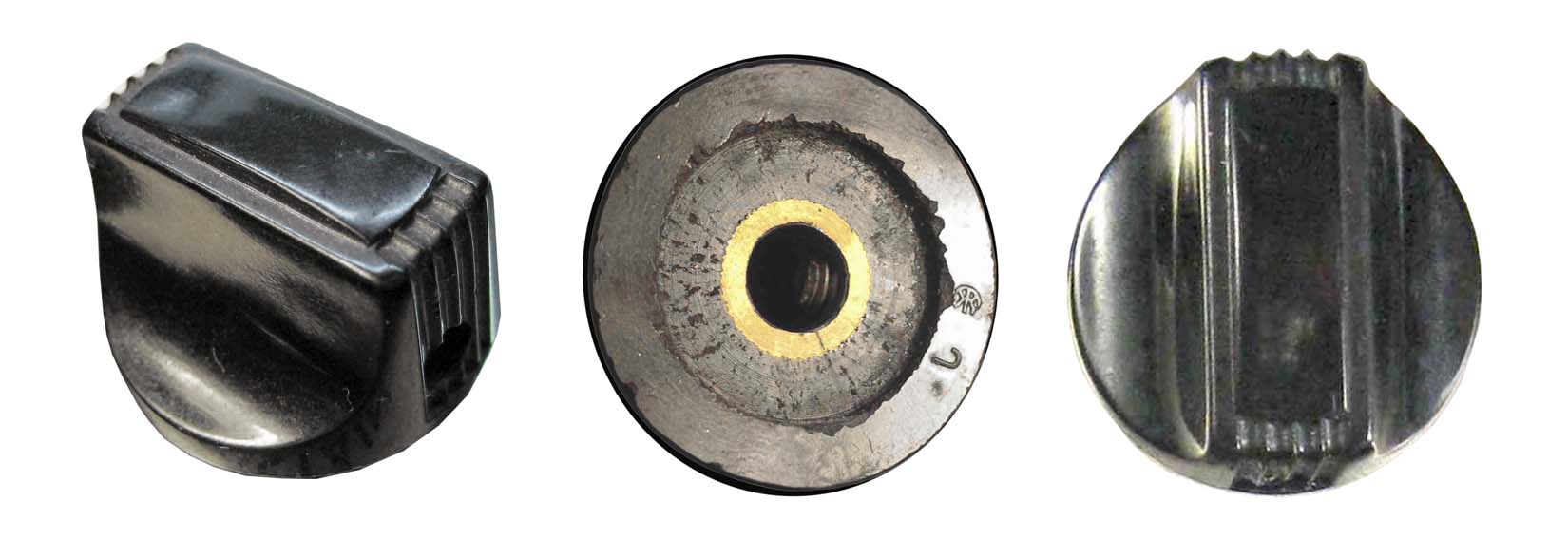
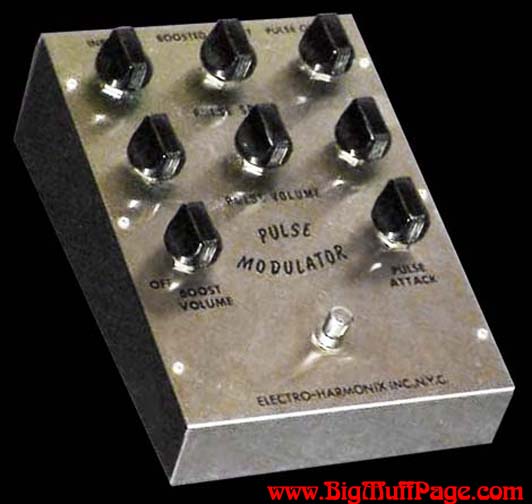
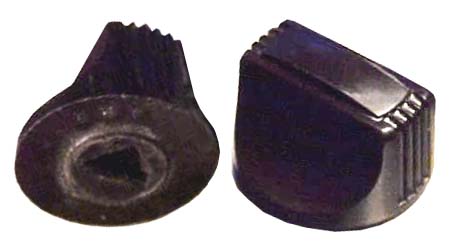
Shown above - E-H was using the same style Bakelite "pinch" knobs for all pedals at this time, including the Pulse Modulator pictured above (right). The common one on the top left is a "pinch" style Bakelite press on knob, similar to the radio knobs used by RCA Victor and Philco in the 1940's/50's. They were bought by E-H in a surplus lot of over 100,000 knobs. The version shown on the right has a set screw in the side and a brass sleeve. This style was used on all first edition and early second edition V1 Big Muffs, the Electro-Harmonix Axis pedal, the two-knob Foxey Lady (a rebranded E-H AXIS pedal) and three knob Foxey Lady (a rebranded V1 Triangle Big Muff), and many other E-H products.
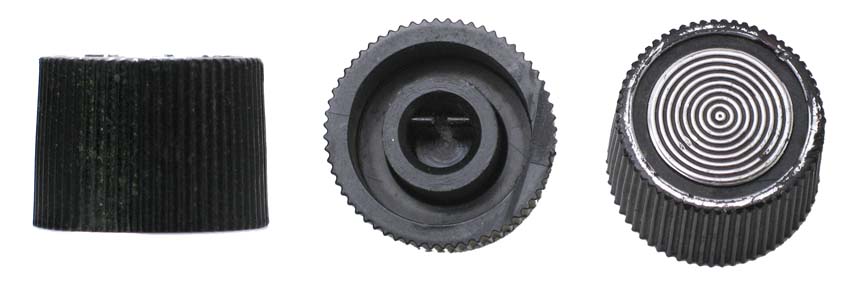
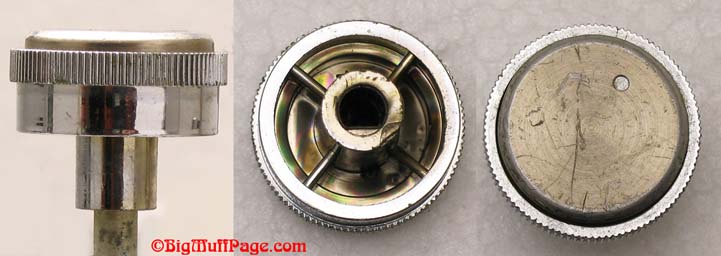
Shown above - Two of the other factory knob types used on V1 Triangle Big Muffs. These are just a few of the many different styles used by E-H after the original Bakelite pinch knob stock was used up.
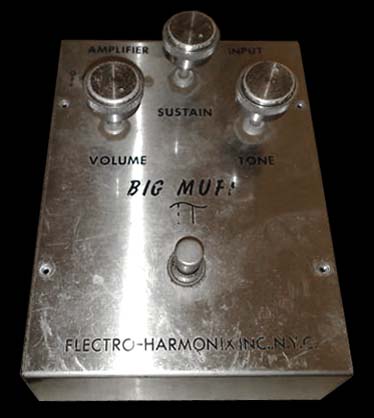
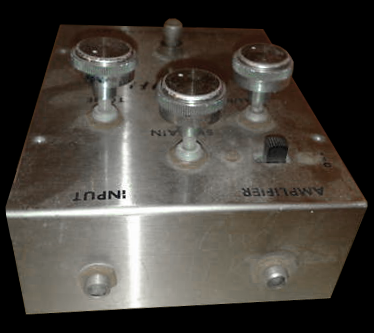
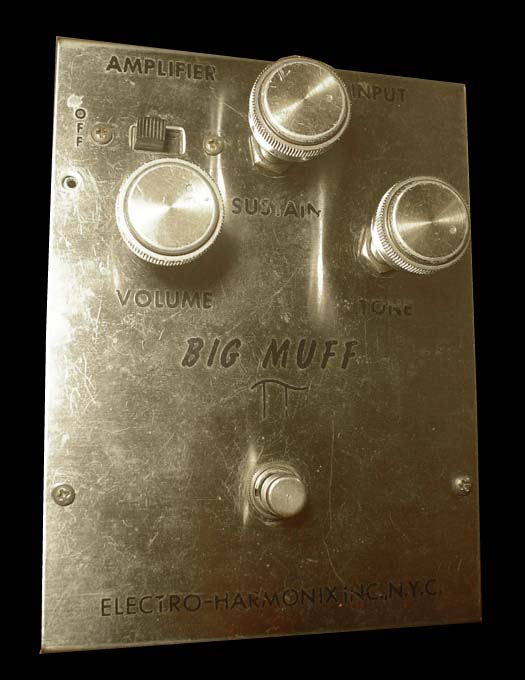
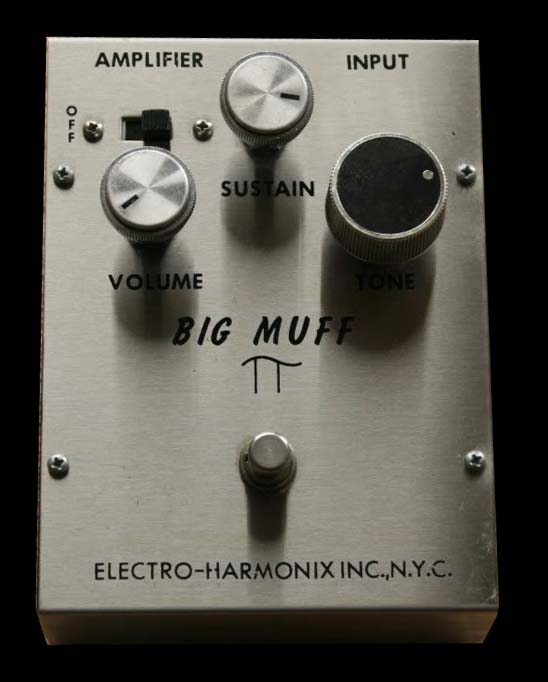


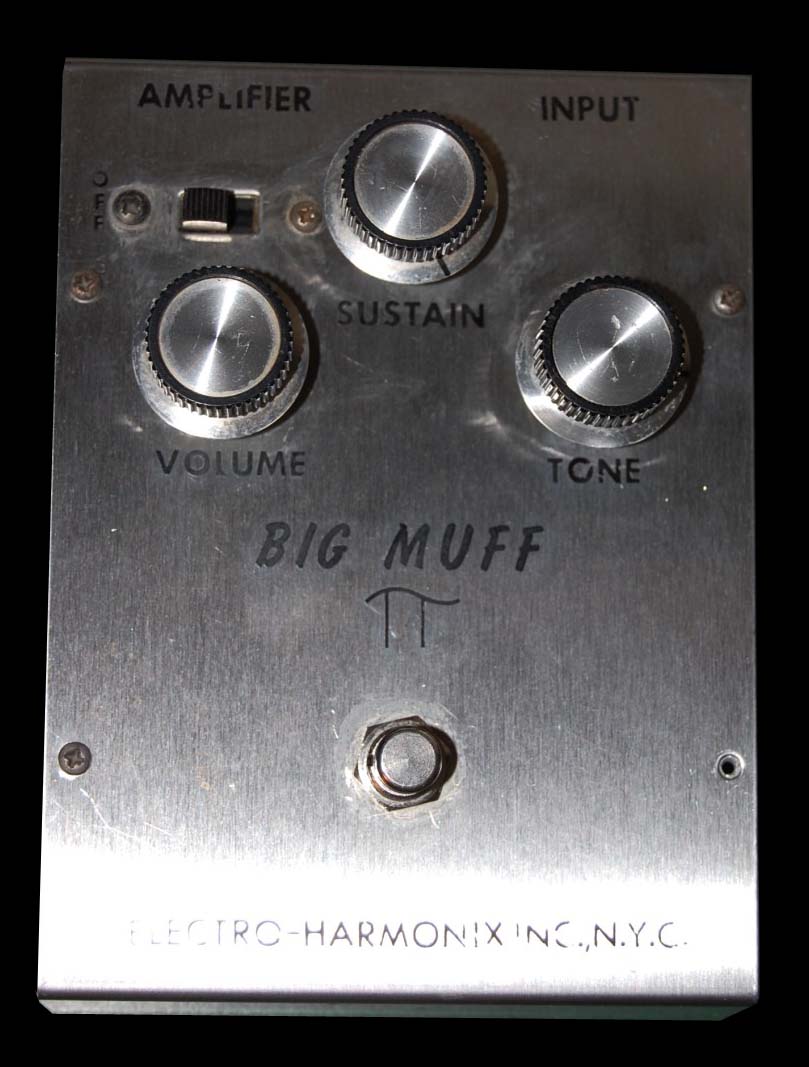
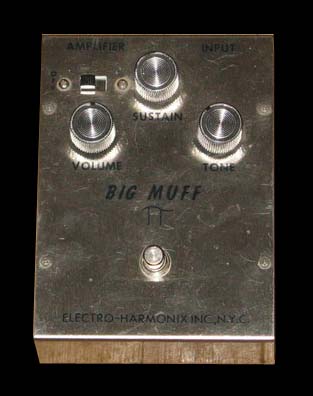
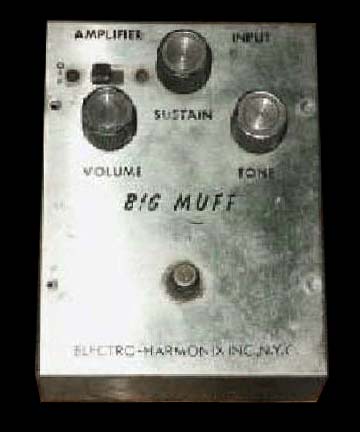
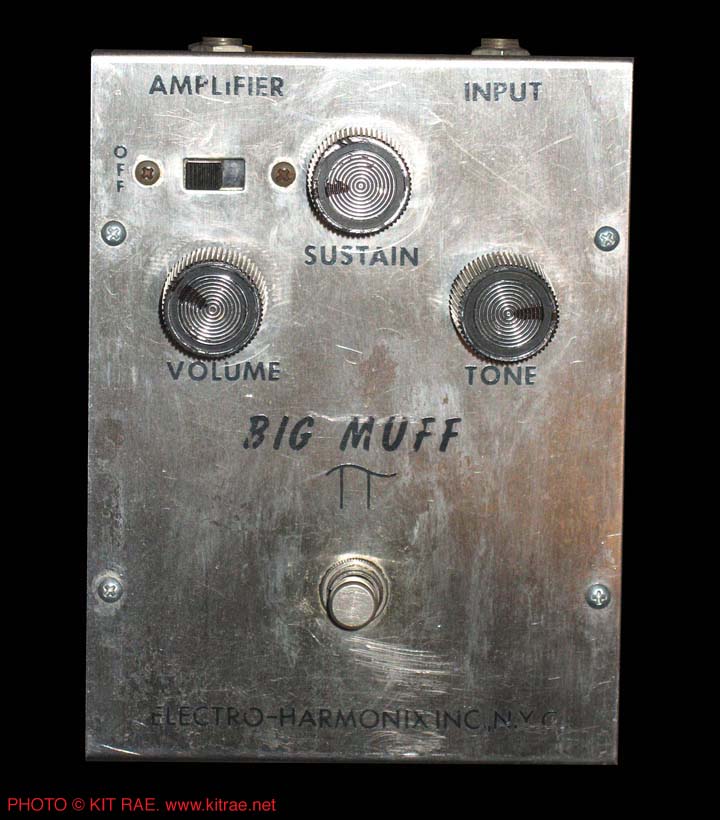
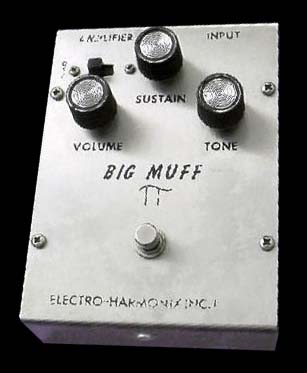
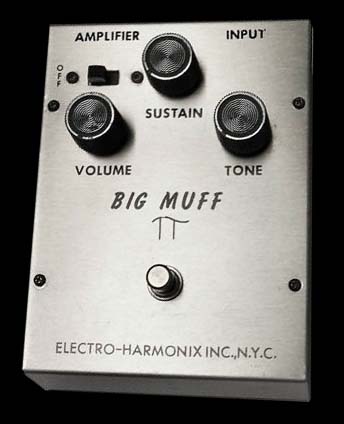
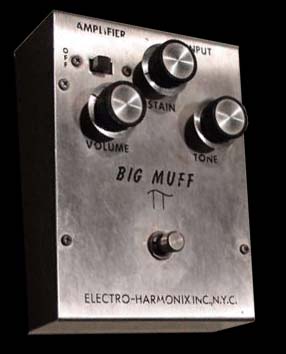
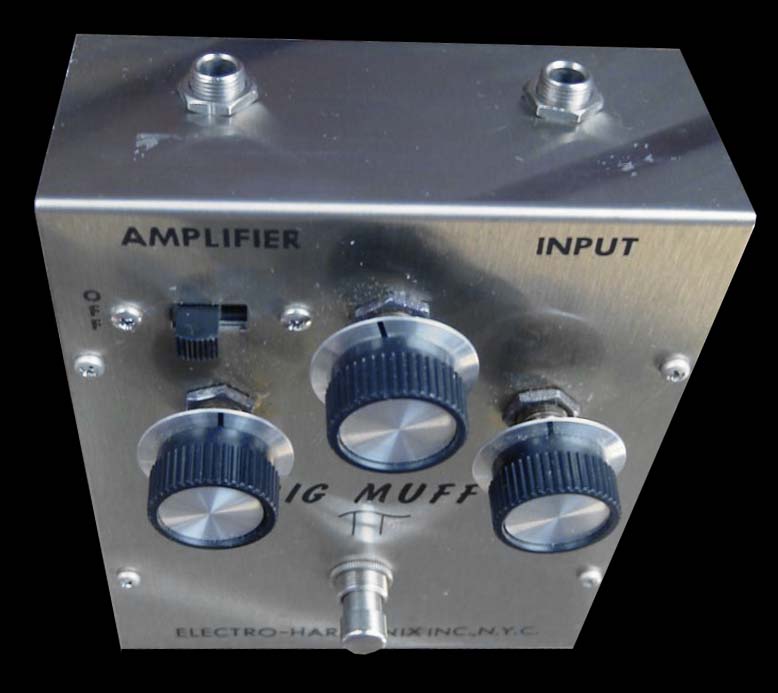
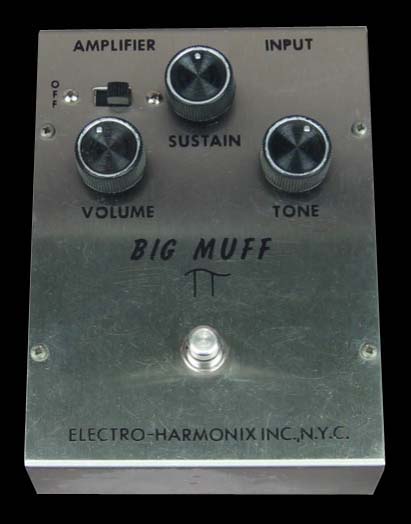
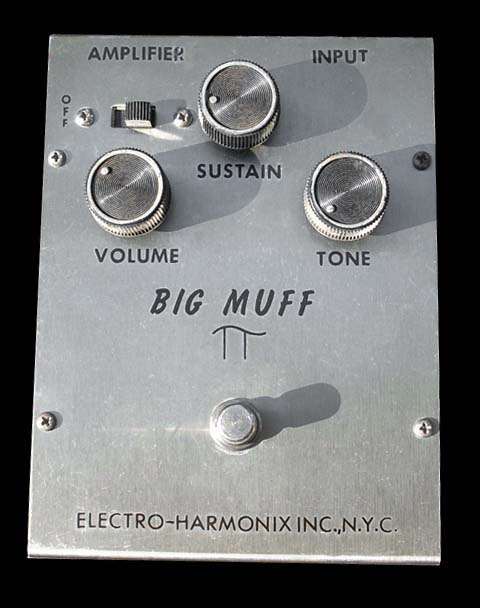
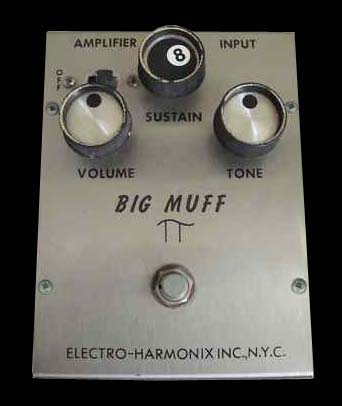
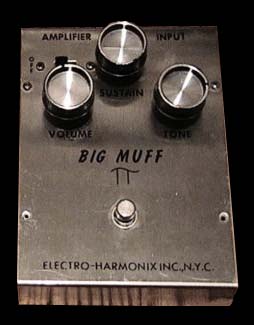
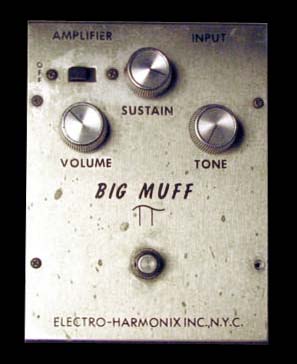
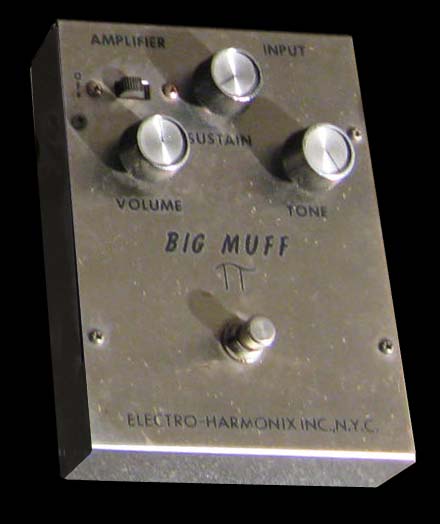
Shown above - Second edtion V1 Triangle Big Muffs with various alternate radio/amplifier knob types used by E-H. These are all actual production knobs, not after-market replacement knobs. They wee all used on V1 Big Muffs and the OEM version made for Guild, the Foxey Lady. There were at least twelve different factory knob types used, some purchased from Harry Davies of Davies Molding in Chicago.
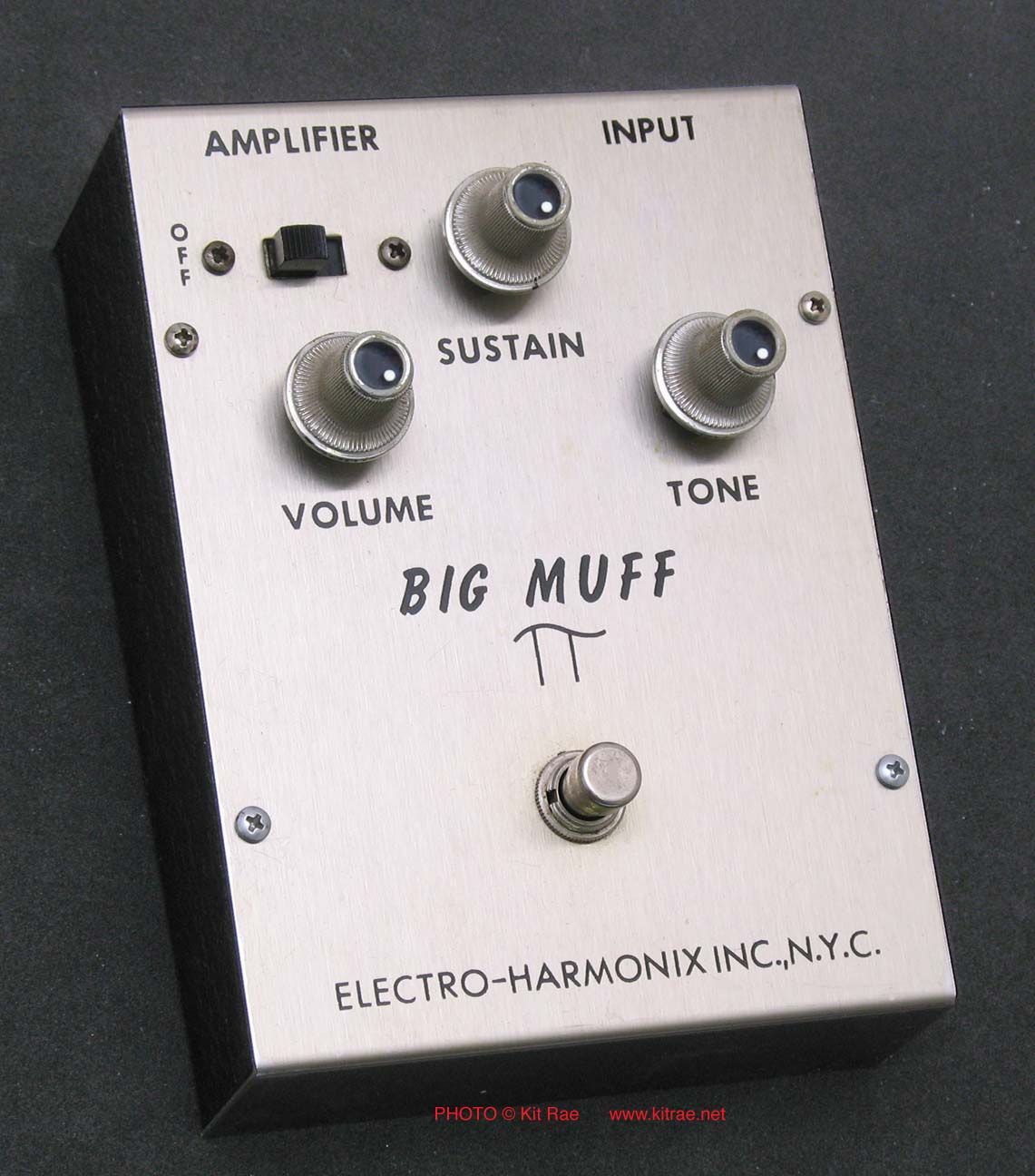
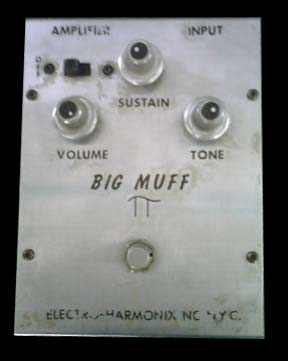
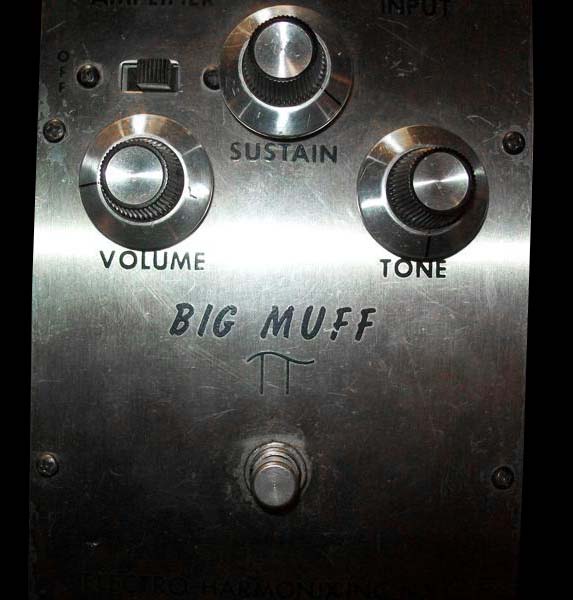
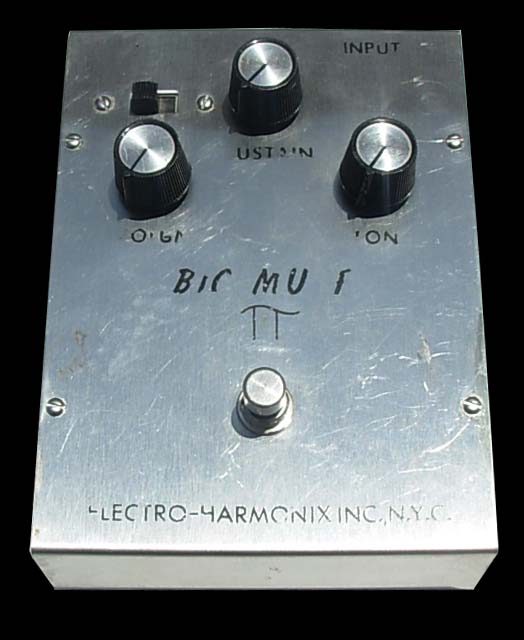
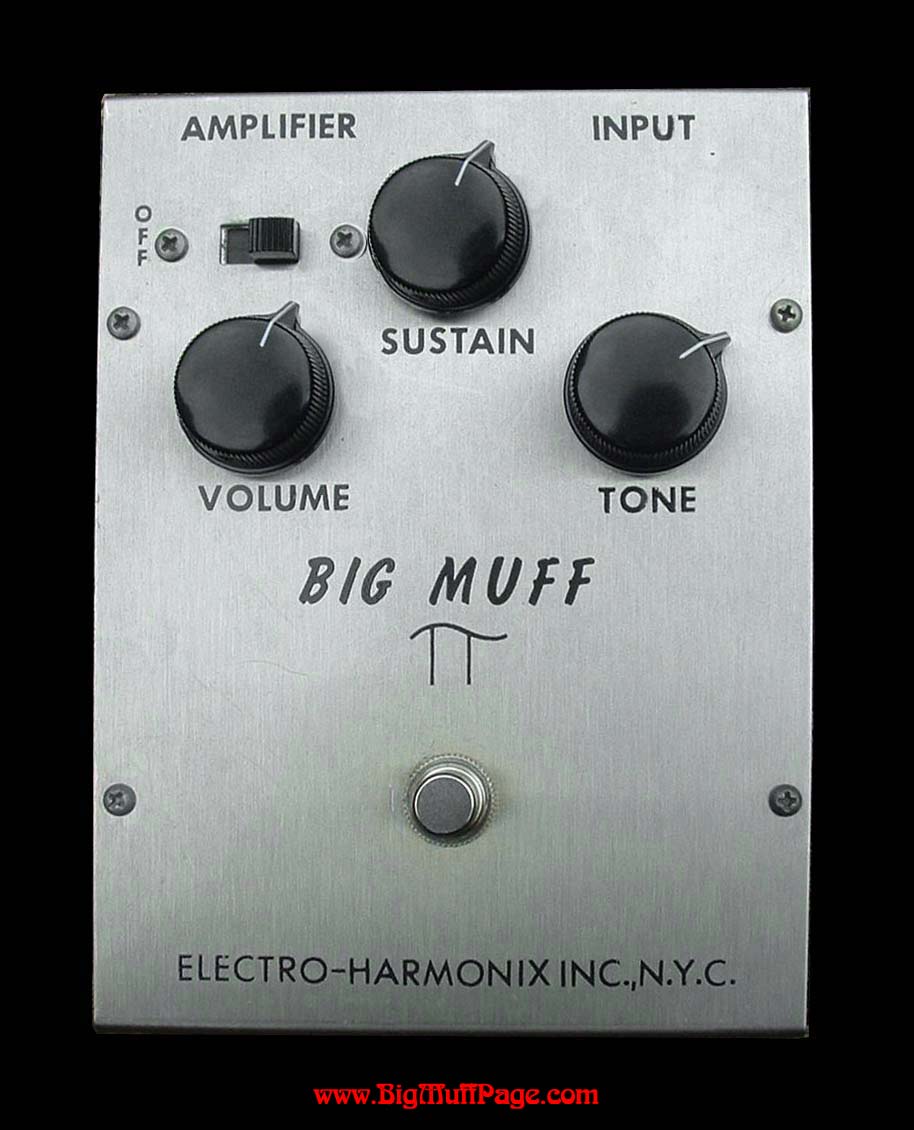
Shown above (left to right) - Second edtion V1 Triangle Big Muffs with various alternate knob types. The "reactor tower" shaped knobs on the left were also used on the early V2 Big Muffs in 1973, indicating these V1s were some of the last production Big Muffs made before they moved into the larger V2 box. The knobs on the two middle examples are likely after market replacements. The knobs on the right example are actually modern Davies Molding replacement knobs. The same knobs were used on early V9 Big Muffs in 2000, but never used on production V1 Big Muffs.
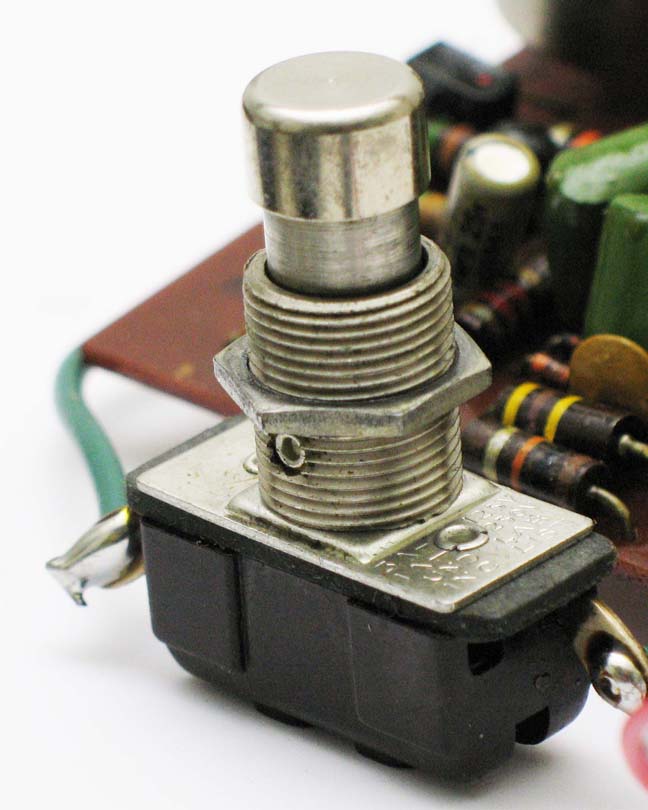
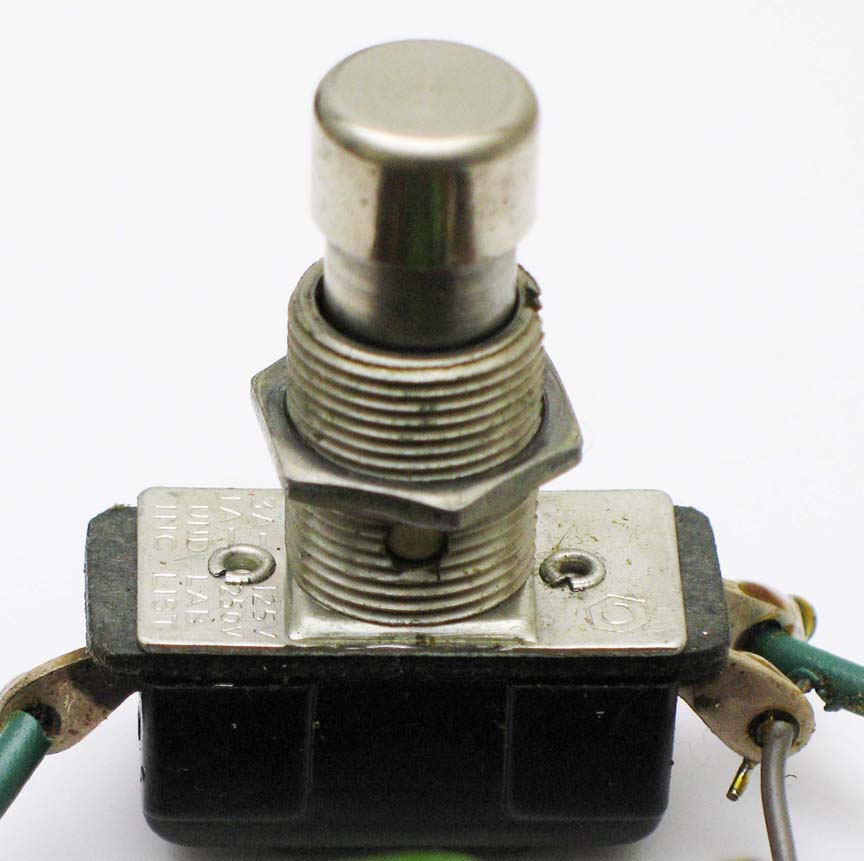
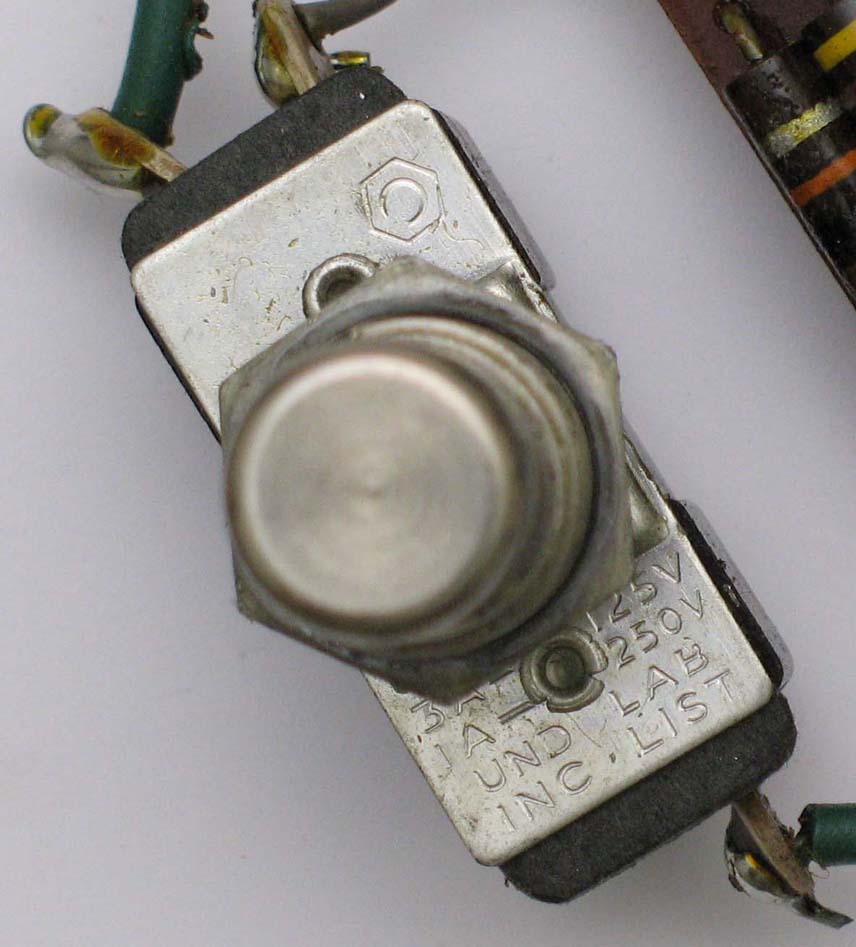
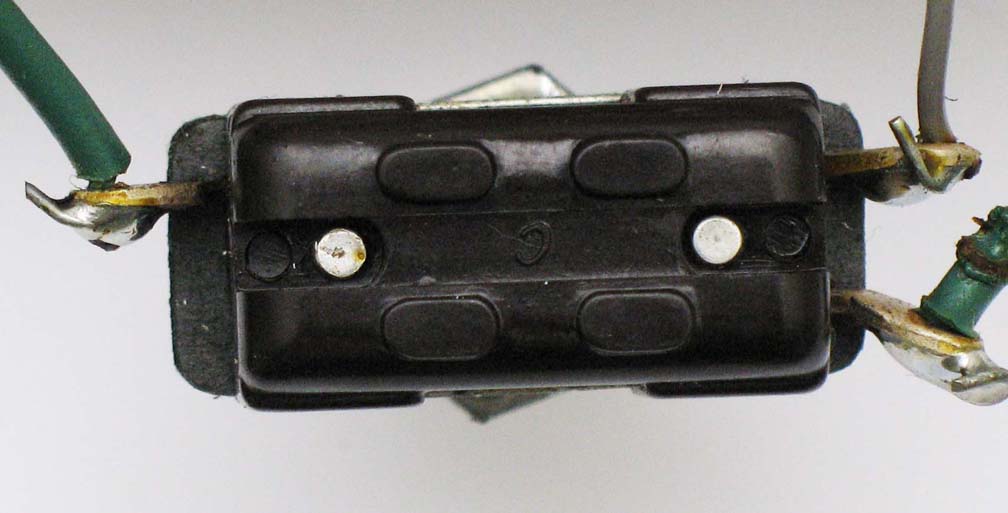
Shown above - The V1 Triangle Big Muff footswitch used on all Version 1 Big Muffs. This is a 3 pole Carling SPDT

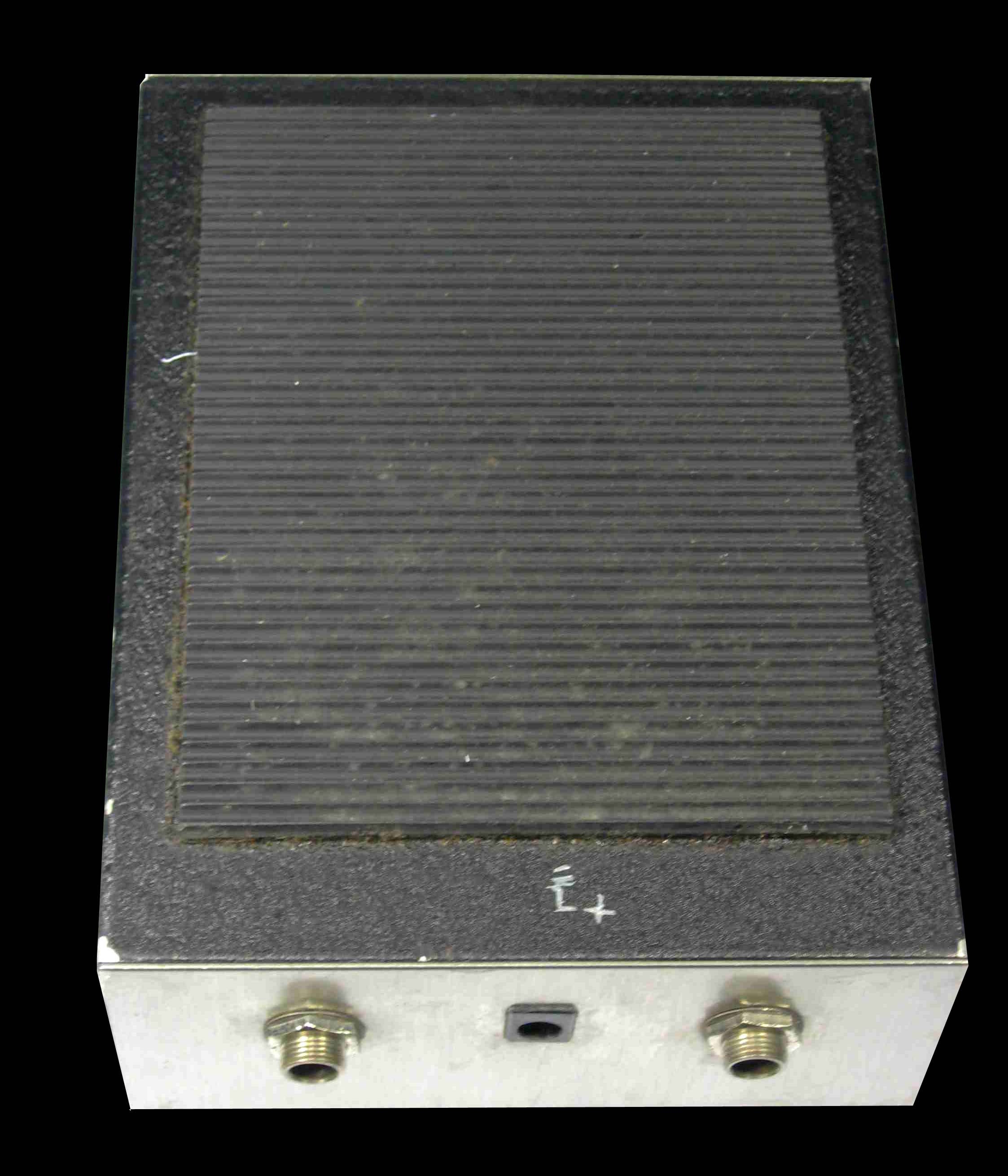
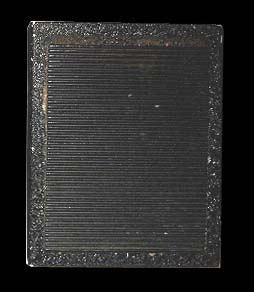
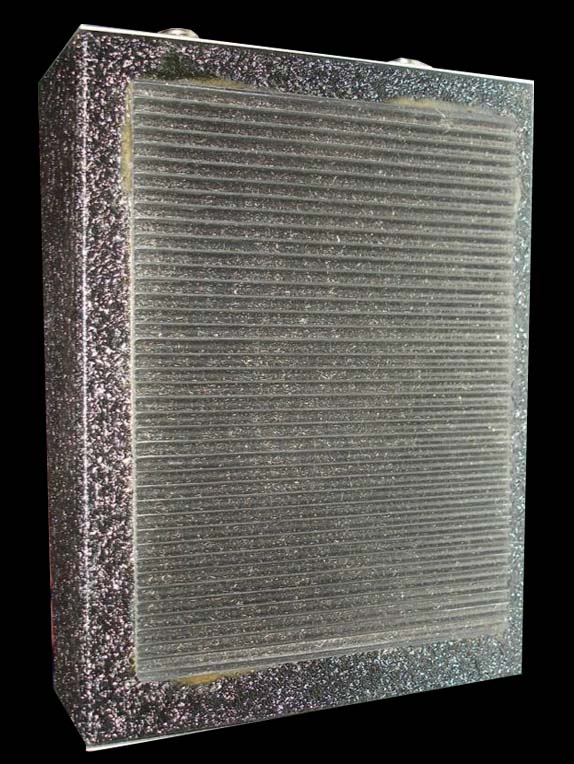
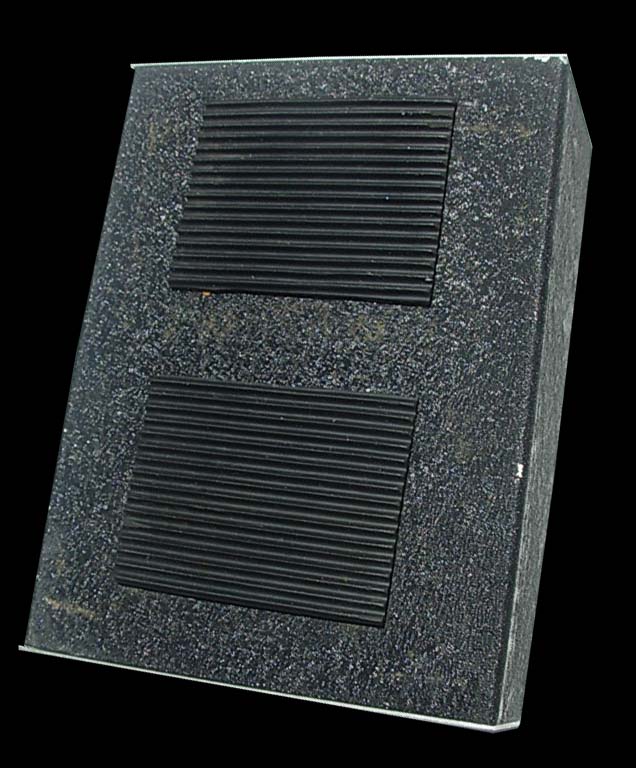
Shown above - The enclosure bottom was covered with a rubber skid pad. This pad is missing on most Triangles, and often times there is noticable glue residue remaining like the example on the left. Example on right is an odd split pad version that may have been done as an after market modification

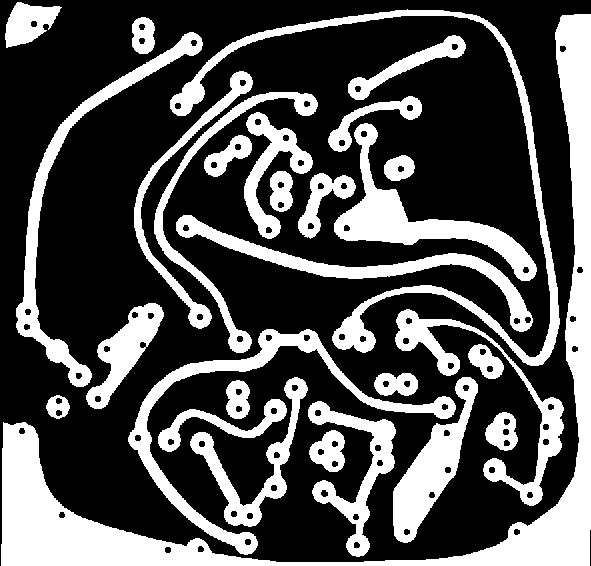
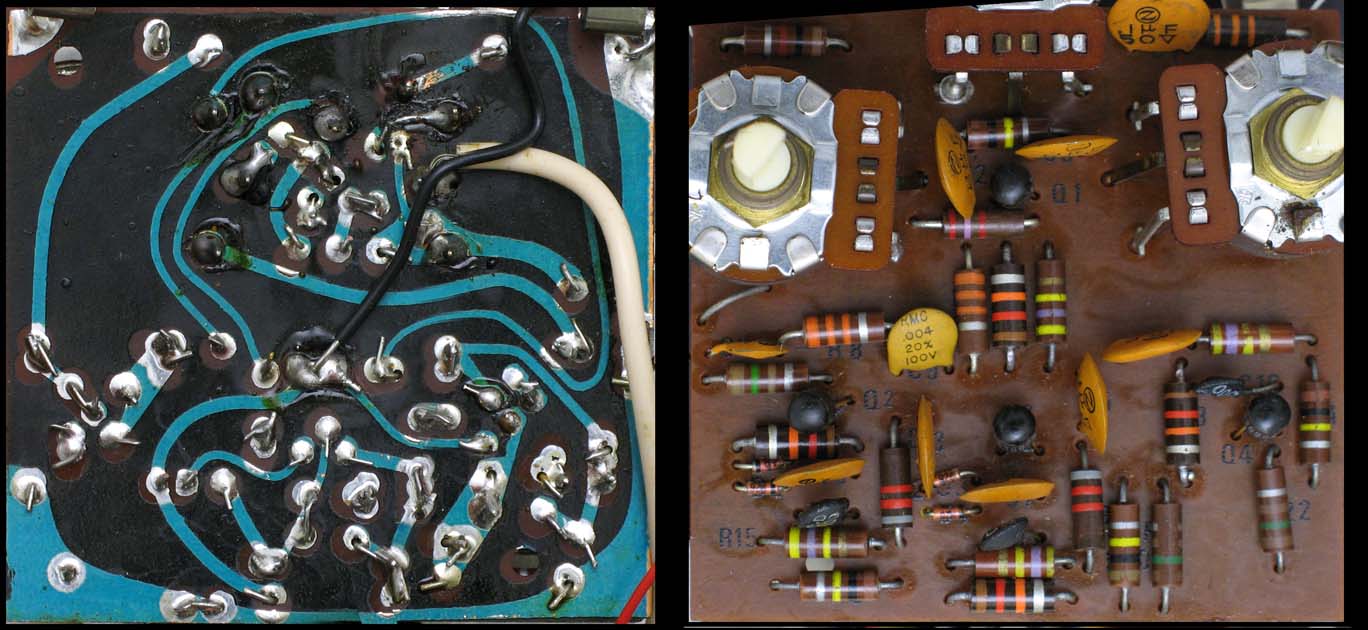
A tracing of the V1 Triangle Big Muff printed circuit board with jumper added (1966 pots), and the later corrected circuit trace side and populated side, both found in the Triangle second edition.
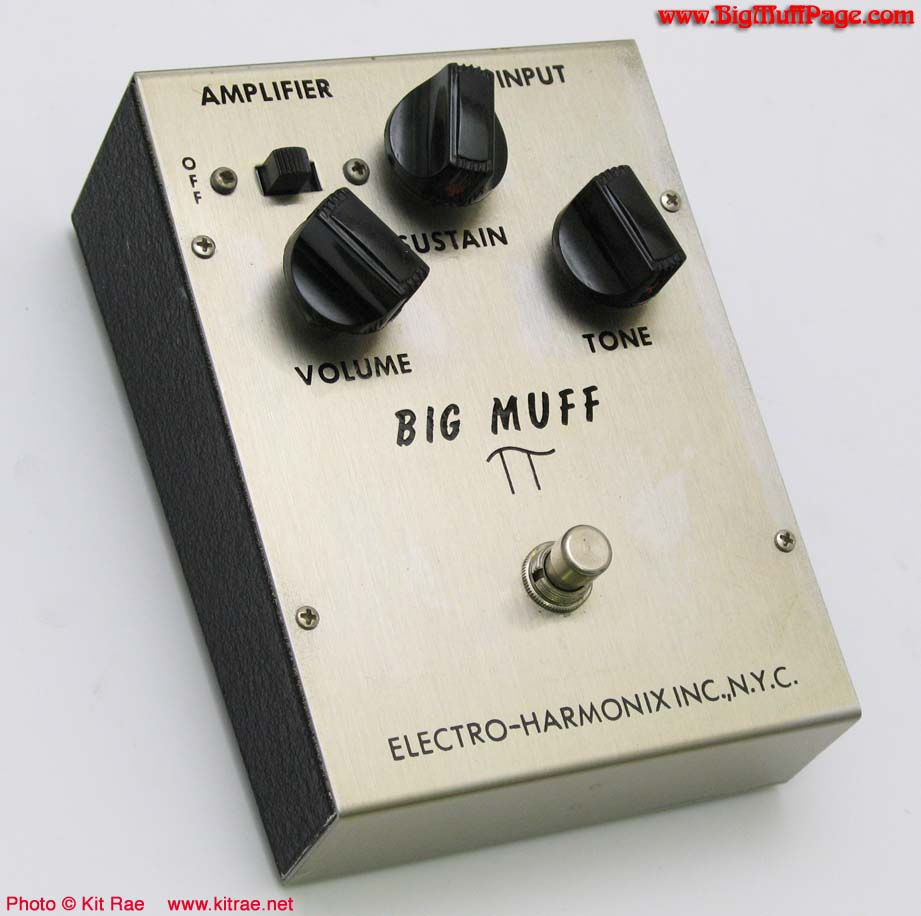

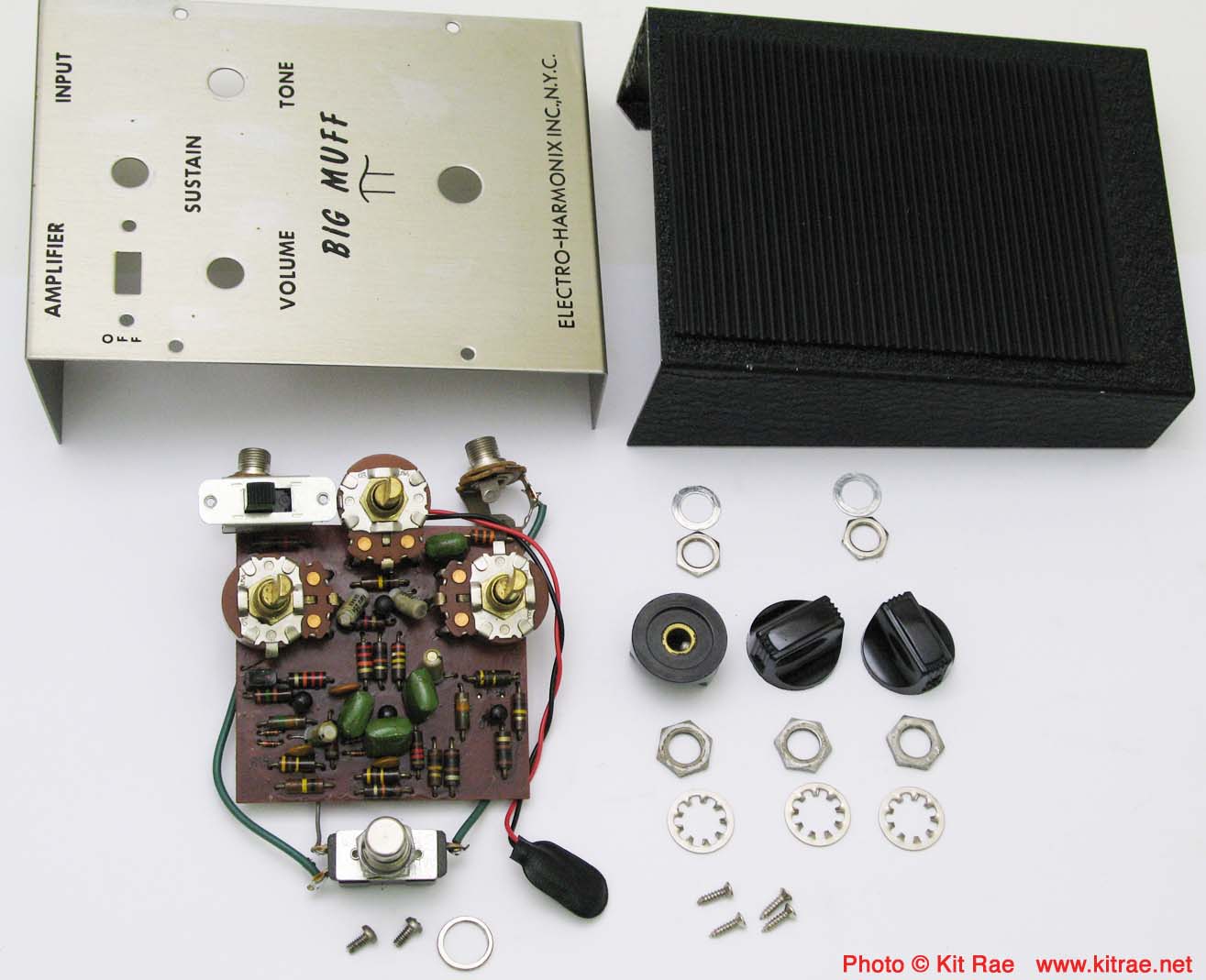
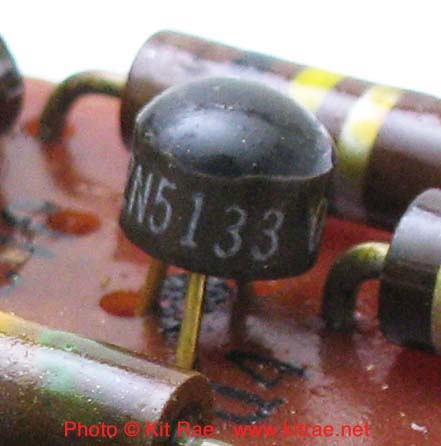
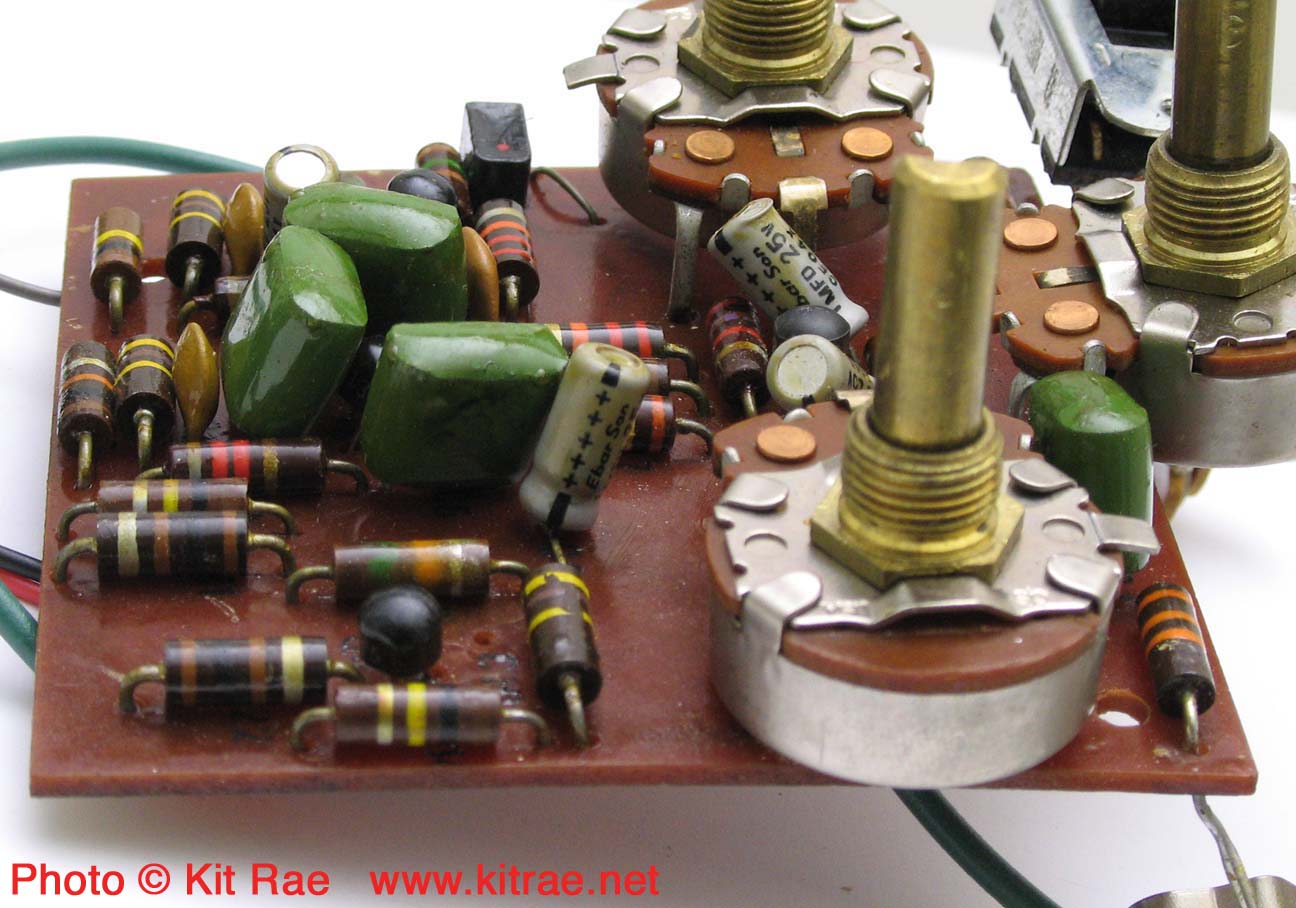
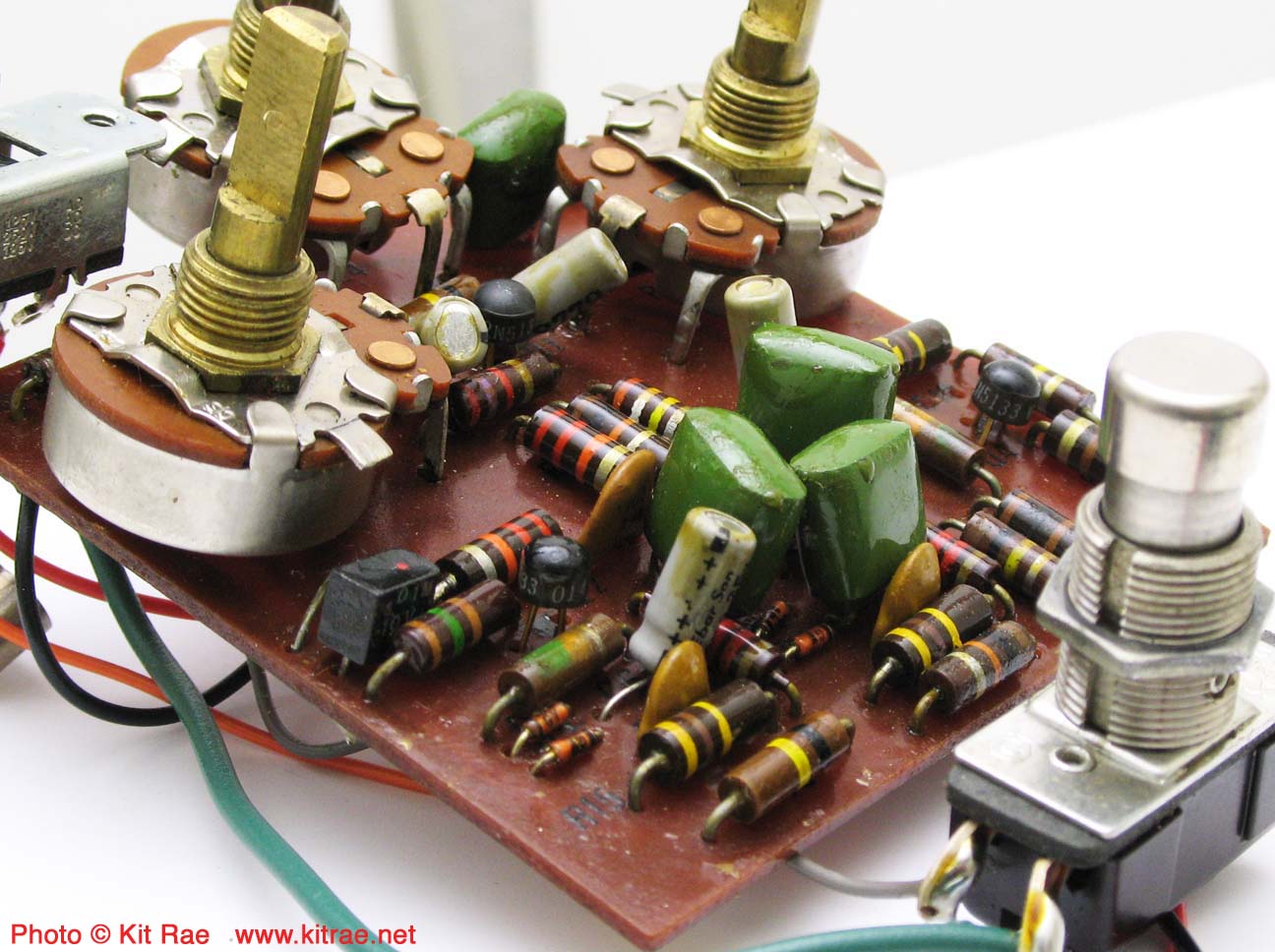
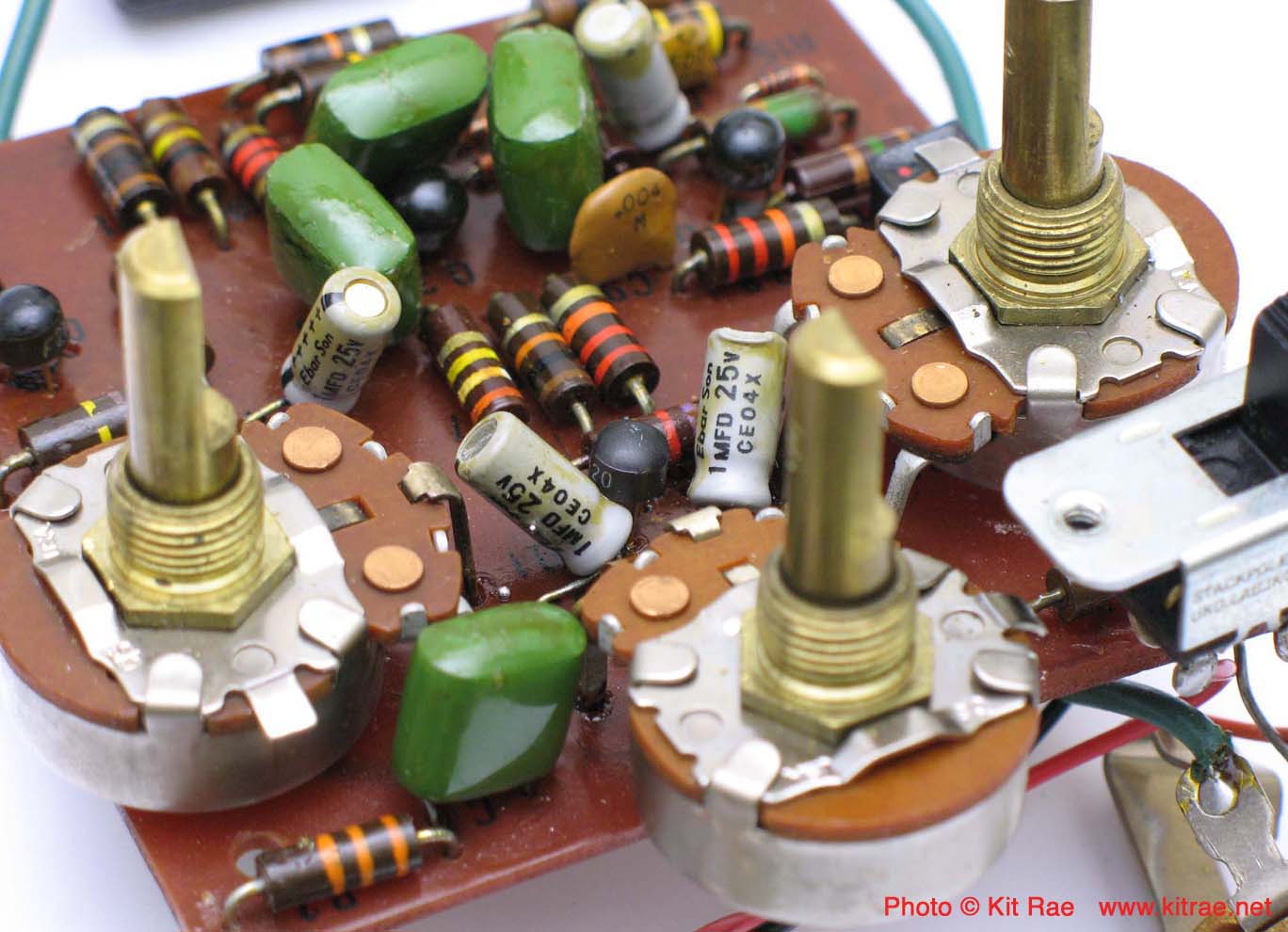
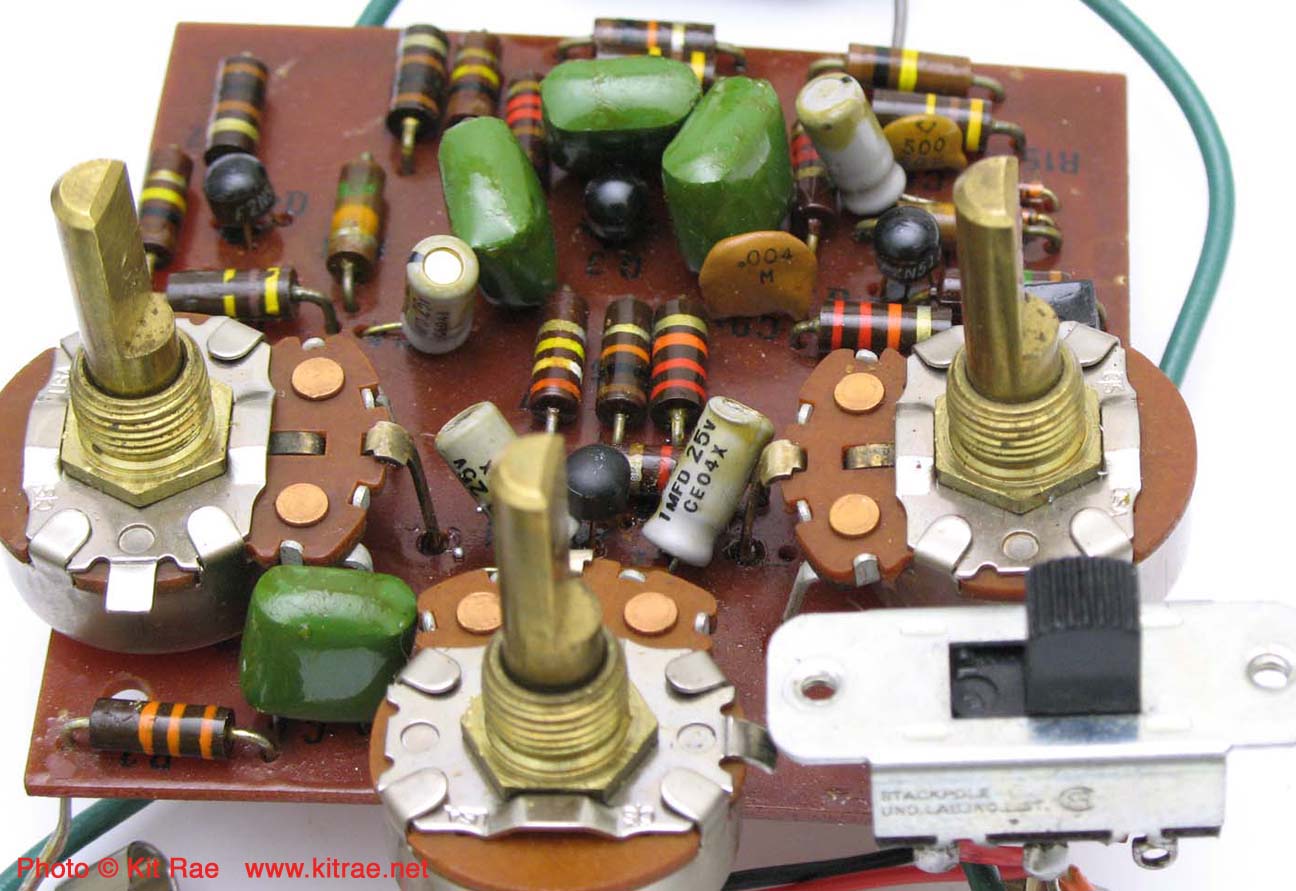

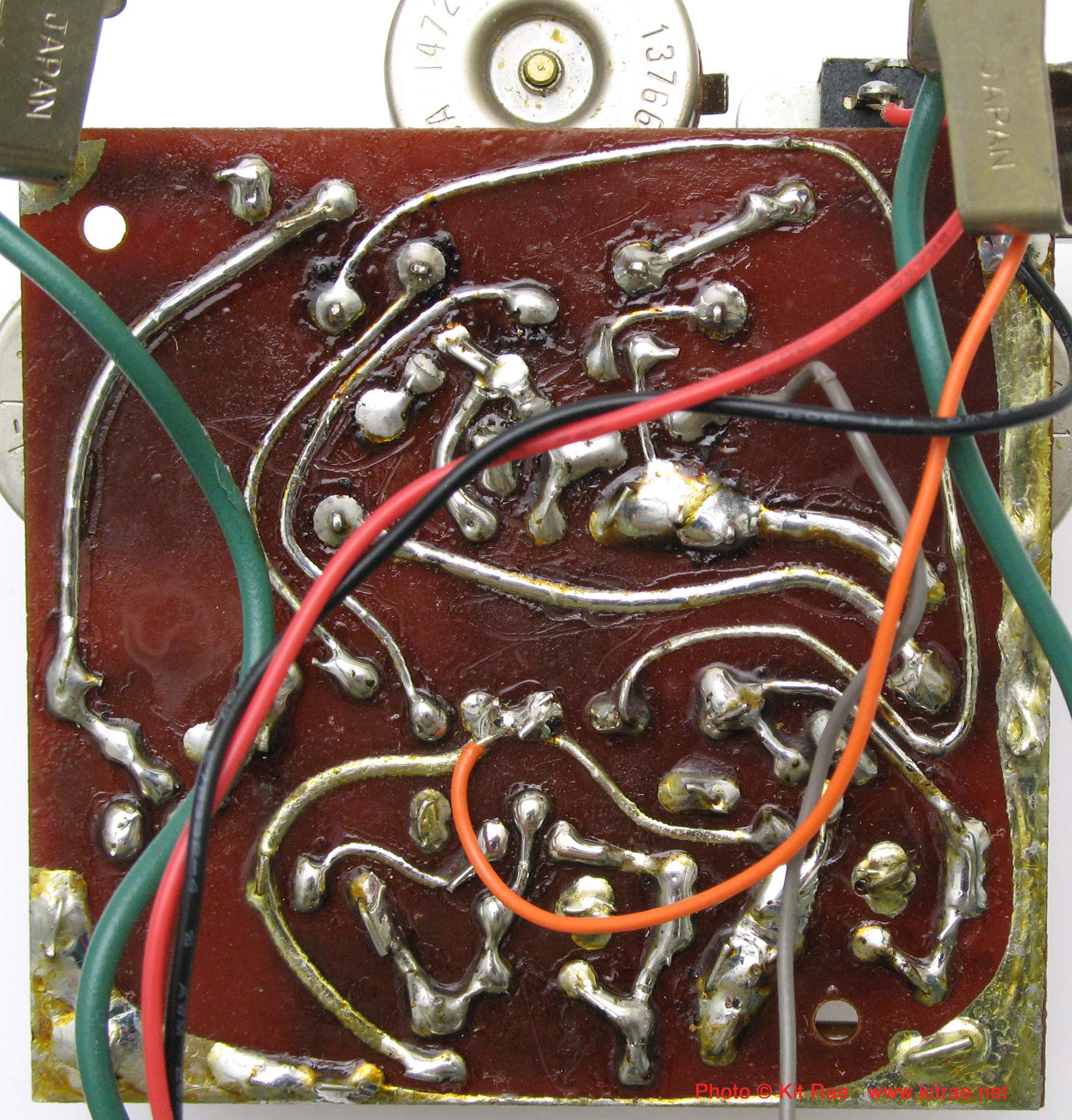
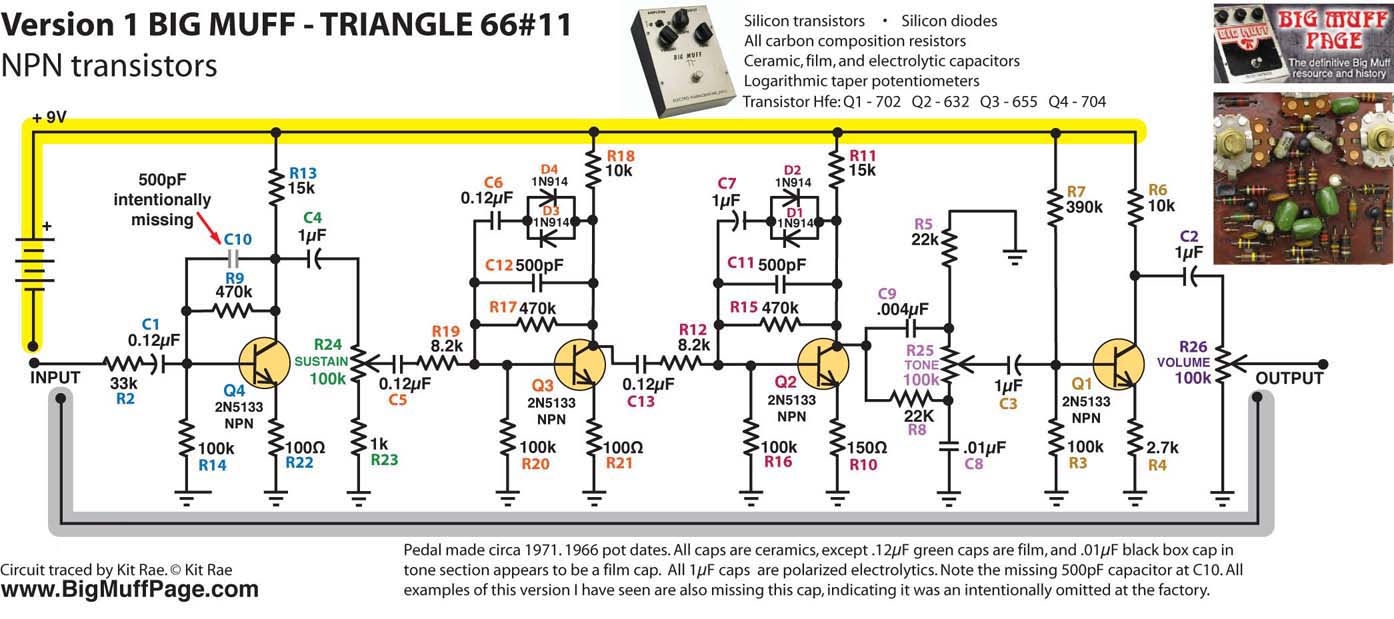
Shown above - A circa 1970-'71 second edition V1 Big Muff with 1966 brass shaft pots, original bakelite knobs, and NPN 2N5133 transistors. This is one of the best sounding V1 Big Muffs I have heard. The pots with brass shafts, unmarked green capacitors, odd black box tone cap, and gray electrolytic caps were originally thought to be after market replacement or repair parts, but I now know these are all original components. I have come across multiple examples from different owners with exactly these same component types and values, so this version seems to have been rather common. Note the missing 500pF capacitor at C10. All examples I have seen, including the two identical examples shown below are also missing this cap, indicating it was an intentionally omitted from the factory. Schematic shown above.
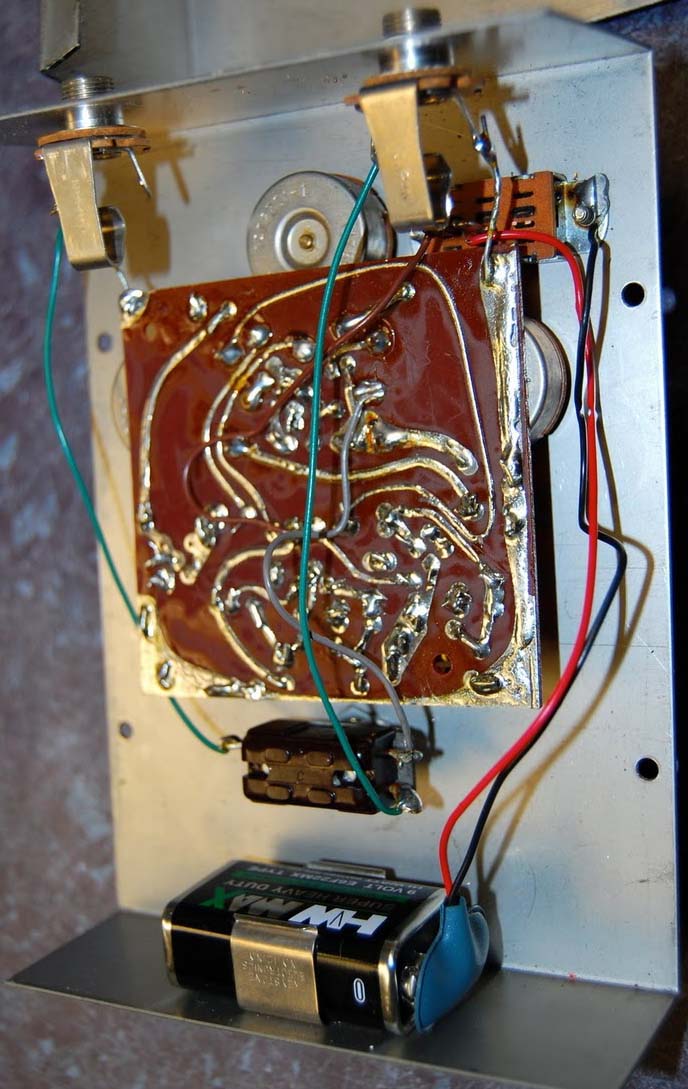

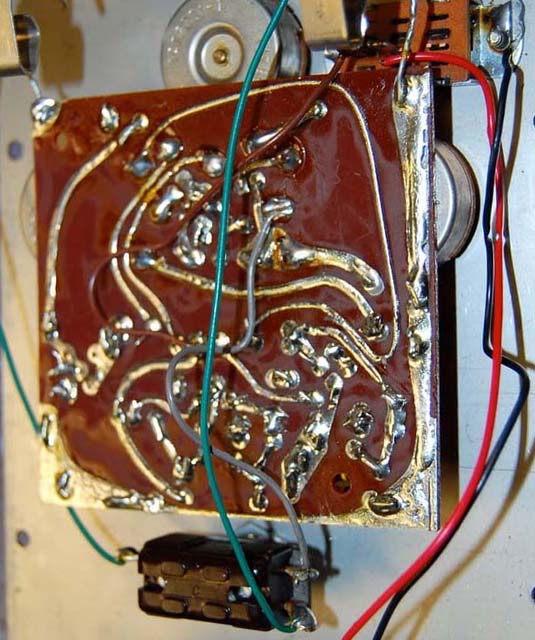
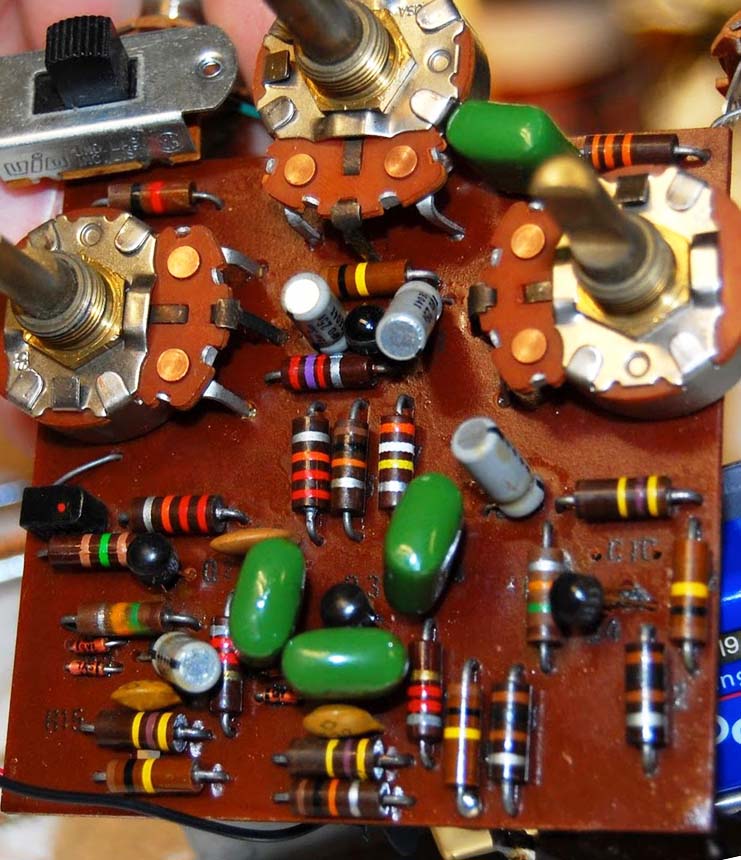
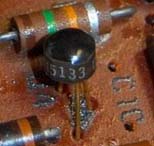
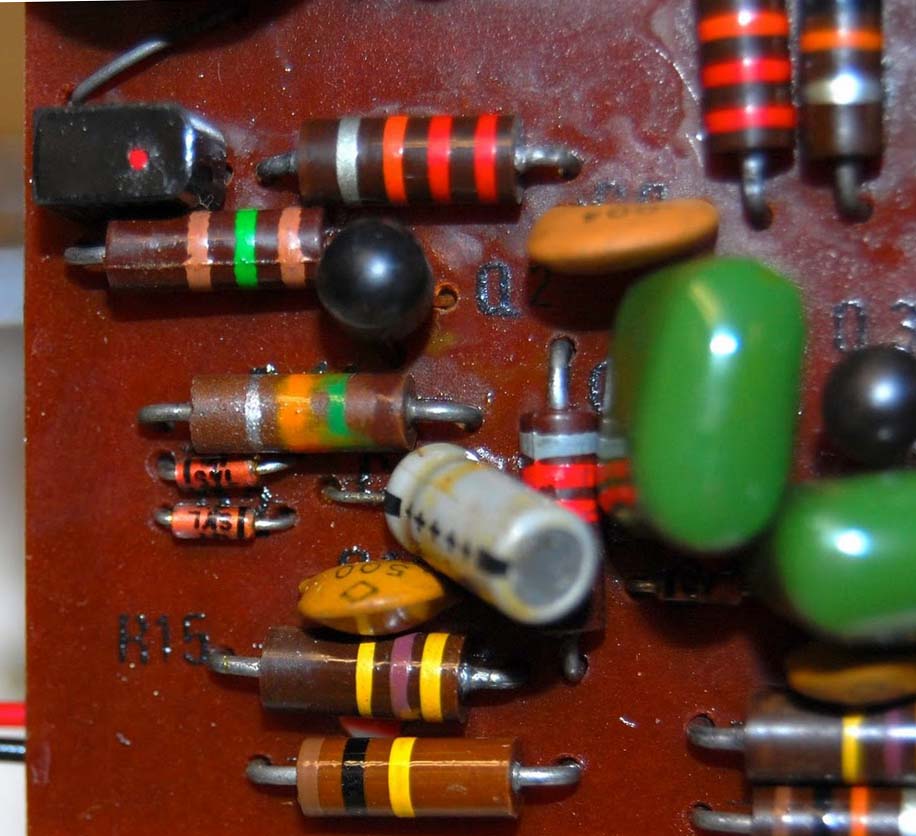
Shown above - Another identical second edition V1 Big Muff with 1966 brass pots, circa 1971. Note that the component types and values are the same as the example shown above, including the missing 500pF capacitor at C10, indicating that this V1 is actual production, not after market replacements or repairs. The green caps are marked .12uF on this example.

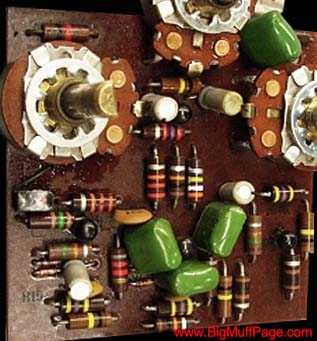
Shown above - Yet another identical second edition V1 Big Muff circuit with 1966 brass pots, circa 1970-'71. Circuit components and values match the two examples shown above. I have seen five examples of this identical V1 circuit. The knobs used on this example are one of the many alternate knobs E-H used for the V1. These knobs replaced the common black bakelite knobs from early V1s, indicating this repeated circuit was made for an extended period.

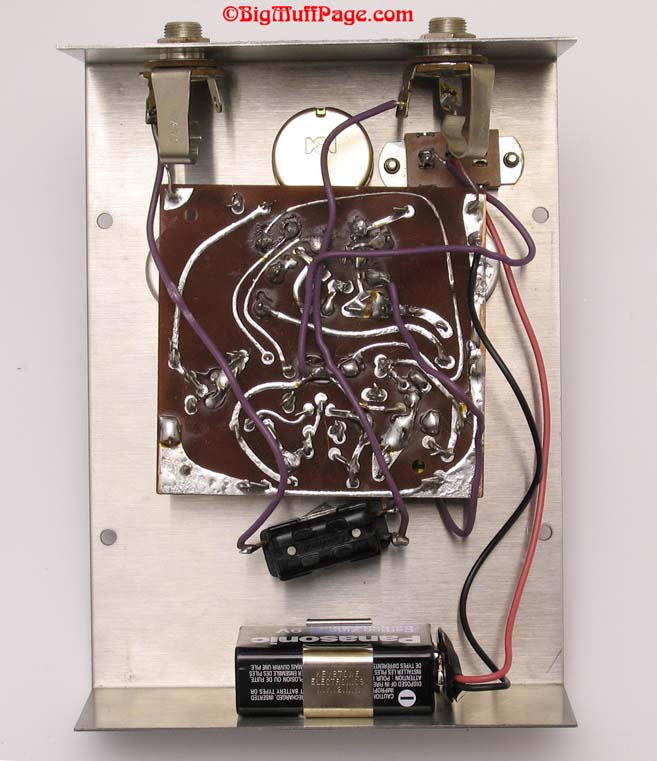
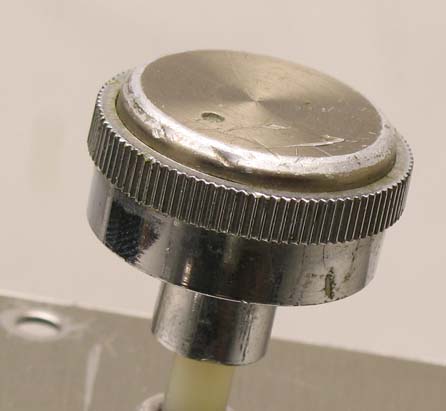
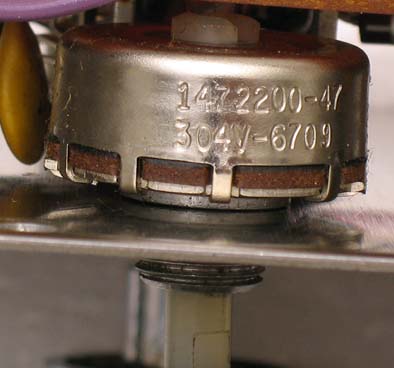


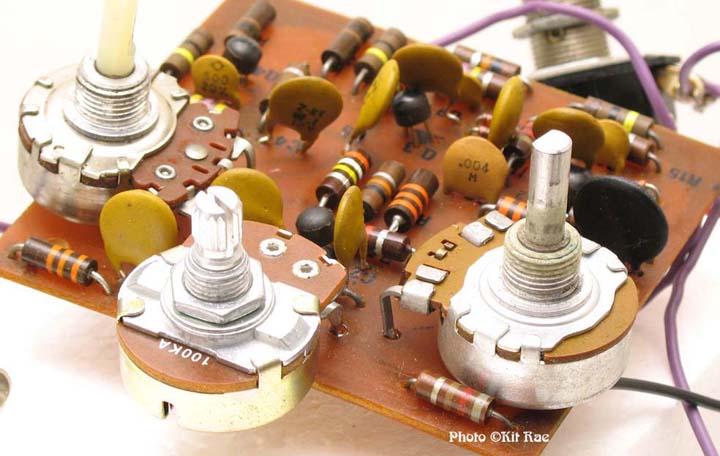
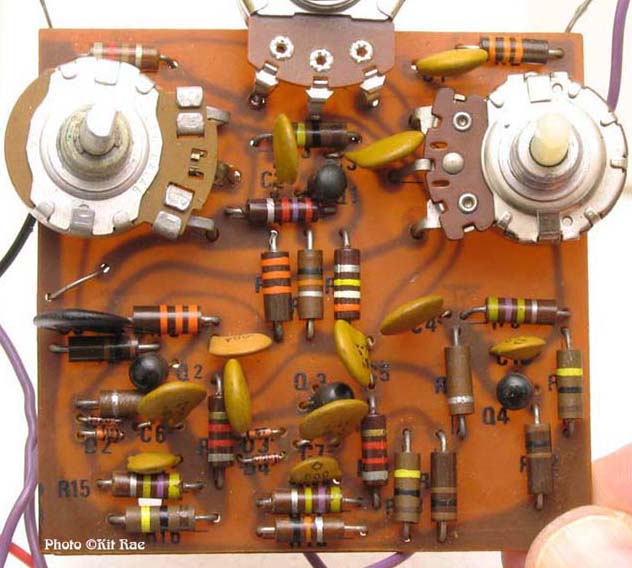

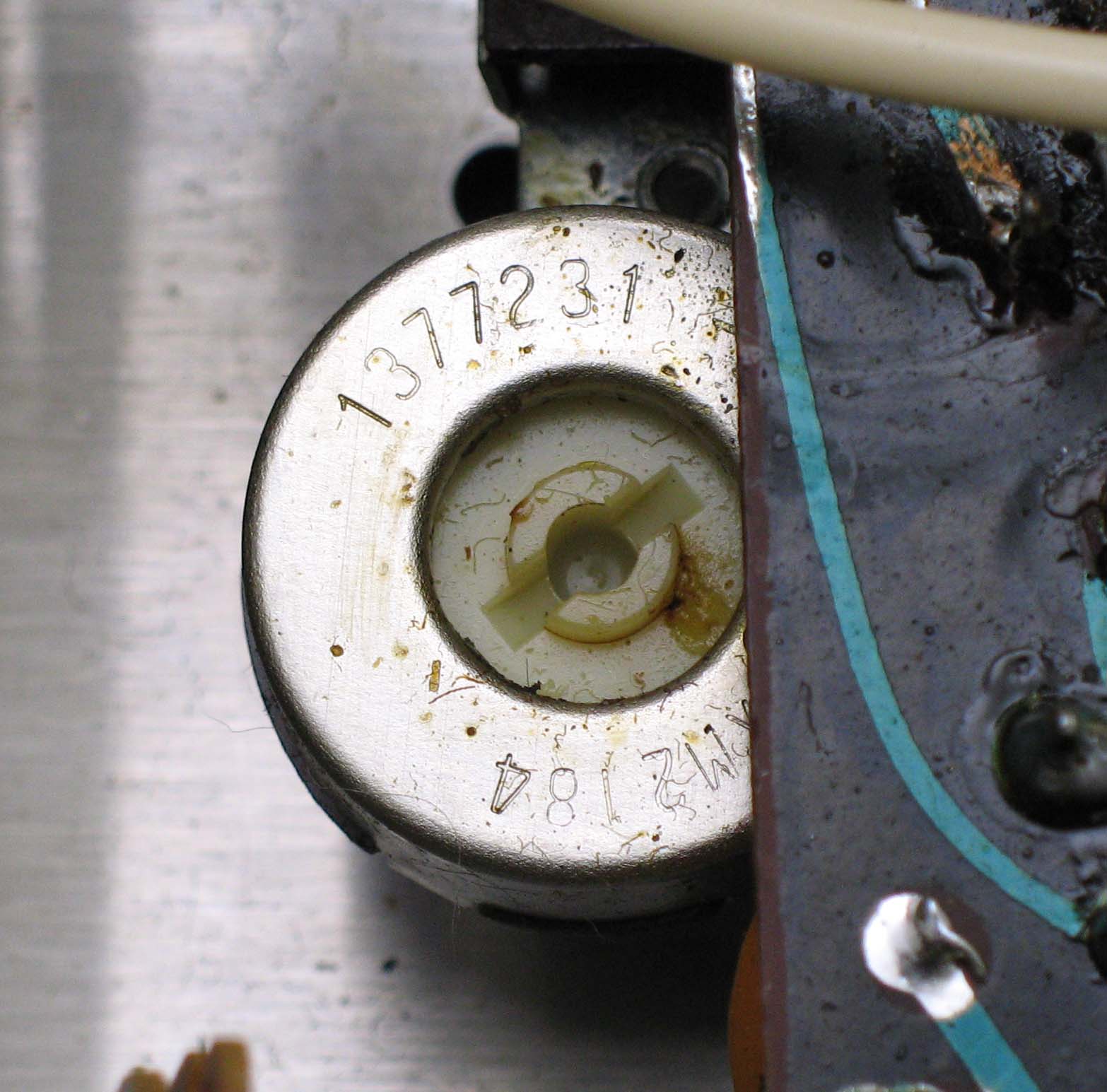
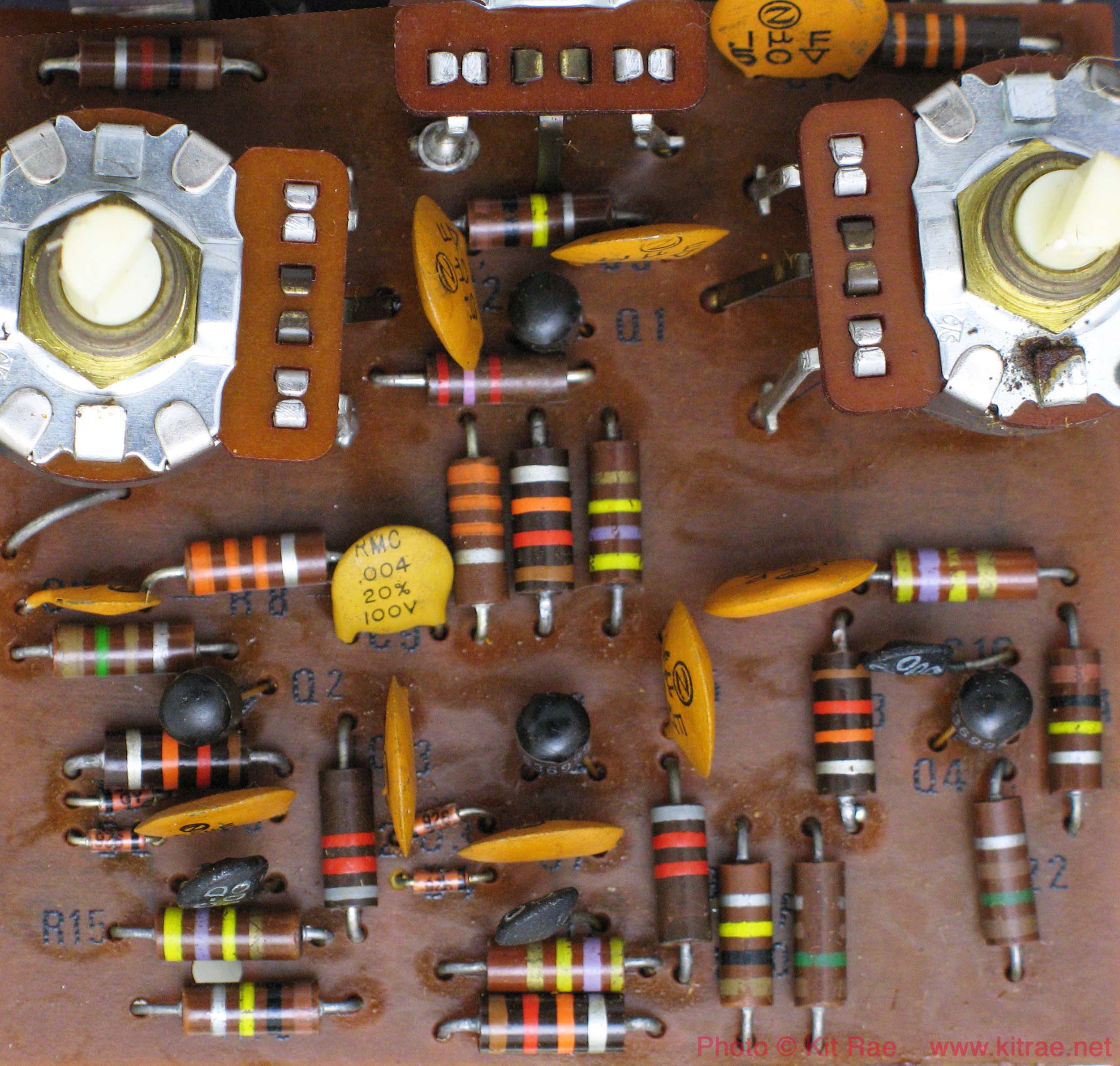
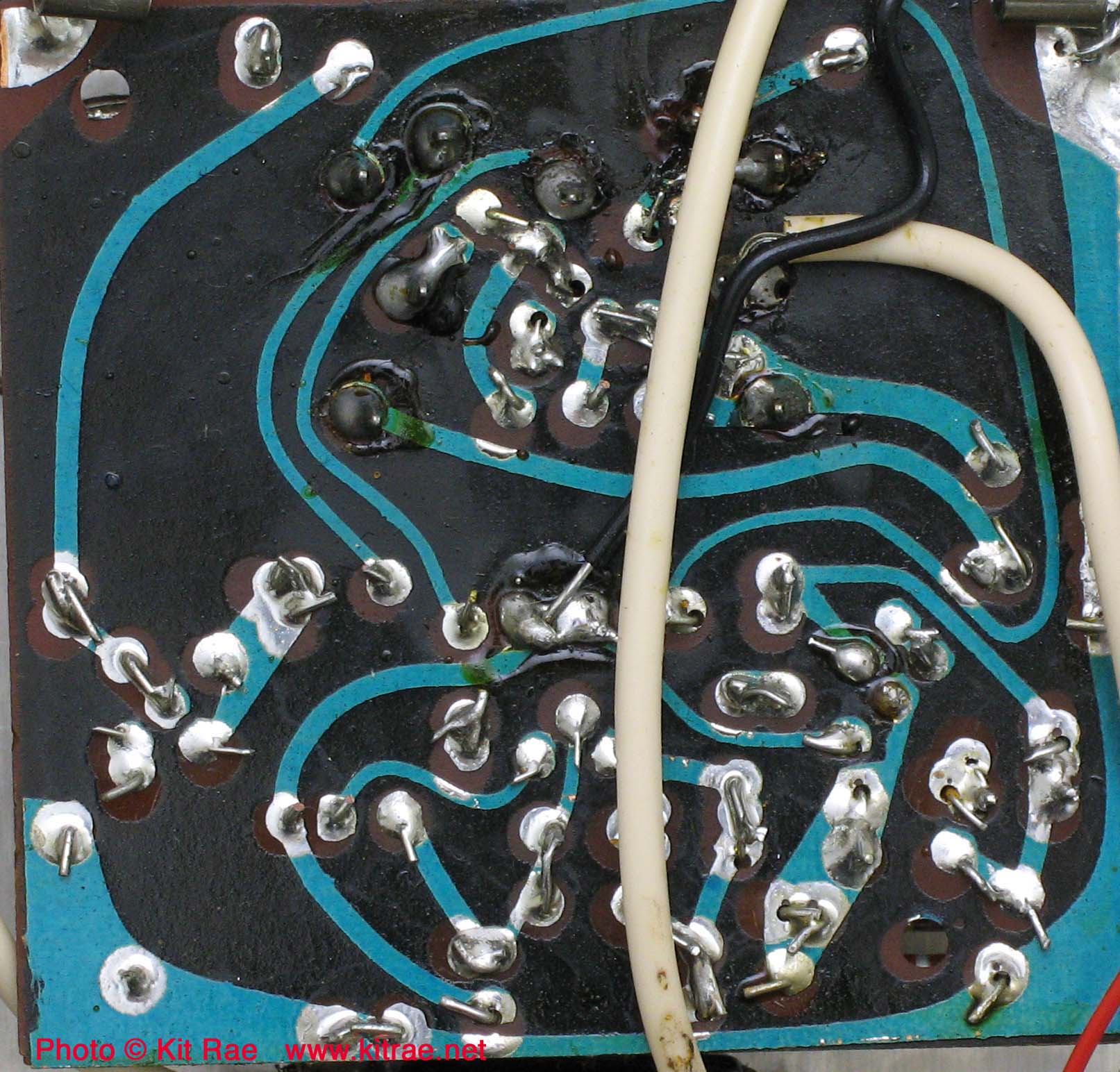
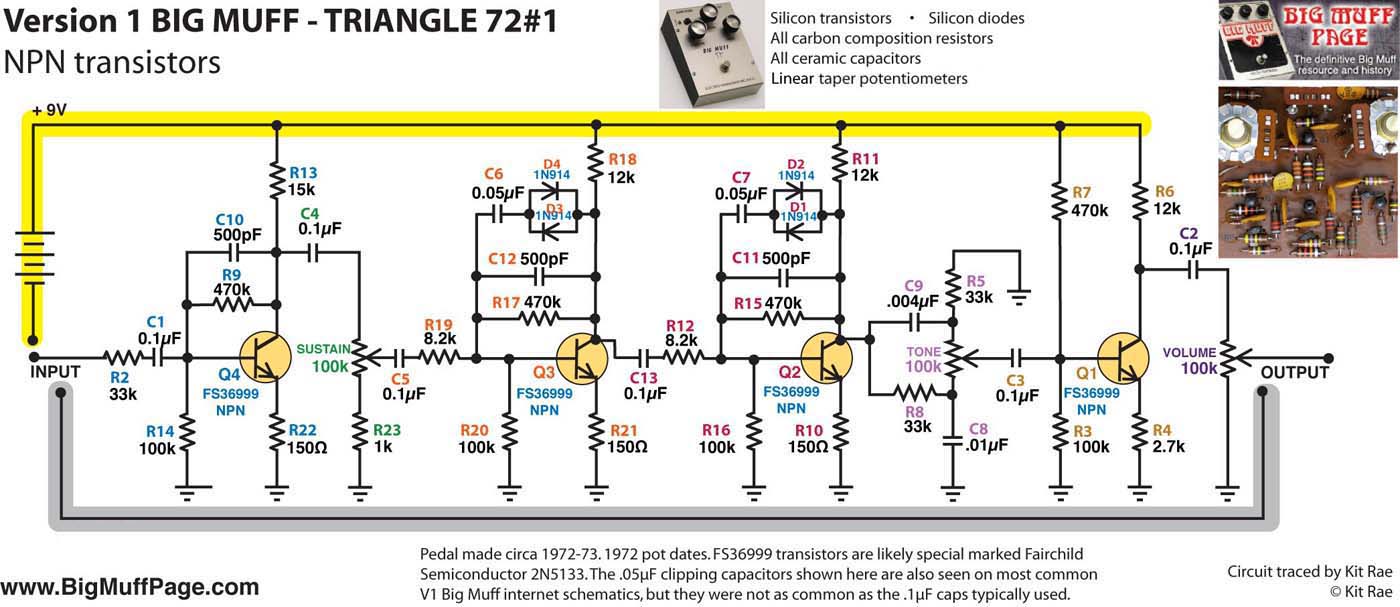
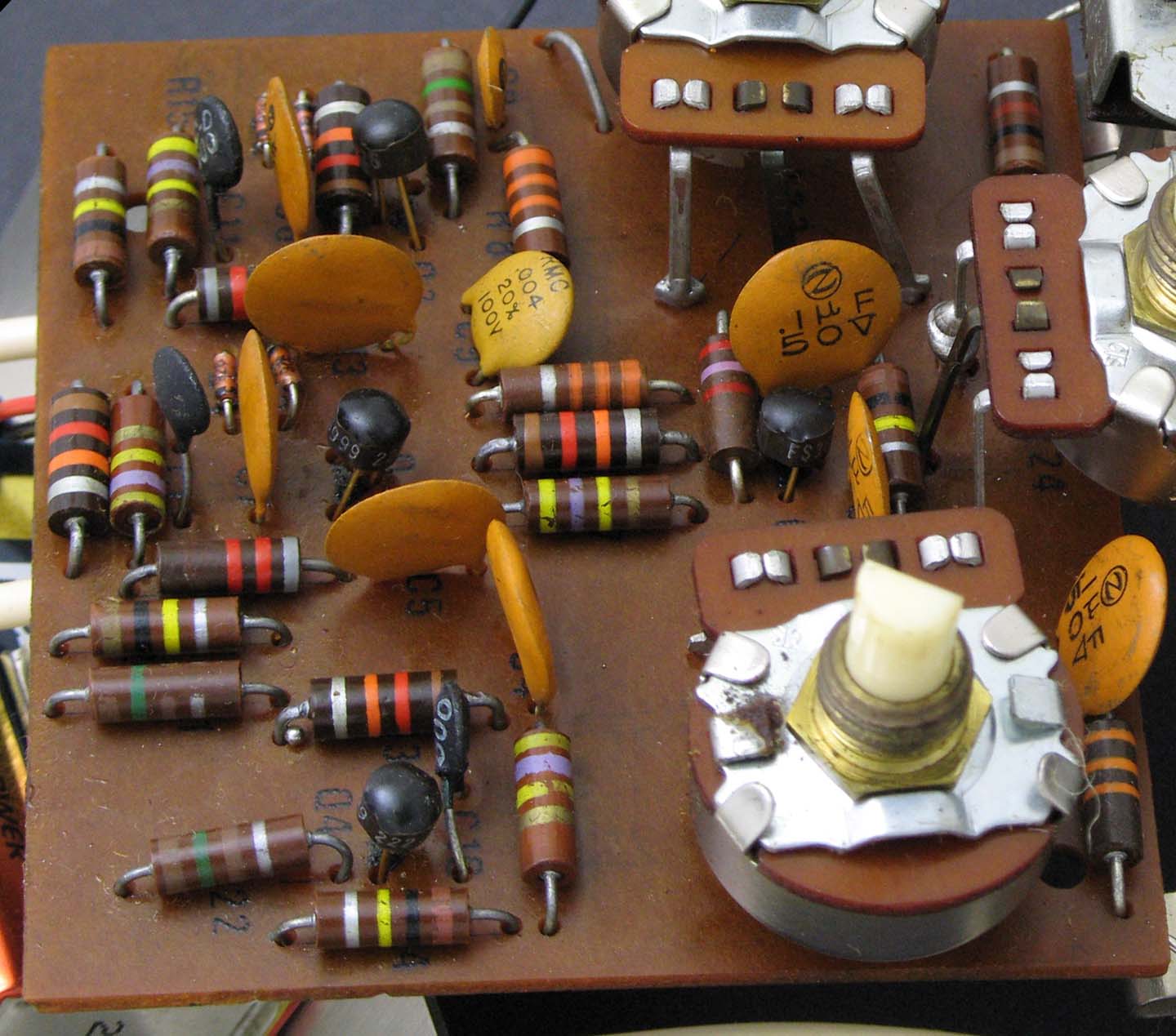
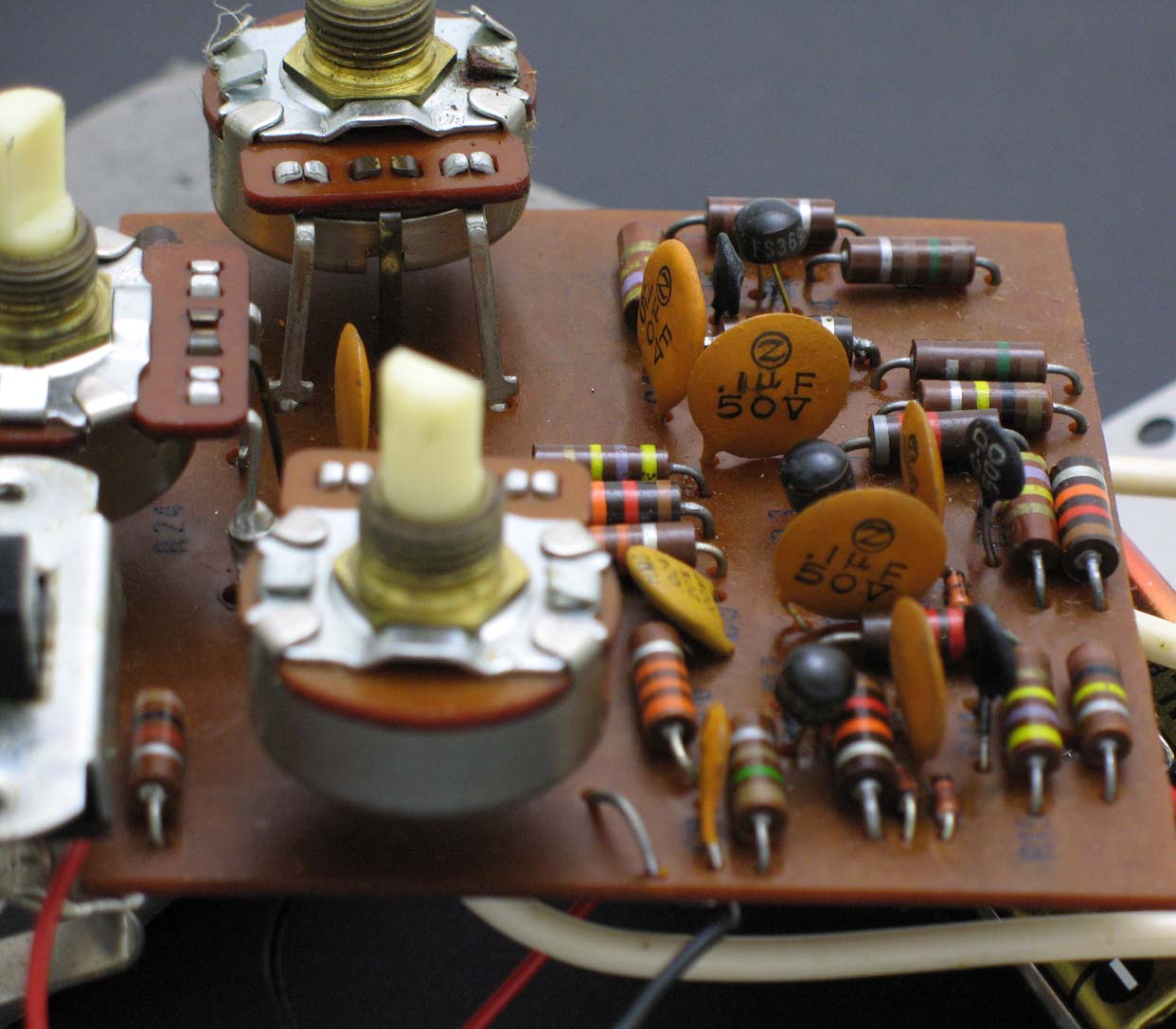
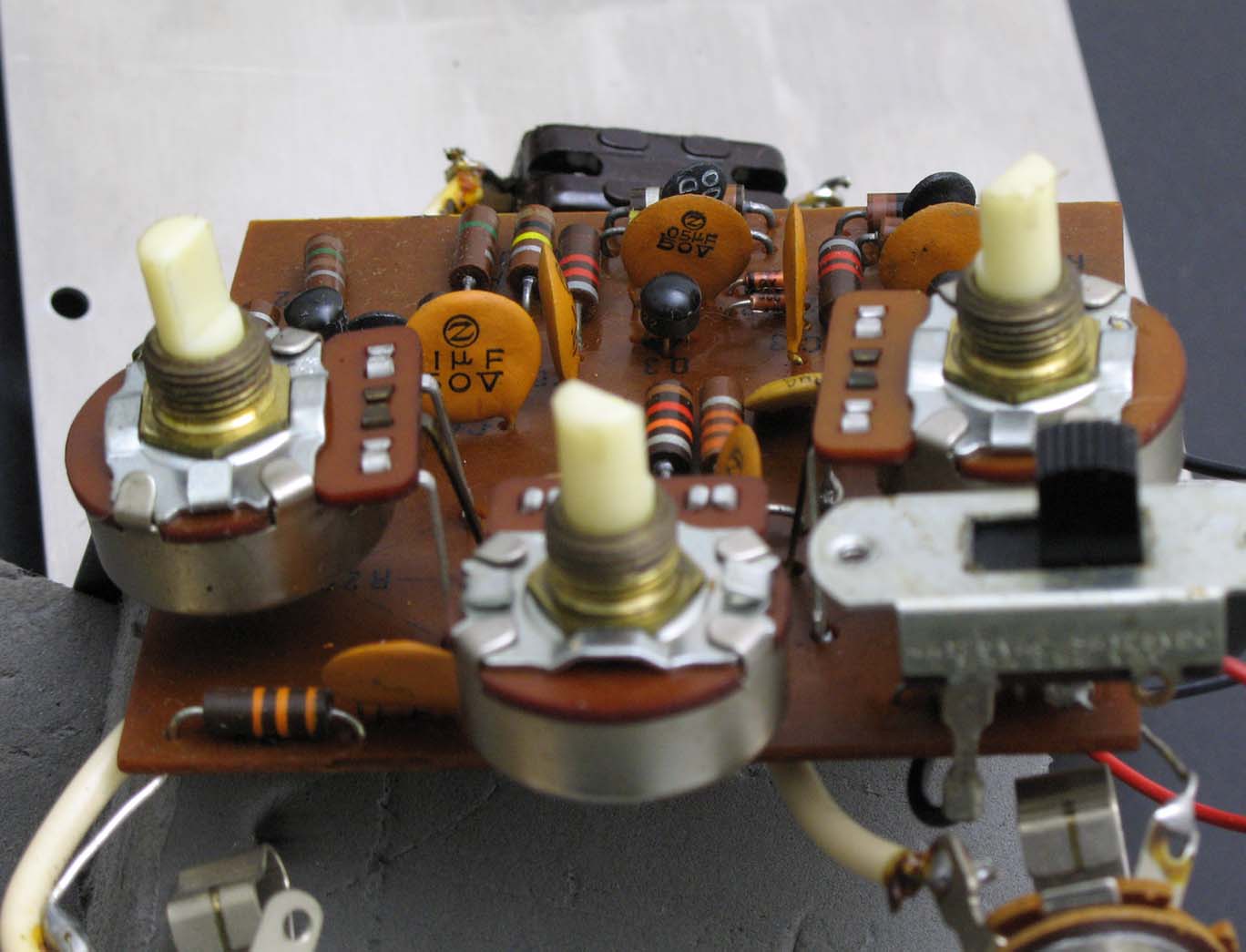
Shown above - A V1 Big Muff made circa 1971 with a different style pot with plastic shafts, dated 1967 (pots shown with metal shafts are modern replacements). These appear to be the pots purchased after the large batch of 1966 pots found in all the previous BMP's were used up. Knobs shown are actual factory knobs, one of the many alternate styles used. This is the most common version of the circuit found in the version 1 enclosure. This same version of the circuit was also common in some of the version 2 "Ram's Head" Big Muff enclosures. Note that the transistors are marked FS36999, with a long F. These NPN transistors were made by Fairchild Semiconductor, but this number is not a standard identifier. It was special house mark, but the transistor itself is actually a 2N5133. It was most likely purchased by EHX as a surplus overrun, and not a special mark made for EHX. The circuit features all .1µF ceramic capacitors, 470k feedback resistors, 500pF feedback caps, and 8.2k input resistors.


 .
.
.  ..
.. ..
.. ..
..
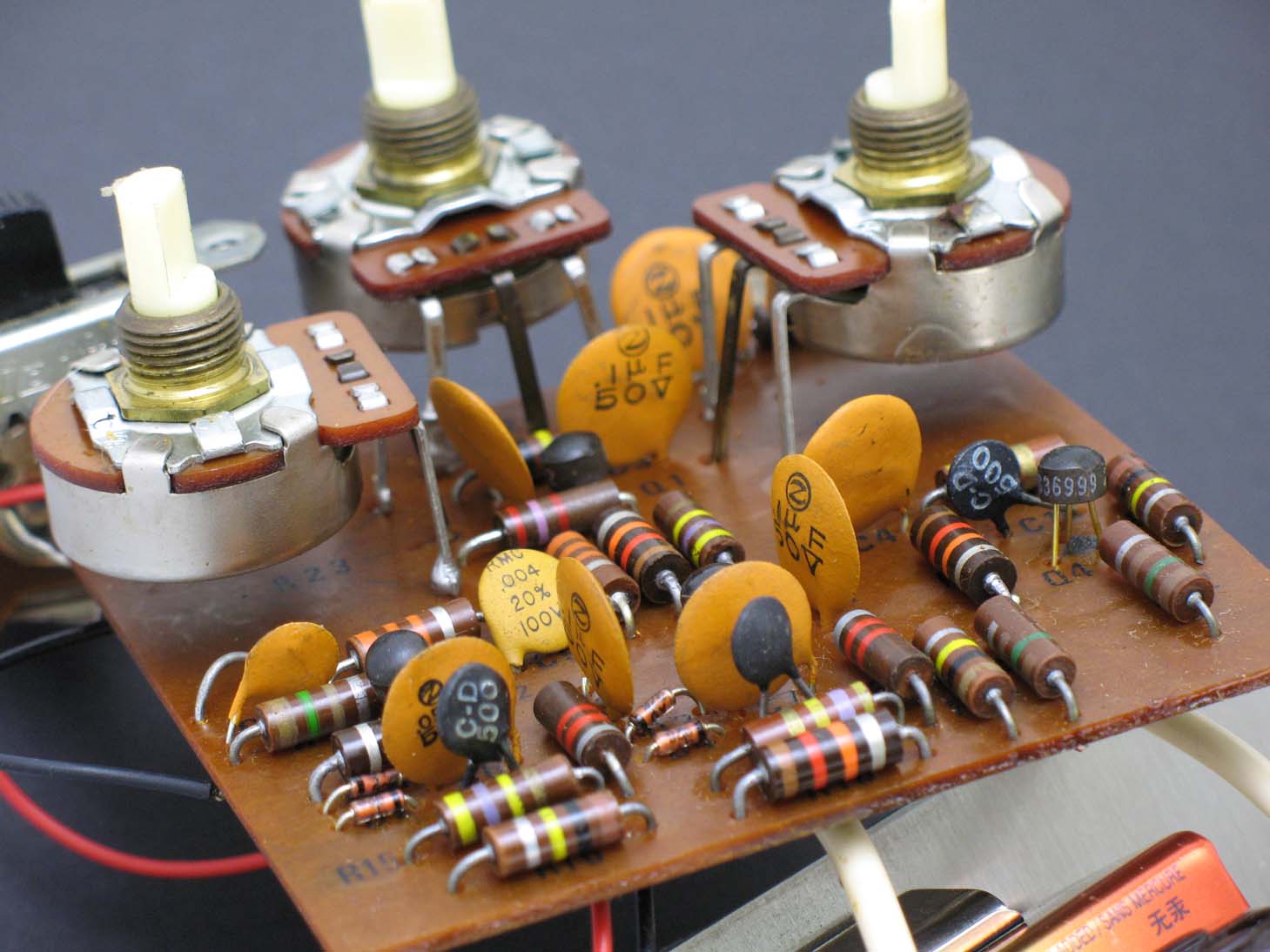
Shown above - A second edition Triangle V1 Big Muff with pots dated 1972, and the mysterious NPN FS36999 transistors, which are actually 2N5133. This version of the transistor did not have the long "F" mark, indicating it was from a later batch. Carbon composition resistors, Silicon diodes, and all ceramic capacitors. Knobs are actual production stock.
 ..
.. ..
.. ..
..
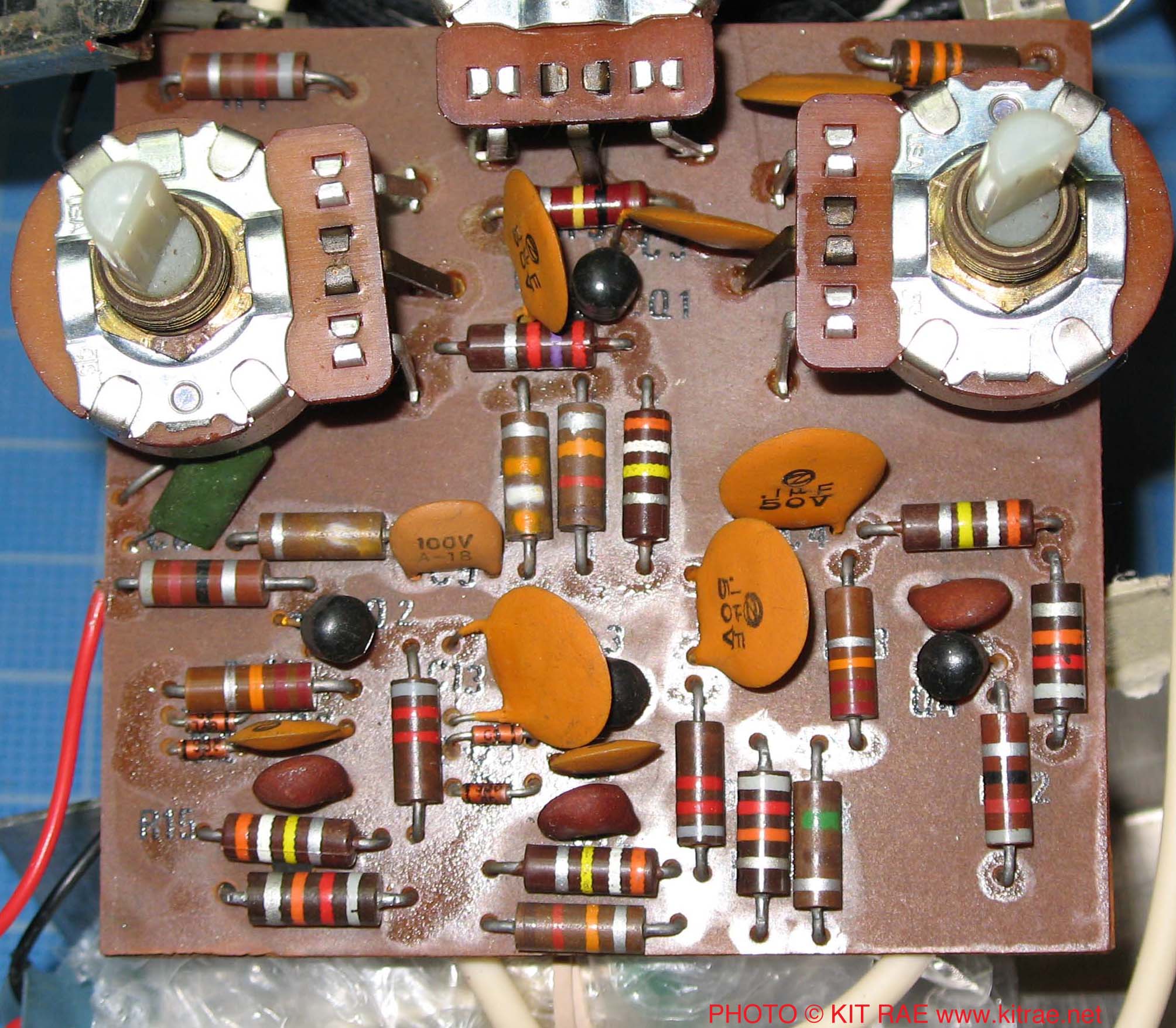
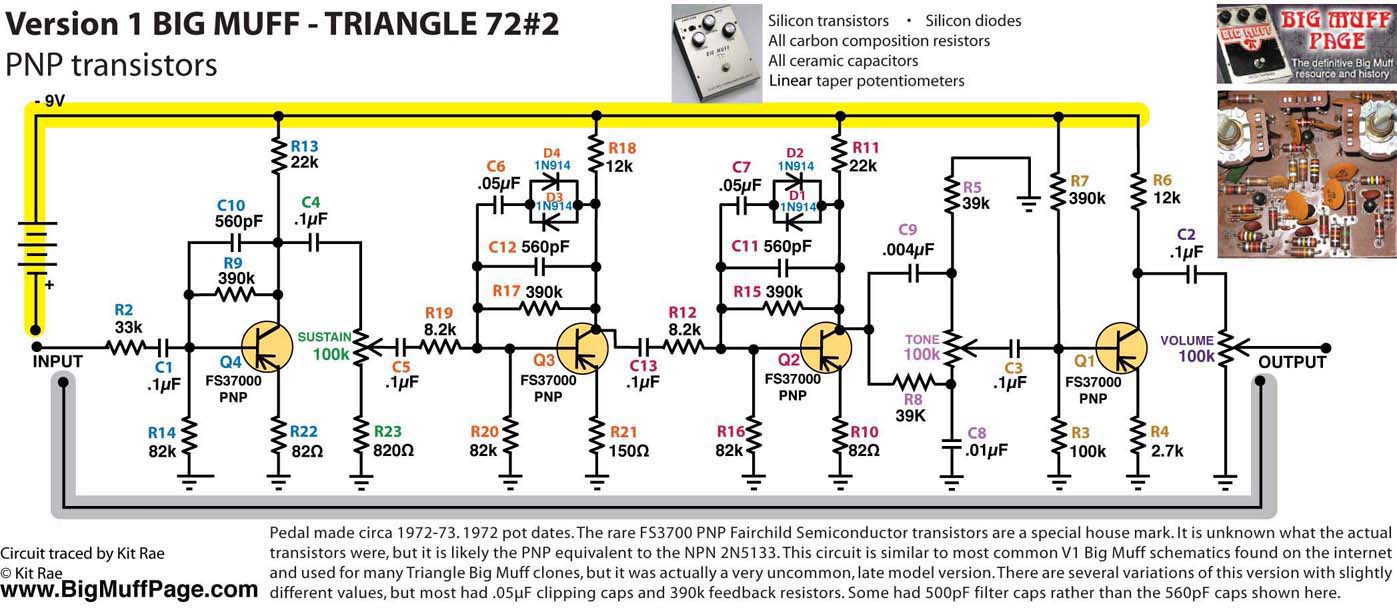
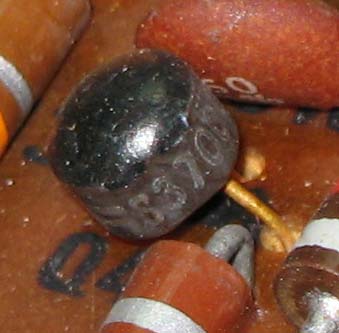
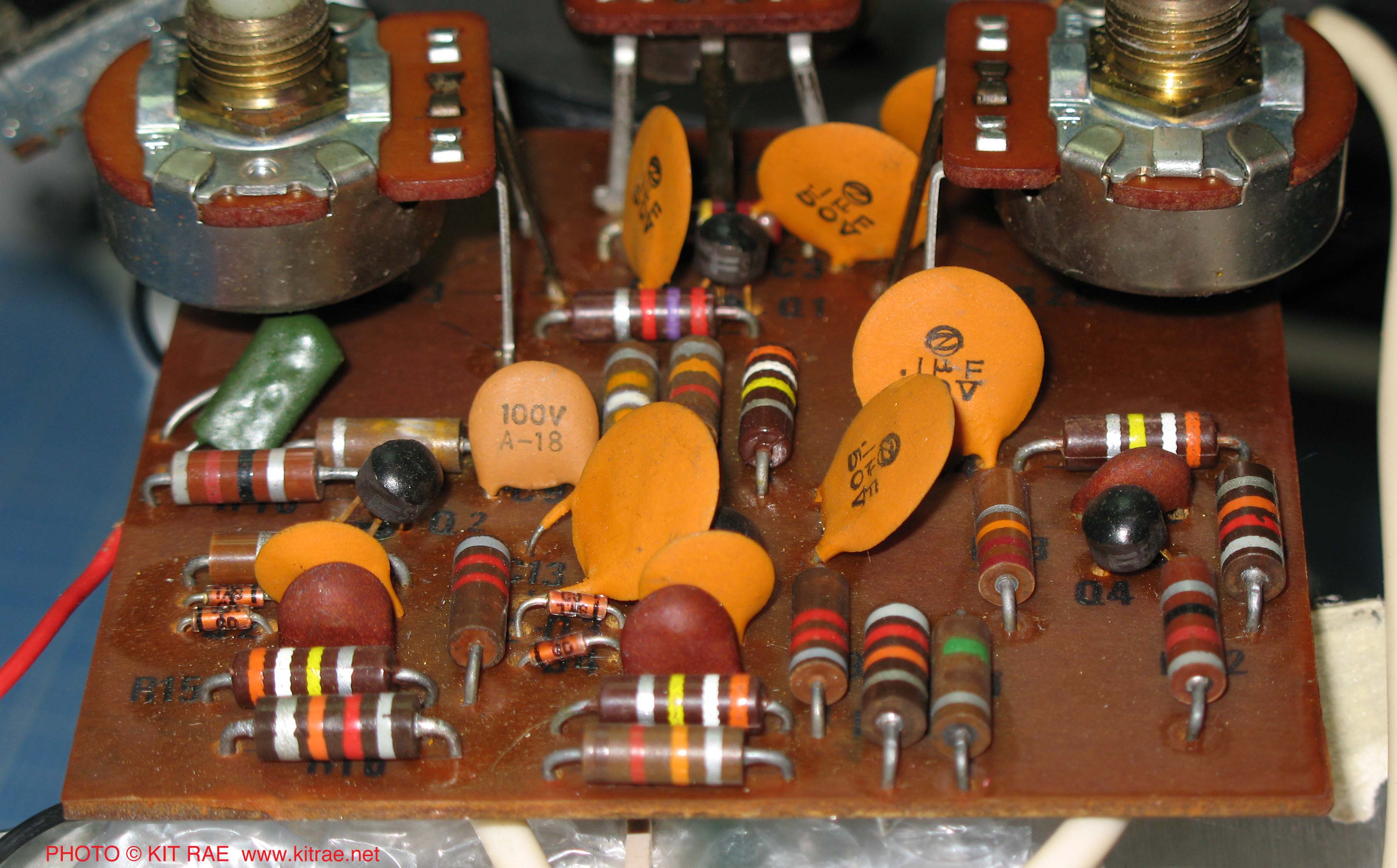
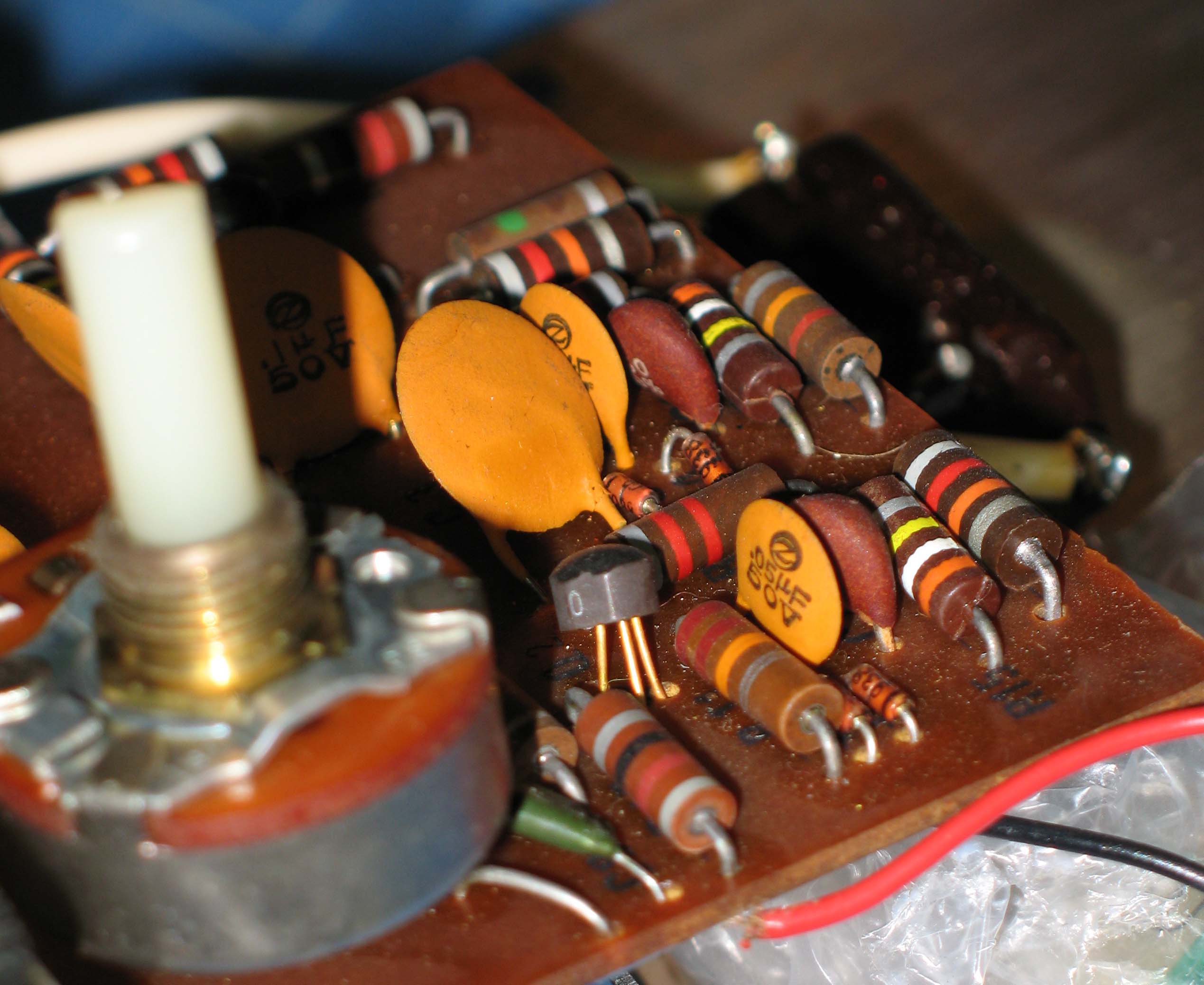
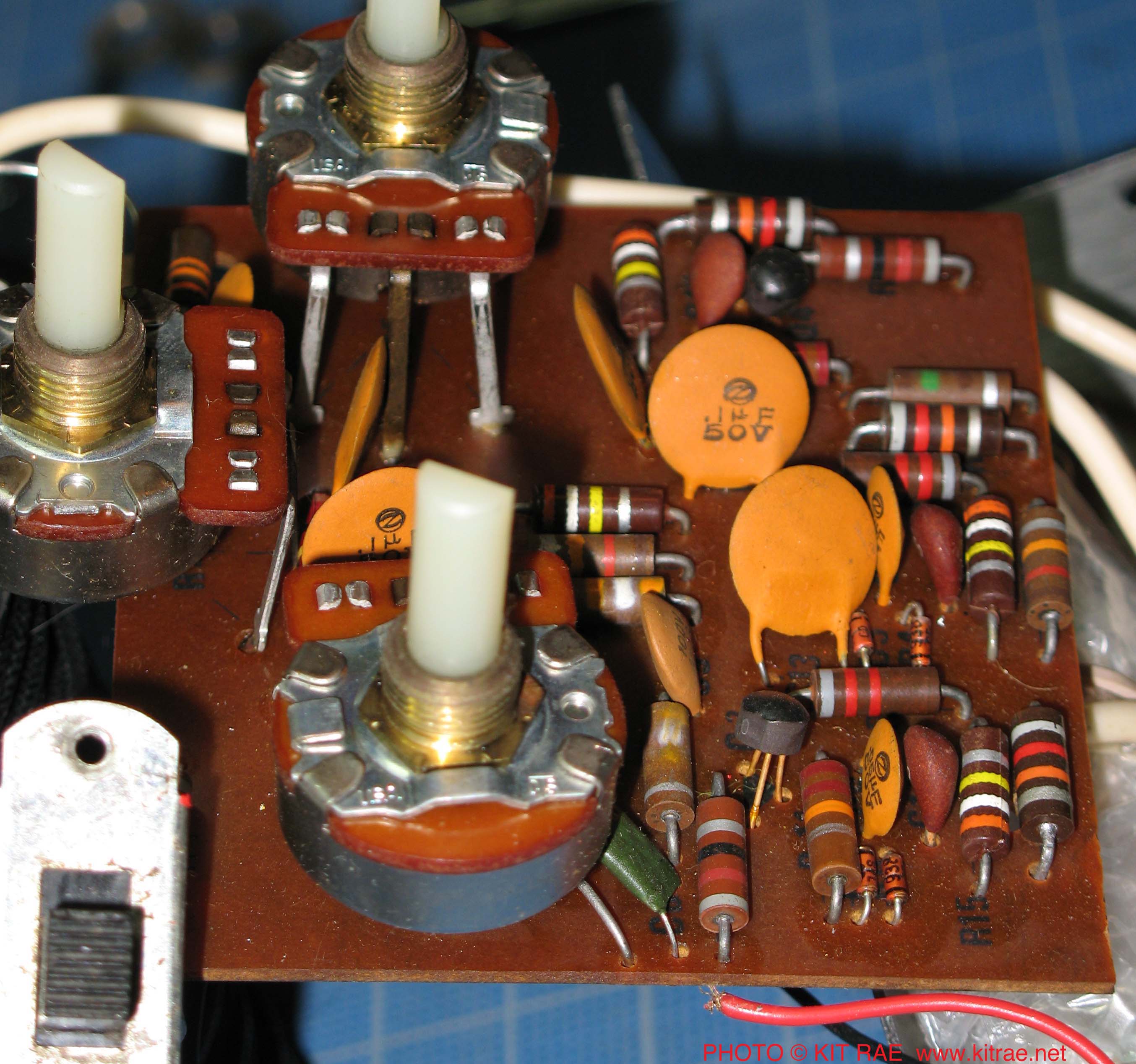
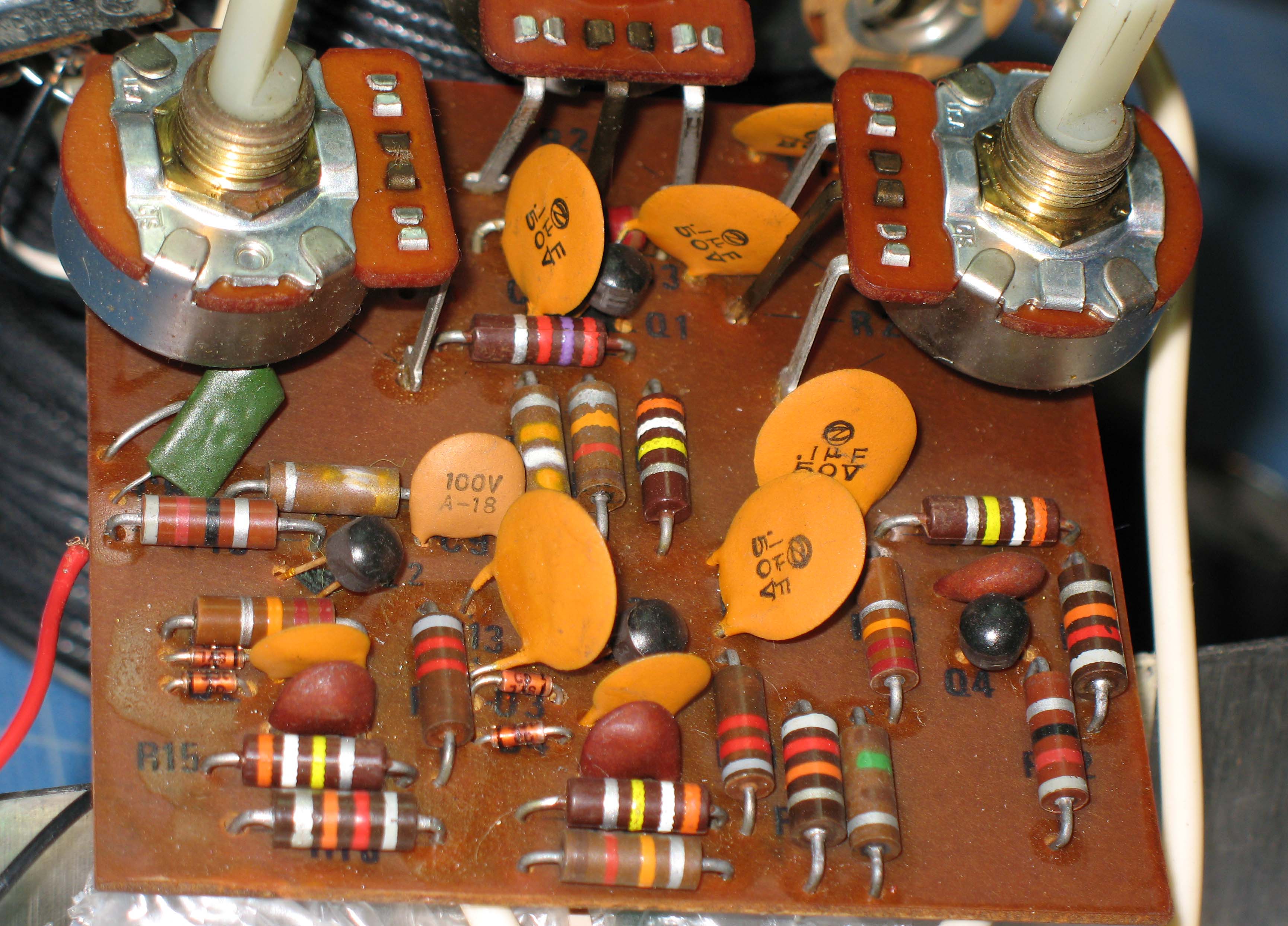

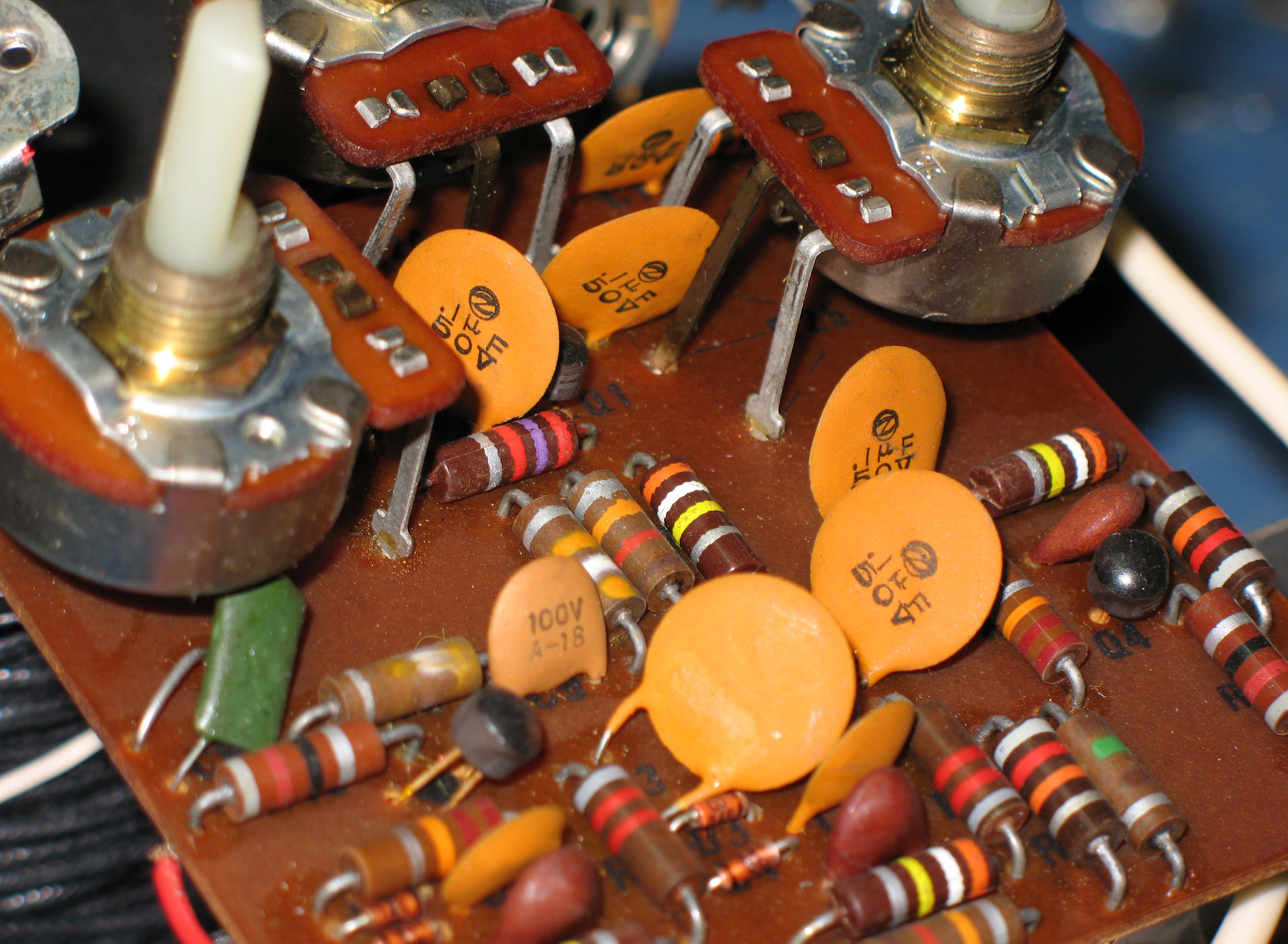
Shown above - A second edition Triangle V1 Big Muff with pots dated 1972. Pedal made circa 1972-73. The rare FS3700 PNP Fairchild Semiconductor transistors are a special house mark. It is unknown what the actual transistors were, but it is likely the PNP equivalent to the NPN 2N5133. This circuit is similar to most common V1 Big Muff schematics found on the internet and used for many Triangle Big Muff clones, but it was actually a very uncommon, late model version. There are several variations of this version with slightly different values, but most had .05µF clipping caps and 390k feedback resistors. Some had 500pF filter caps rather than the 560pF caps shown here.
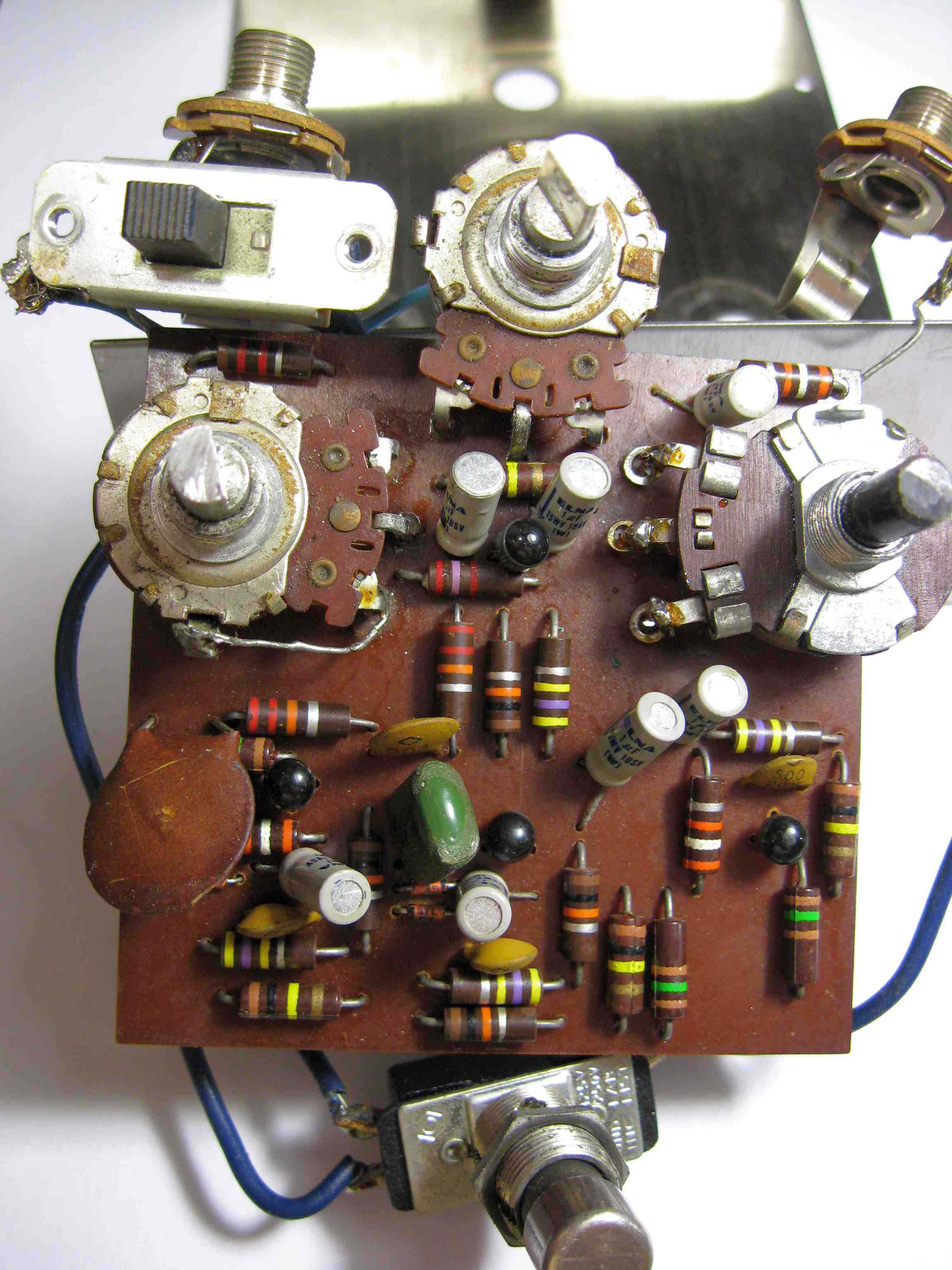
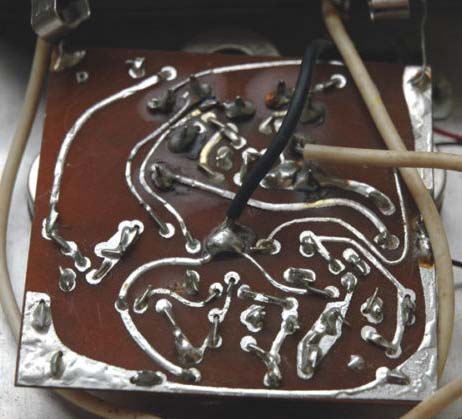
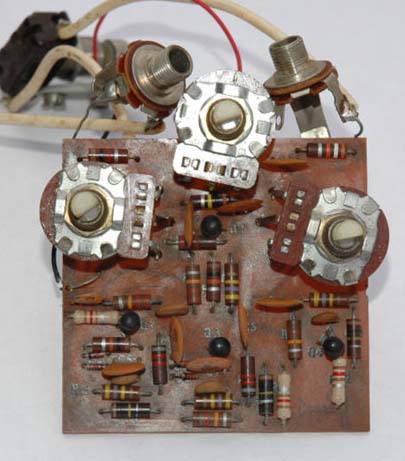
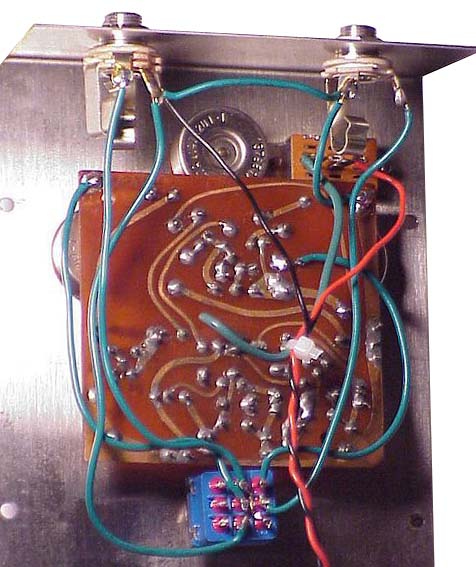
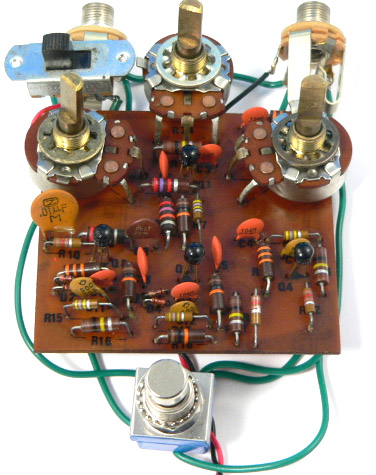
Shown above (left to right) - A second edition Triangle V1 purchased in 1970, trace and populated side of a 1971 second edition V1 Muff with NPN FS36999 transistors, and trace and populated side of a second edition V1 Muff with caps replaced and a true bypass installed by Marc Ahlfs of Skreddy Pedals, who has also made his own very popular versions of the Big Muff circuit. Note the positioning of the potentiometers which caused the three knobs to each start with zero in a different position, common to all V1 Big Muffs
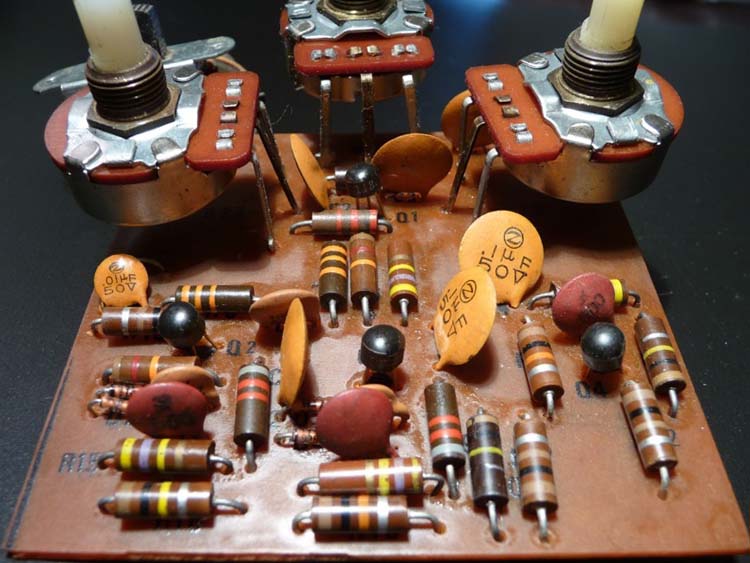
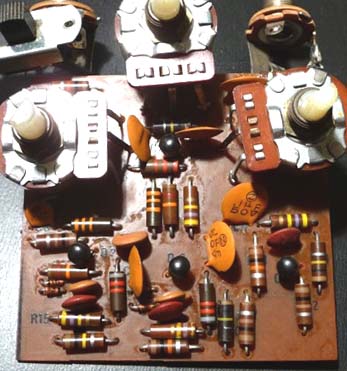
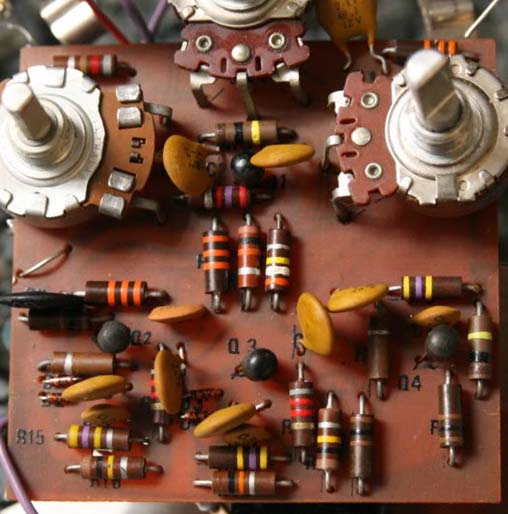
 ..
..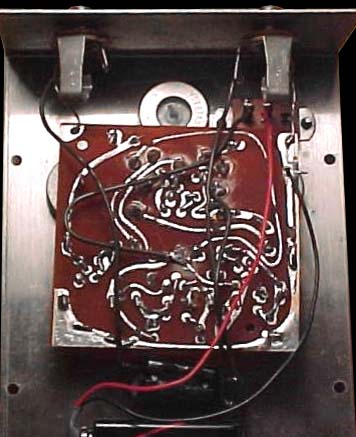
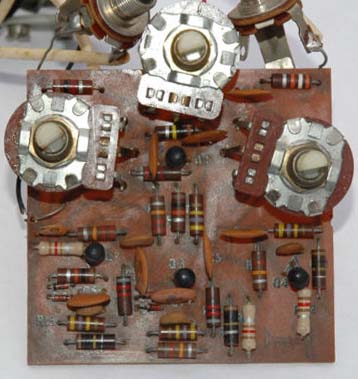
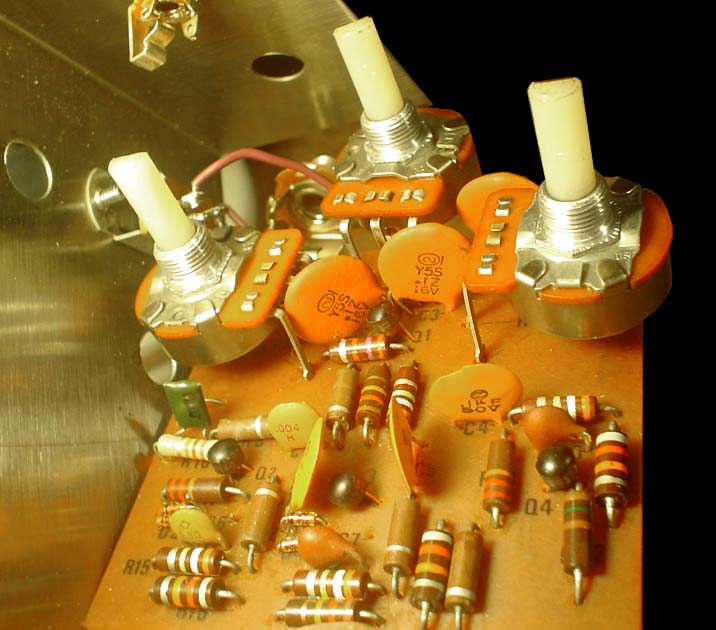
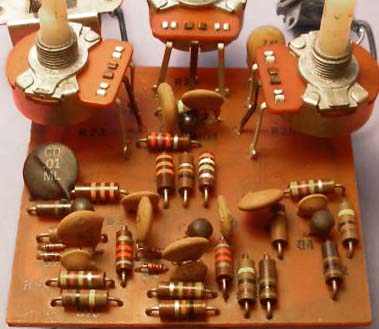
Shown above - Four second edition Triangle V1 Big Muff circuits with pots dated 1972. Note the component values are different from one Muff to another, giving each a slightly different sound. Almost all capacitors (round disks) are ceramic, and all resistors (with colored bands) are carbon composition
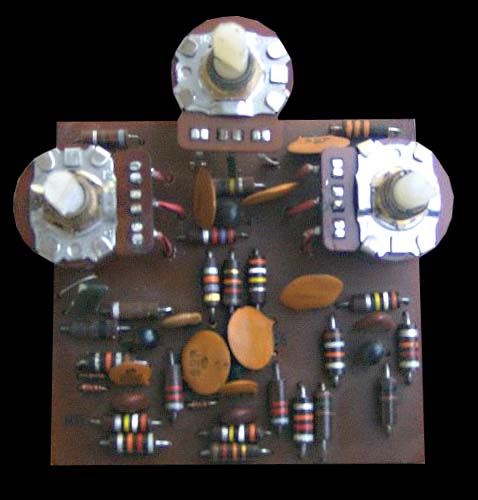
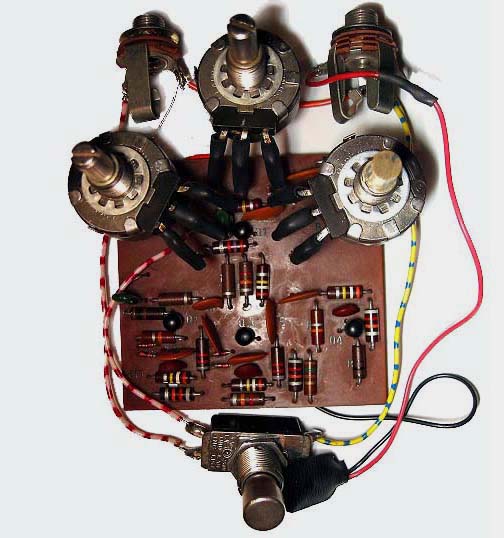
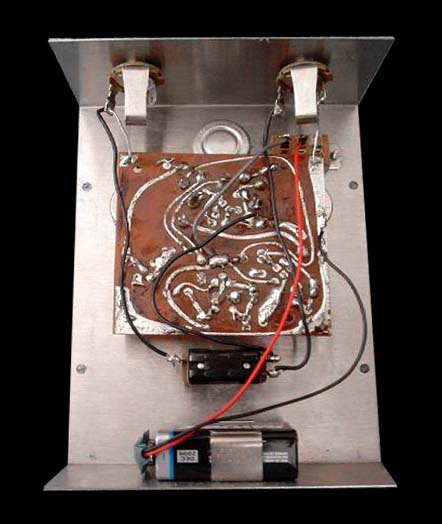
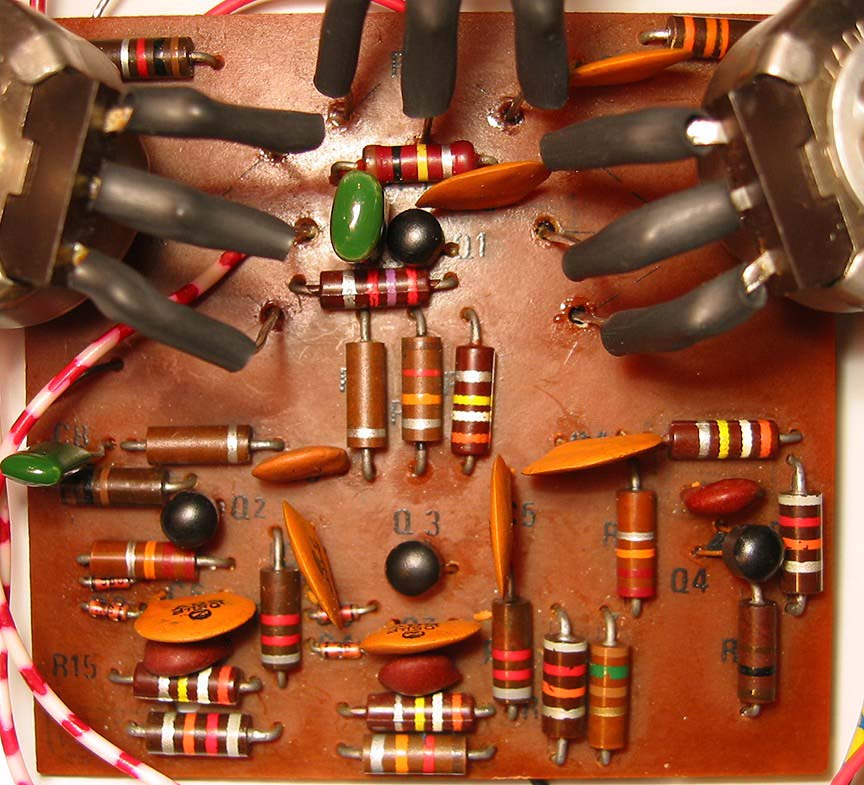
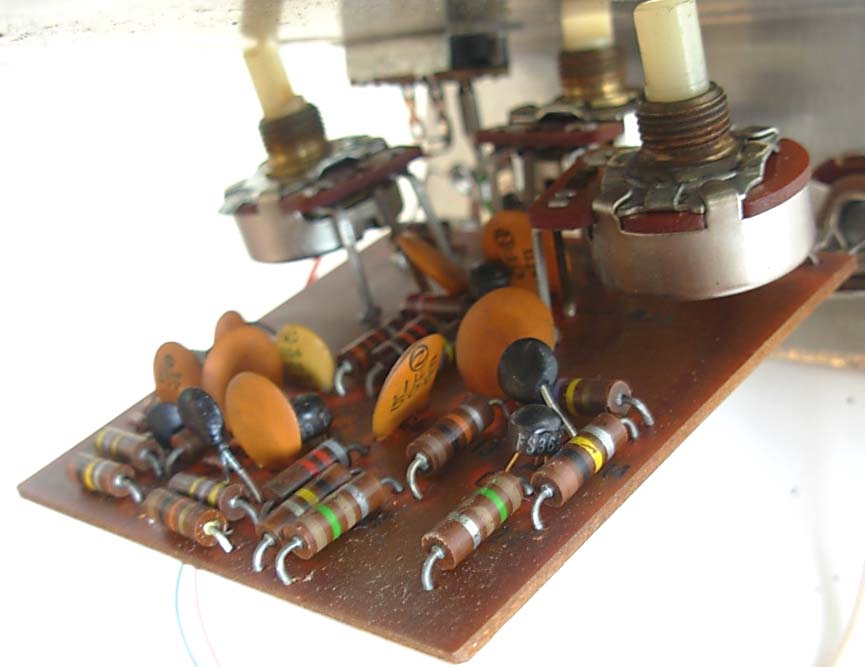
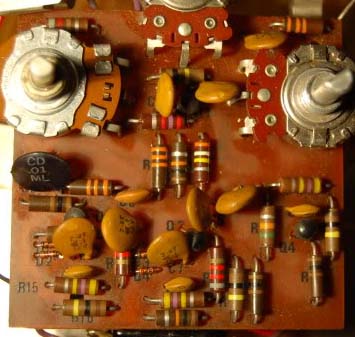
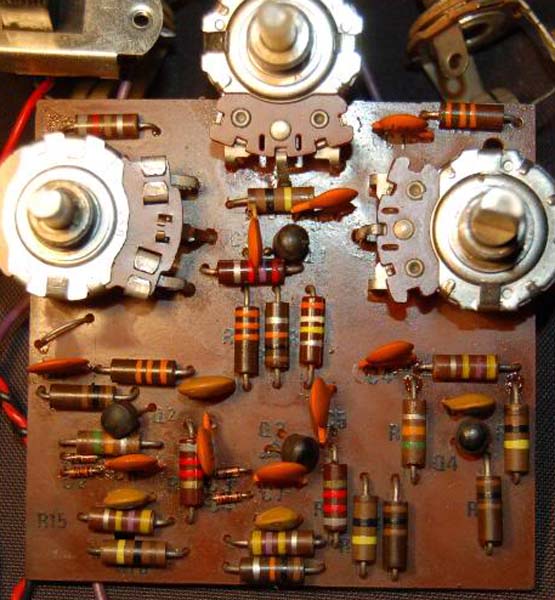
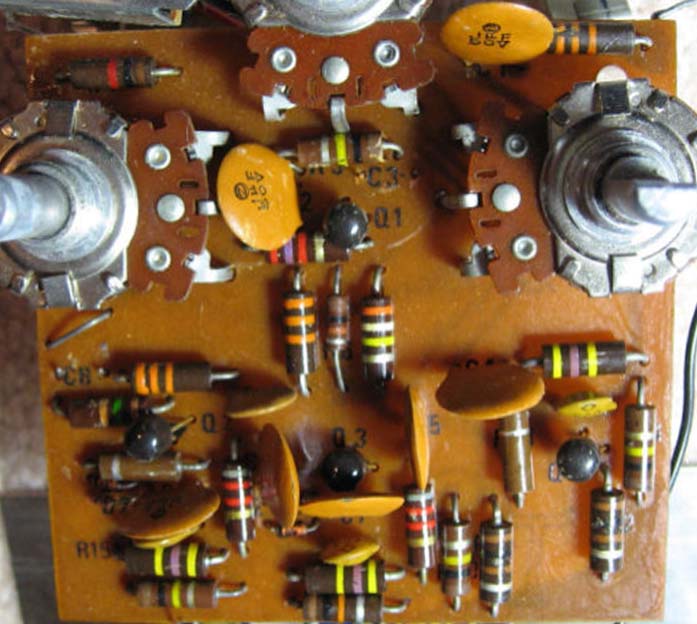
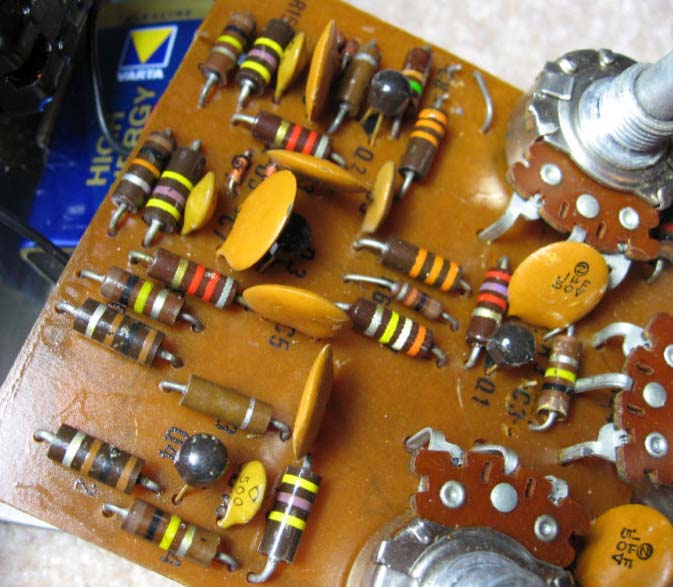

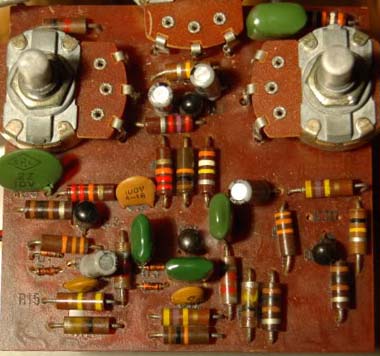
Shown above - Various second edition Triangle V1 Big Muff circuit boards showing the variety of capacitor and resistor values used. Despite schematics you may find on the web, there was no "first" or "second" edition schematic. Those are simply tracings of two different V1s, but in fact there were numersous V1 Big Muffs curcuit variations, making a wide variety of tones. Some of the odd pot types shown above are replacements
CONTINUE - MORE OF THE HISTORY OF THE BIG MUFF PART 1 (Vintage USA)
HISTORY OF THE BIG MUFF PART 2 (Russian)
HISTORY OF THE BIG MUFF PART 3 (modern USA)
© Kit Rae. This page is not authorized, affiliated, or associated with Electro Harmonix in any way
Website and contents ©2007 and ©2012 Kit Rae. All rights reserved. Linking to this website is allowed, but copying the text content is strictly prohibited without prior authorization. No part of this work may be reproduced, stored in a retrieval system, or transmitted in any other form, or by any means, electronic, mechanical, photocopying, recording, computer networking, or otherwise without prior permission in writing from the copyright holder(s).
Kit’s Secret Guitar, Gear, and Music Page
Guitar stuff, gear stuff, soundclips, videos, Gilmour/Pink Floyd stuff, photos and other goodies.
Contact: nasnandos @ kitrae.net (remove spaces around @ to email)
Copyright Kit Rae.












VISIT MY SWORDS, KNIVES and FANTASY ART WEBSITE www.kitrae.net